GCC member states are working to establish a joint human rights body at the bloc’s general secretariat to help curb domestic violence at the regional level.
“The move to establish the rights agency was prompted by the growing number of domestic violence incidents reported throughout the Gulf countries,” said a GCC statement on Saturday.
“Plans are being prepared to set up the human rights office at the GCC base in Riyadh,” said the body’s chief Abdullateef Al-Zayani, according to the statement.
The GCC is concerned about domestic violence, child protection, acts of torture and abuse mainly involving children and women, as well as maltreatment of domestics in the Gulf, added Al-Zayani.
Al-Zayani, who participated in a forum on violence and security in Doha late last week, said that the GCC countries will use all means to fight abuse and domestic violence and to put up a united front against it at the regional level. He also revealed plans to introduce a unified law to fight domestic violence in the Gulf.
He welcomed the tough measures introduced by some Gulf countries including Saudi Arabia to curb this social evil.
Saudi Arabia adopted a regulation in July 2013 that guarantees domestics nine hours of rest daily, one day off a week, and one month of paid vacation after two years of service.
Additionally, the Ministry of Justice has announced plans to appoint 150 judges to deal with domestic violence cases.
A report quoting Nasser Al-Oud, adviser to the justice minister and general supervisor of the social services department, said there are 177 cases of domestic violence currently before Saudi courts involving women and children, including assault, rape and forced confinement.
He said the training would allow judges to handle cases more effectively.
In August last year, the Saudi government passed a law criminalizing domestic abuse. “Penalties for domestic abuse were recently raised from a month to one year in prison, and from SR5,000 to SR50,000 in fines in the Kingdom,” he said. However, many other Gulf countries have so far not taken such strict measures to curb domestic violence. For example, Qatar currently does not have a specific law criminalizing domestic violence that also includes rape.
According to a report issued by the Qatar Foundation for the Protection of Women and Children, the number of reported cases about violence against women rose by 54 percent between 2011 and 2013. In Kuwait, the legislation process also remains in its infancy. It is important to note here that Qatar, the UAE, Kuwait, and Oman either exclude domestic workers from their labor laws completely, or have very lax provisions for their protection.


GCC declares war on domestic violence
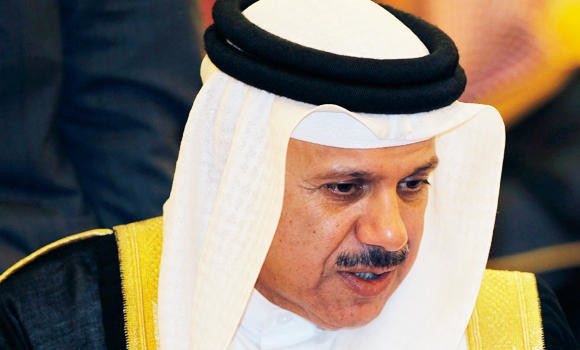
GCC declares war on domestic violence

Israeli military says it will pursue every successor of Iran’s Khamenei
- The clerical body that will choose Iran’s next supreme leader has more or less reached a majority consensus
- Minor disagreement over whether their final decision must follow an in-person meeting or instead be issued
The Israeli military warned it would continue pursuing every successor of Iran’s next supreme leader.
In a post on X in Farsi, the Israeli military also warned it would pursue every person who seeks to appoint a successor for Ayatollah Ali Khamenei, referring to the clerical body charged with choosing the Islamic Republic’s supreme leader.
The clerical body that will choose Iran’s next supreme leader, succeeding the slain Ayatollah Ali Khamenei, has more or less reached a majority consensus, Assembly of Experts member Ayatollah Mohammadmehdi Mirbaqeri said on Sunday.
The Mehr news agency quoted him as saying “some obstacles” still needed to be resolved regarding the process.
On Saturday, a senior cleric in the Assembly of Experts said its members would meet “within one day” to choose the leader.
Iranian media said the group had a minor disagreement over whether their final decision must follow an in-person meeting or instead be issued without adhering to this formality.
Ayatollah Mohsen Heidari Alekasir, another member of the Assembly of Experts, said in a video released by Nournews on Sunday that an in-person meeting by the assembly for a final vote was not possible under current conditions.
He said a candidate had been picked, based on the late supreme leader’s advice that Iran’s top leader should “be hated by the enemy” instead of praised by it.
“Even the Great Satan (US) has mentioned his name,” Heidari Alekasir said of the chosen successor, days after US President Donald Trump said that Khamenei’s son, Mojtaba, was an “unacceptable” choice for him.