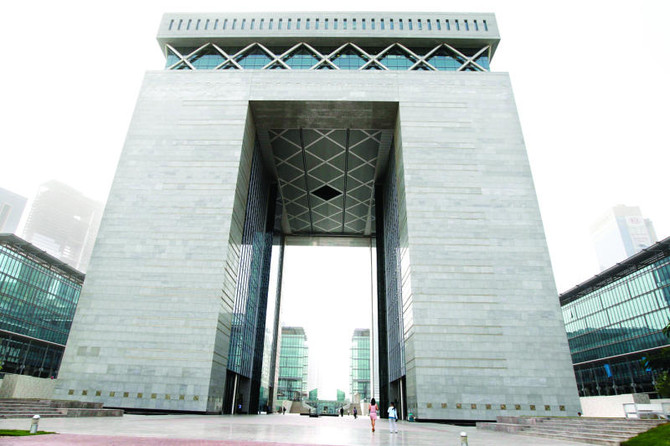
DIFC aims to triple number of firms by 2024

Updated 10 June 2015
Follow

DIFC aims to triple number of firms by 2024

DUBAI: Dubai International Financial Center (DIFC) said it would triple the number of finance firms in the free zone by 2024, aiming to entrench its position as the Middle East’s most prominent banking hub, despite growing competition.
DIFC’s growth, particularly in the years after it was created in 2004, intially came mainly from European and US companies, but half of the expansion targeted for the next decade will come from other emerging markets, the ‘south-south trade corridor’ from Latin America to South Asia, especially India and China, DIFC governor Essa Kazim said.
The other half of the growth will come from expanding existing activities such as investment banking and reinsurance, as well as pulling in more family-owned investment offices and asset management businesses, Kazim said at a news conference to announce DIFC’s strategy for the next 10 years.
“Between high net worth individual assets, sovereign wealth assets and the pension funds, assets of the region stand at $7 to $8 trillion but less then $1 trillion is being managed from the region. We want to change that,” he said.
In November, Kazim said the free zone would double over the next decade but the 10-year strategy envisions even faster growth.


Saudi retail spending holds steady near $4bn during early Ramadan, while postal services rise

Updated 8 sec ago
Follow

Saudi retail spending holds steady near $4bn during early Ramadan, while postal services rise

RIYADH: Saudi Arabia’s point-of-sale spending remained close to $4 billion in the week ending Feb. 21, even as overall transaction volumes declined during the early days of Ramadan, central bank data showed. 

According to the latest data from the Saudi Central Bank, also known as SAMA, total POS transactions settled at SR13.9 billion ($3.71 billion), representing a 9.3 percent week-on-week decline, while the number of transactions fell 12.5 percent to 220.57 million. 

Spending on freight transport, postal and courier services rose 24.4 percent week on week to SR80.68 million, marking one of the strongest sectoral gains as demand for deliveries increased during the holy month. 

In an interview with Arab News, Saudi economist Talat Hafiz attributed the broader slowdown in spending to seasonal consumption patterns linked to Ramadan. 

“During the first week of Ramadan, consumer behavior typically shifts, as individuals focus more on purchasing goods related to the holy month while reducing discretionary spending,” he said. 

SAMA’s report showed that spending on food and beverages increased by 2.1 percent to SR2.62 billion, accounting for the largest share of total POS transactions.

Meanwhile, spending at restaurants and cafes fell by 28.3 percent to SR1.24 billion. 

Hafiz said this purchasing pattern is expected to continue as Eid Al-Fitr approaches. 

“Spending behavior is likely to shift again, with increased expenditure on travel-related services, apparel, clothing, and accessories in preparation for Eid. During the Eid holiday itself, we can expect a noticeable rebound in spending on recreation, entertainment, restaurants, and cafes,” he added. 

Expenditure on public utilities saw an increase of 2.3 percent to SR63.06 million, while spending on apparel and clothing outlays followed with a 4.8 percent decrease to reach SR1.32 billion. 

Spending at pharmacies and medical supply outlets decreased by 7.9 percent to SR206.1 million, while spending on medical services fell by 10.6 percent to SR482.53 million. Expenditure on personal care declined by 23.6 percent to SR93.34 million. 

The Kingdom’s key urban centers mirrored the negative changes. Riyadh, which accounted for the largest share of total POS spending, saw a 10.8 percent drop to SR4.75 billion. The number of transactions in the capital reached 69.8 million, down 13.3 percent week on week. 

In Jeddah, transaction values decreased 11.1 percent to SR1.88 billion, while Dammam reported a 9.1 percent fall to SR678.29 million. 

POS data, tracked weekly by SAMA, provides an indicator of consumer spending trends and the ongoing growth of digital payments in Saudi Arabia. 

The data also highlights the expanding reach of POS infrastructure, extending beyond major retail hubs to smaller cities and service sectors, supporting broader digital inclusion initiatives.