WASHINGTON: "Made in China" will be a less frequent sight in US clothing stores if the United States has its way in a new trade pact negotiated among 12 Pacific Rim nations.
Washington aims to engineer a deal where Vietnam, set to be one of the big winners among the members of the Trans-Pacific Partnership (TPP), would win apparel market share from China and other non-members, rather than Mexico and Central America.
Today, thanks to regional trade deals half of US yarn and textile exports head south of the border, where cheap labor transforms them into clothes that mostly make it back to American shoppers, duty-free.
Many in the $57 billion US yarn and textile industry fear the new pact, billed as the world's most ambitious trade agreement, will destroy that business model, which has helped the sector rebound from a decade-long slump and sustains more than 1.5 million regional jobs.
A US official who spoke on condition of anonymity said tools such as rules of origin, which say how much local content is required to win duty-free status, and different timetables for tariff cuts could protect regional interests while also providing value for Vietnam.
People in the United States familiar with the negotiations are confident Vietnam could take considerable market share from China and other countries without trade preferences.
"If damage is done to Central America by the TPP, that has a devastating effect on the industry here," said Bill Jasper, chief executive of synthetic yarn maker Unifi.
"If structured properly and intelligently negotiated I think the majority of the impact is going to be on China and not on this region."
Clothing is a priority for Vietnam, which is hosting a round of negotiations on the pact this week, but is just one of many issues for other countries, which may seek concessions in other areas in return for siding with Washington on textiles.
The other TPP countries are Australia, Brunei, Canada, Chile, Japan, Malaysia, Mexico, New Zealand, Peru and Singapore.
In practice, different treatment of sectors depending on their US economic impact could mean longer wait for tariff cuts on cotton garments like underwear and men's knit shirts, where Central America has greater market share. Tariffs on products where China dominates, such as down-filled jackets and synthetic dresses, could be cut quickly, giving Vietnam an edge.
Fabrics like silk and herringbone tweed, not mass produced by TPP nations, could bypass rules of origin demanding all clothing inputs from yarn on be sourced within the TPP, the US official said, although Vietnam and many US retailers would prefer a much longer list of exemptions.
Vietnam has already boosted its US-bound exports by 38 percent since 2010 even with tariffs adding as much as a third to costs. Peterson Institute for International Economics modeling forecasts a further 46 percent rise in total exports by 2025, while exports from Mexico, China and India would fall.
Based on labor costs alone, US and Central American textile firms are no match for their Asian rivals, although higher labor and environmental standards sought by the new pact are expected to push up costs for Vietnam.
Dan Nation, who heads the biggest US yarn spinner, Parkdale Mills, said a living wage, benefits and respect for the environment were built into the cost structure of firms in the Americas, unlike in Vietnam, which the US Department of Labor says is using child and forced labor.
"We have to do things they don't have to do, and we pay a lot more than 72 cents an hour," Nation said.
Still, the Americas have the advantage of proximity: To the consumer, increasingly important for "fast fashion" chains such as Zara, H&M and Forever 21, and to cheap, high-quality US cotton. The benefits are substantial enough to keep investment pouring into the US cotton industry.
Canada's Gildan Activewear, which makes cotton wear in Honduras, Nicaragua and the Dominican Republic using US yarn, is spending $340 million on US spinning while Chinese textile manufacturer Keer Group plans a $218 million yarn spinning plant in South Carolina. "Apart from labor, all other manufacturing elements are cheaper in the States than in China," said Wally Wang, deputy general manager at Keer America.
Many industry insiders and experts contend the pact, which Washington hopes will reach broad agreement by November, will spark further changes in global textile and apparel trade?
China's share of the US apparel market fell below 37 percent in mid-2014 from over 39 percent in 2010, while Vietnam's has grown to more than 10 percent.
"Vietnam is already less expensive than China, but then with the duty-free preference you might get a 12 to 32 percent duty break, that's going to make a huge difference," said Julia Hughes, president of the US Fashion Industry Association.
China's Ministry of Commerce did not respond to questions and the China Chamber of Commerce for Import and Export of Textile and Apparel declined comment.
But knitwear firm Shenzhou International Group, which is planning to build fabric and garment factories in Vietnam, said in an interim report last week unfavorable trade policies in major importing nations and rising manufacturing costs were crimping market share.
Other Chinese companies, such as fabric makers Texhong Textile Group and Pacific Textiles Holdings, also look to use Vietnam as a base.
Rules of origin will force Vietnam to replace China as the main external supplier of yarn and textiles while it develops its own industry — possibly looking at Malaysia, or maybe even the United States.
Still, many experts warn that even with such constraints, the Americas' market share may also shrink after the TPP is implemented.
"It will have an effect and it could be a large one," said Patrick Conway, chair of economics at the University of North Carolina at Chapel Hill.


‘Made in China’ clothing sales may shrink under Pacific trade pact
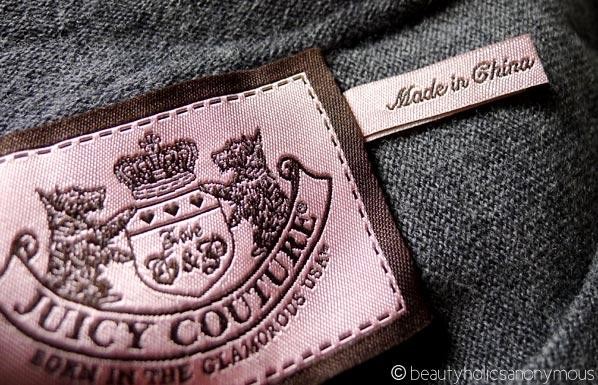
‘Made in China’ clothing sales may shrink under Pacific trade pact

Closing Bell: Saudi main index slips to close at 11,228
RIYADH: Saudi Arabia’s Tadawul All Share Index slipped on Sunday, lost 23.17 points, or 0.21 percent, to close at 11,228.64.
The total trading turnover of the benchmark index was SR2.99 billion ($797 million), as 170 of the stocks advanced and 82 retreated.
On the other hand, the Kingdom’s parallel market Nomu gained 449.38 points, or 1.90 percent, to close at 24,093.12. This comes as 43 of the stocks advanced while 27 retreated.
The MSCI Tadawul Index lost 6.07 points, or 0.40 percent, to close at 1,511.36.
The best-performing stock of the day was Obeikan Glass Co., whose share price surged 7.54 percent to SR27.66.
Other top performers included Alamar Foods Co., whose share price rose 6.80 percent to SR47.10, as well as Saudi Kayan Petrochemical Co., whose share price climbed 6.79 percent to SR5.66.
Saudi Investment Bank recorded the steepest drop, falling 3.21 percent to SR13.56.
Jahez International Co. for Information System Technology also saw its share price fall 3.15 percent to SR13.55.
Rabigh Refining and Petrochemical Co. declined 2.78 percent to SR7.34.
On the announcements front, Tanmiah Food Co. reported its annual financial results for the period ending Dec. 31. According to a Tadawul statement, the company recorded a net loss of SR18.8 million, compared with a net profit of SR95.8 million a year earlier.
The net loss was mainly due to ongoing market challenges that resulted in continued pricing pressures in fresh poultry, inflationary cost pressures, higher financing expenses, and depreciation and ramp-up costs from new facilities, partially offset by increased production volumes and cost-optimization initiatives.
Tanmiah Food Co. ended the session at SR58.20, up 3.72 percent.
United International Holding Co., also known as Tas’heel, announced its annual financial results for the period ending Dec. 31. A bourse filing showed the company recorded a net profit of SR273.64 million in 2025, up 23.05 percent from 2024, primarily driven by a 23.4 percent rise in revenues. The revenue growth helped lift gross profit by 23.7 percent.
Tas’heel ended the session at SR146.80, down 0.28 percent.


