The Gulf region is forging ahead with plans to improve its regional transportation infrastructure, with $ 121.3 billion worth of road and bridge projects already under way or in the planning phase.
Saudi Arabia is the second largest spender in the region, pledging SR 100.87 billion ($ 26.9 billion) to upgrade the country’s transport infrastructure over the next five years, while the UAE accounts for nearly half of the regional spend, with $ 58 billion worth of road and bridge projects planned or under way.
In Qatar, $ 17 billion worth of road projects are now in cruise control, as it prepares its expansive transport network ahead of the Football World Cup in 2022, while Kuwait underlines its position as one of the most active markets for road projects in the next two years, with $ 9 billion of schemes in the pipeline.
Oman and Bahrain round off the regional appetite for road and bridge spending, with $ 8 billion of projects in various stages currently ongoing in Oman, and a further $ 2 billion in Bahrain.
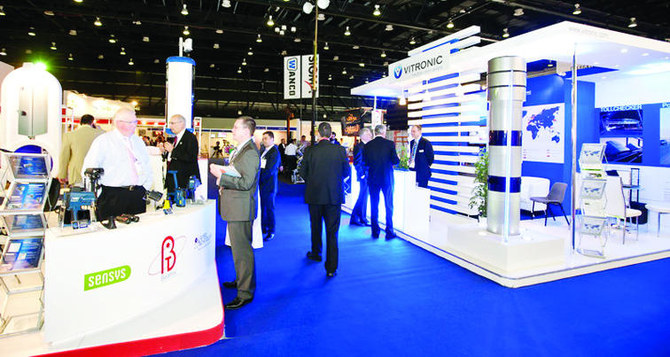
Highlighting enormous business opportunities for the regional traffic sector, the latest figures have been collated by Informa Exhibitions, organizer of Gulf Traffic, taking place from Nov. 19-21 at Abu Dhabi National Exhibition Centre (ADNEC).
Run every two years in Abu Dhabi, Gulf Traffic is the only dedicated event for the road, public transport and parking sectors, bringing together more than 100 exhibitors involved in the design, build, and maintenance of the region’s road, rail, parking and public transport projects.
Richard Pavitt, exhibition director for Gulf Traffic, said: “In line with a combined vision to improve road infrastructure and safety, GCC governments have outlined impressive plans to significantly boost investments in developing their road networks.”
“Road infrastructure development in the region will continue unabated, as governments set out to improve road safety and reduce congestion.
Gulf Traffic provides the ideal platform to showcase the latest trends and technologies that will propel the region to the forefront of road, rail, parking and public transport sectors globally.
Now in its seventh edition, Gulf Traffic is endorsed by the Chartered Institution of Highways and Transportation (CIHT), and is supported by the Abu Dhabi Police, Saaed, the Law Respect Culture Bureau, and ITS Arab.
The three-day exhibition features the Gulf Traffic Conference, addressing key traffic and transportation issues facing the Gulf region today, bringing together regional and international experts debating the latest strategies and technology in road safety and congestion management.
Gulf Traffic attracts more than 3,000 transport industry professionals and government agencies from across the Middle East.


Kingdom earmarks SR 100.87 bn for infrastructure projects
Kingdom earmarks SR 100.87 bn for infrastructure projects

Saudi POS spending jumps 28% in final week of Jan: SAMA
RIYADH: Saudi Arabia’s point-of-sale spending climbed sharply in the final week of January, rising nearly 28 percent from the previous week as consumer outlays increased across almost all sectors.
POS transactions reached SR16 billion ($4.27 billion) in the week ending Jan. 31, up 27.8 percent week on week, according to the Saudi Central Bank. Transaction volumes rose 16.5 percent to 248.8 million, reflecting stronger retail and service activity.
Spending on jewelry saw the biggest uptick at 55.5 percent to SR613.69 million, followed by laundry services which saw a 44.4 percent increase to SR62.83 million.
Expenditure on personal care rose 29.1 percent, while outlays on books and stationery increased 5.1 percent. Hotel spending climbed 7.4 percent to SR377.1 million.
Further gains were recorded across other categories. Spending in pharmacies and medical supplies rose 33.4 percent to SR259.19 million, while medical services increased 13.7 percent to SR515.44 million.

Food and beverage spending surged 38.6 percent to SR2.6 billion, accounting for the largest share of total POS value. Restaurants and cafes followed with a 20.4 percent increase to SR1.81 billion. Apparel and clothing spending rose 35.4 percent to SR1.33 billion, representing the third-largest share during the week.
The Kingdom’s key urban centers mirrored the national surge. Riyadh, which accounted for the largest share of total POS spending, saw a 22 percent rise to SR5.44 billion from SR4.46 billion the previous week. The number of transactions in the capital reached 78.6 million, up 13.8 percent week on week.
In Jeddah, transaction values increased 23.7 percent to SR2.16 billion, while Dammam reported a 22.2 percent rise to SR783.06 million.

POS data, tracked weekly by SAMA, provides an indicator of consumer spending trends and the ongoing growth of digital payments in Saudi Arabia.
The data also highlights the expanding reach of POS infrastructure, extending beyond major retail hubs to smaller cities and service sectors, supporting broader digital inclusion initiatives.
The growth of digital payment technologies aligns with Saudi Arabia’s Vision 2030 objectives, promoting electronic transactions and contributing to the Kingdom’s broader digital economy.


