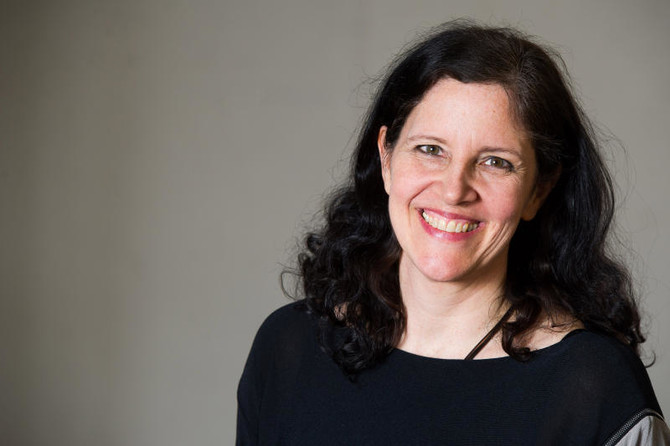
NEW YORK: US documentary maker Laura Poitras has found herself in many a risky situation in Iraq and Yemen. But she never felt in as much danger as when she was filming Edward Snowden in a Hong Kong hotel while he prepared to blow the whistle on massive secret surveillance programs run by the US government.
Those tense eight days form the centerpiece of “Citizenfour,” her account of how the former National Security Agency (NSA) contractor decided in 2013 to release to the media tens of thousands of classified documents, and the global repercussions of that action.
“I think he (Snowden) was certainly in danger and I certainly had a lot of fear. I have worked in conflict zones but I felt more fear working on this film than I did when working in Baghdad,” Poitras told Reuters.
“It was clear for me, when we started communicating over e-mail, that if he was legitimate we were going to anger some of the most powerful people in the world, and people who would try to make this stop. These are powerful institutions and they have an enormous reach,” she added.
“Citizenfour,” opens in select US movie theaters on Friday. It takes its title from the moniker Snowden used when he first approached Poitras through encrypted e-mails with a view to exposing how the NSA gathers data on the Internet activities and phone calls of millions of ordinary Americans and dozens of world leaders.
Poitras shared a Pulitzer prize for her role in publicizing that information, and “Citizenfour” is being tipped by awards watchers for an Oscar nomination in January. Variety called it “an extraordinary portrait” of Snowden, while Salon.com described it as “an urgent, gripping real-life spy story that should be seen by every American.”
TRAITOR OR HERO?
Outwardly calm in the film, Snowden becomes jumpy at an insistent hotel fire alarm. At one point, he dives under a red hood to cloak his laptop and password from any overhead cameras in the room.
When Poitras first started communicating with Snowden, now 31 and reunited in Russia with his girlfriend, she assumed he would remain anonymous, and had no expectation of filming him.
“But at some point he said ‘I don’t want to conceal my identity and I won’t be able to. They will find out.’ He had made peace with that, but he never asked to be filmed.
“He didn’t want the story to be about him. He wanted the public to understand what the government was doing. (But) I said, even if you don’t want it to be about you, the way the news works it will become about you. And you need to be able to articulate your motivations,” she said.
Poitras hopes the documentary will allow audiences to reach their own conclusions about Snowden, who is wanted in the United States on charges brought under the Espionage Act and is viewed as either a traitor or a hero.
She said the impact of his revelations was much greater than expected, and says there are more disclosures to come.
“Even though people claim we are being slow, these stories take a really long time to report and to understand the documents,” said Poitras.
She relocated from New York to Berlin while working on “Citizenfour” for fear of having her material seized.
“There is something about the way surveillance works that gets inside your head. I can’t assume my life is private any more. I go to sleep every night and I think about the NSA, and I wake up and I think about the NSA,” she said.


![]()
Filming in fear: Edward Snowden as ‘Citizenfour’
Filming in fear: Edward Snowden as ‘Citizenfour’
Latest updates


© 2026 SAUDI RESEARCH & PUBLISHING COMPANY, All Rights Reserved And subject to Terms of Use Agreement.