SEOUL: What a difference three months can make.
At the end of August, Apple Inc. seemed on top of the world. Fresh off a resounding $ 1.05 billion US legal victory over arch-foe Samsung Electronics Co. Ltd, the company was gearing up to launch the fifth iteration of its iconic iPhone. Just a week prior, its market value had surpassed Microsoft Corp’s and it became the most valuable technology company in history.
That was then. Since winning a landmark US patent infringement case in August, its stock has dived 18 percent, wiping $ 108 billion from its value. But the shares of defeated party Samsung have surged, rising 16 percent.
The dramatic reversal has sparked raging market speculation.
Some pundits say concerns are growing about the seemingly inexorable advance of Google Inc’s Android, the rival software championed by Samsung. Others say fears about higher capital gains taxes have prompted investors made rich by Apple’s stock-price growth to sell.
But it is the Apple-Samsung rivalry that defines a global mobile device industry with a growing list of struggling players. Together, the two mobile juggernauts account for more than 1 in 2 smartphones sold globally.
Analysts say Samsung is beginning to shed its aura as a “fast follower” and becoming a serious innovator, while Apple has failed to deliver on a truly seminal product in years — the oft-rumored Apple TV remains a well-honed rumor.
“Apple’s actions have started to appear as if innovation is slowing and they’re defending turf with a zero-sum market view rather than continuing to innovate as a world-beating leader,” said Tony Nash, managing director at IHS, a business information provider.
The clash of the gadget titans underscores a broader battle between Apple and Google’s increasingly popular Android mobile software, now installed on about two out of every three smartphones sold.
But some Asian analysts also point to Samsung’s very different business model as helping it get a leg up on Apple.
The iPad maker’s outsourcing structure provides fatter margins, but cedes some control to an army of suppliers, while Samsung’s competitiveness is driven by keeping most of its manufacturing in-house.
And while Apple focuses on a few high-end mobile devices, Samsung’s product breadth helps it scoop up new, less affluent users who can then be driven toward higher-margin devices, such as the phone-tablet combo Galaxy Note.
“In Asia, Samsung is still in the stronger growth position when it comes to smartphones — bringing large-screen models to the masses, re-introducing the pen with its Galaxy Note series and also, at the lower-end, with its entry-level Galaxy Y devices driving emerging markets like Indonesia and India,” said
Melissa Chau, Singapore-based research manager at IDC.
No one is writing off Apple, still the world’s most valuable listed company and expected to chalk up 27 percent revenue growth to almost $ 200 billion in fiscal 2013 — about level with Samsung.
“There have certainly been missteps at Apple ... but if we look at what’s been achieved in the year since (co-founder Steve) Job’s death, there are things that keep their competitors quaking in their boots,” said Rachel Lashford, Managing Director, Mobile and APAC, at consultancy Canalys in Singapore.
Among its strengths, she cited unprecedented demand around new launches, the expansion of content on iTunes and the Apps Store, a possible move to product updates twice a year, efforts to improve parts supply and manufacturing, the dogged legal pursuit of Samsung and cash reserves of more than $ 120 billion.
Its gross margins of above 40 percent are double Samsung’s.
But the South Korean company is now beginning to generate some buzz with recent improvements in its line-up. This week, news emerged that it is likely accelerating the launch of its next-generation flagship Galaxy smartphone — which sports an unbreakable screen.
Codenamed “Project J,” the Galaxy S IV could be released as early as March or April, according to leading industry analysts and tech blogs. With smartphones increasingly looking alike, an unbreakable screen could be a big selling point for the Galaxy over the iPhone.
“Samsung’s richer product line-up and vertically integrated supply structure are among its strongest advantages over Apple’s simpler product range and strength in software,” said Kim Young-chan, an analyst at Shinhan Investment Corp. in Seoul.
Samsung is estimated to have shipped close to 56 million smartphones in July-September, more than double the number of iPhones, and analysts expect it to sell around 30 million more smartphones than Apple this quarter.
The South Korean firm’s shift comes as its Cupertino, California-based rival suffered from some missteps in its iPhone 5 mapping app, supply constraints that have prompted delivery delays and allegations of employee abuse at supplier plants in China.
Charles Moon, Singapore-based principal analyst at Informa Telecoms & Media, a research consultancy, sees these as a sign Apple is adjusting to maturing markets.
“A completely offensive strategy with uncontested gains are a thing of the past,” he said. “Apple is not positioned well at the moment following a couple of disappointing quarters and continued negative news flow.
“Regardless of what happens (in the court ruling), Samsung and Android are winning where it counts — outside the courtroom — and this is likely to go on unless Apple can continue to reinvent itself. Very difficult, considering how far they’ve come, but not impossible. They’ve done it before,” he added.
In the key battleground of China — the world’s No. 1 cellphone market — Samsung and Android devices in general appear to be making headway against pricier Apple gadgets.
Third-quarter data shows Apple slid to sixth place in China, its largest market after the US. Samsung kept top slot, according to research firm IDC, which estimated the Chinese smartphone market at a record of more than 60 million in July-September.
IDC analysts forecast a rebound for Apple with this month’s iPhone 5 launch there, but it has so far failed to crack the country’s largest carrier by far, China Mobile Ltd.
Apple’s “loss of market share and of opportunities like a stalled China Mobile agreement are notable and, potentially, show some strengths of an integrated hardware-led model of players like Samsung against the comprehensive hardware-software ecosystem model of Apple,” said Nash at IHS.
“This competition is far from over and my hope is that it forces very strong and continued innovation from Apple, Samsung and others.”


Apple and Samsung: A defining rivalry in a changed market

Apple and Samsung: A defining rivalry in a changed market
The Family Office to host global investment summit in Saudi Arabia
RIYADH: The Family Office, one of the Gulf’s leading wealth management firms, will host its exclusive investment summit, “Investing Is a Sea,” from Jan. 29 to 31 on Shura Island along Saudi Arabia’s Red Sea coast.
The event comes as part of the Kingdom’s broader Vision 2030 initiative, reflecting efforts to position Saudi Arabia as a global hub for investment dialogue and strategic economic development.
The summit is designed to offer participants an immersive environment for exploring global investment trends and assessing emerging opportunities and challenges in a rapidly changing financial landscape.
Discussions will cover key themes including shifts in the global economy, the role of private markets in portfolio management, long-term investment strategies, and the transformative impact of artificial intelligence and advanced technologies on investment decision-making and risk management, according to a press release issued on Sunday.
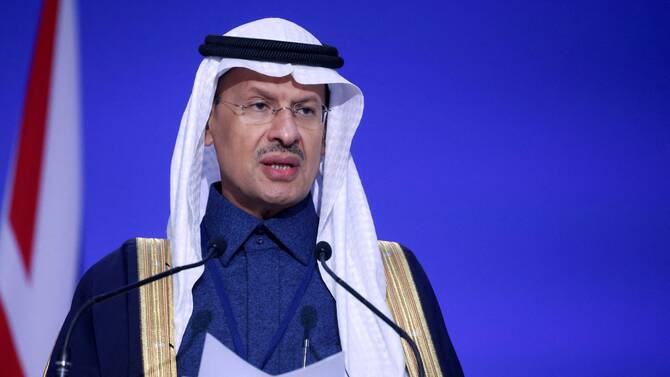
Abdulmohsin Al-Omran, founder and CEO of The Family Office, will deliver the opening remarks, with keynote addresses from Saudi Energy Minister Prince Abdulaziz bin Salman and Prince Turki Al-Faisal, chairman of the King Faisal Center for Research and Islamic Studies.
The press release said the event reflects the firm’s commitment to institutional discipline, selective investment strategies, and long-term planning that anticipates economic cycles.
The summit will bring together prominent international and regional figures, including former UK Treasury Commercial Secretary Lord Jim O’Neill, Mohamed El-Erian, chairman of Gramercy Fund Management, Abdulrahman Al-Rashed, chairman of the editorial board at Al Arabiya, Lebanese Minister of Economy and Trade Dr. Amer Bisat, economist Nouriel Roubini of NYU Stern School of Business, Naim Yazbeck, president of Microsoft Middle East and Africa, John Pagano, CEO of Red Sea Global, Dr. Anne-Marie Imafidon, MBE, co-founder of Stemettes, SRMG CEO Jomana R. Alrashed and other leaders in finance, technology, and investment.
With offices in Bahrain, Dubai, Riyadh, and Kuwait, and through its Zurich-based sister company Petiole Asset Management AG with a presence in New York and Hong Kong, The Family Office has established a reputation for combining institutional rigor with innovative, long-term investment strategies.
The “Investing Is a Sea” summit underscores Saudi Arabia’s growing role as a global center for financial dialogue and strategic investment, reinforcing the Kingdom’s Vision 2030 objective of fostering economic diversification and sustainable development.


