Sheany Yasuko Lai JAKARTA
Indonesia is seeking a free trade agreement with Gulf Cooperation Council countries to advance technology transfer, strengthen food security and build supply-chain resilience, its trade ministry says, as negotiations on the pact are expected to conclude by the end of 2026.
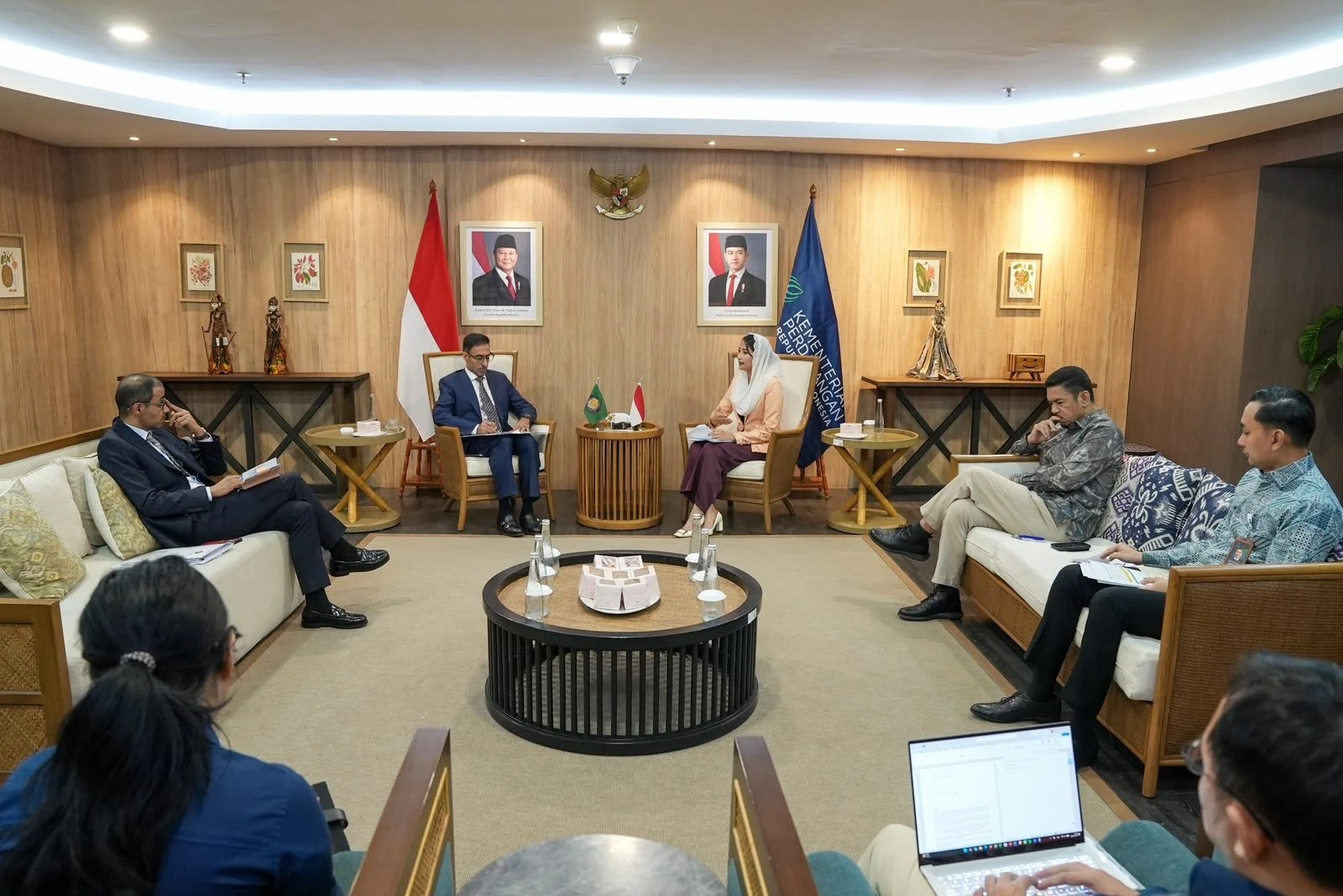
Jakarta and the GCC launched talks for the FTA in July 2024. Following the latest meetings in July, Indonesia’s Deputy Trade Minister Roro Esti Widya Putri said nearly 90 percent of the deal has been completed, reflecting “the strong commitment” of both negotiating teams.
“We are doing our best to conclude it substantially, hopefully by the end of 2026,” Johni Martha, director general of International Trade Negotiations at the Ministry of Trade, told Arab News.
“We want the Indonesia-GCC FTA to support investment, technology transfer, supply-chain resilience, food security, energy transition and industrial development.”
Indonesia already has a Comprehensive Economic Partnership Agreement with the UAE and facilitating greater trade flows with other members of the bloc, especially Saudi Arabia, is projected by the Indonesian government to increase the Southeast Asian nation’s total exports by more than 17 percent.
“Closer trade cooperation with the Gulf is strategically important because the GCC is not only a major trading partner but also an increasingly important investment, logistics, and economic hub connecting Asia, Europe, and Africa ... At the same time, Indonesia can offer the GCC a large, dynamic market and a platform to expand economic activities into ASEAN,” Martha said.
“We see strong potential because Indonesia is a market of around 285 million people, while the GCC represents a highly integrated market with substantial purchasing power and significant investment capacity. The agreement can therefore create a much broader economic partnership beyond conventional trade in goods.”
Indonesia’s total trade with GCC countries was valued at $17 billion out of a total $524 billion in 2025. The main export commodities to the Gulf region included motor vehicles and automotive components, palm oil, and jewelry.
Immediate gains from the deal are expected to be seen in the food and food security sectors, as Indonesia would play a bigger role in the GCC’s food supply chains. Being the biggest Muslim-majority country with a strong agricultural and food-processing base, it is also a leading producer of halal-certified food products.
In the longer term, partnerships are expected in investment and industrial cooperation — especially green energy and energy transition, where GCC has significant expertise.
“GCC countries have strong capital and investment capabilities, while Indonesia offers a large domestic market, manufacturing capacity, abundant renewable energy potential, and growing downstream industries,” Martha said.
“We would like to connect these strengths by promoting investment in renewable energy, green hydrogen and ammonia, green industrial development, and other clean energy solutions, while strengthening industrial value chains and creating mutually beneficial opportunities for both sides.”
Indonesia seeks GCC trade deal for tech transfer, supply chain resilience