SANAA: The King Salman Center for Relief and Humanitarian Works, UAE Red Crescent Society and the Khalifa bin Zayed Al-Nahyan Foundation for Humanitarian Assistance have sent urgent humanitarian assistance to the people of Socotra, which took the brunt of the cyclone “Chapala.”
Humanitarian workers coordinated an airlift of relief supplies, including foodstuff, medicines, blankets and clothing, to people in the provinces of Al-Mahra, Hadramout, Shaboua and the eastern part of the Socotra archipelago.
The King Salman center initiated humanitarian assistance efforts following a warning by the UN’s World Meteorological Organization about the movement of the hurricane toward Oman and Yemen.
The center has been working in coordination with the legitimate Yemeni government and global relief organizations in the war-torn country to deal with any urgent humanitarian cases.
The cyclone made landfall on Yemen’s Arabian Sea coast on Tuesday, flooding the country’s fifth-largest city Mukalla and sending thousands of people fleeing for shelter.
In Mukalla, whose 300,000 people are largely ruled by Al-Qaeda fighters since the army withdrew in April, water submerged cars on city streets and caused dozens of families to flee to a hospital for fear of rock slides.
Residents said the seafront promenade and many homes had been destroyed by the cyclone and officials in the dry hinterland province of Shabwa said about 6,000 people had moved to higher ground.
In a statement to a local paper, Minister of Fisheries and member of the central operations room at the Yemeni government, set up to face the effects of Chapala, Fahad Kafayen, said the cyclone hit Socotra around 10 a.m. on Sunday and continued until 1 a.m. on Monday, affecting 60 percent of the land in Socotra and causing an interruption of communications between the operations room and areas on the island.
He said efforts were under way to communicate with the authorities concerned in the affected territories.
“We have not yet received information about any casualties, but 3,000 families have been displaced, comprising about 20,000 people. There has been significant damage to homes, livestock, trees and stretches of agricultural land,” he said, noting that the operations room has sent an initial amount of $100,000 for transfer and food expenses.
According to President of the Supervisory and Popular Support Committee at the operations room in Hadramout, Salem bin Al-Sheikh Abu Bakr, the cyclone caused abnormally high sea levels, in turn affecting cities on the coast of Hadramout, particularly Al-Raida and Qasaer.


![]()
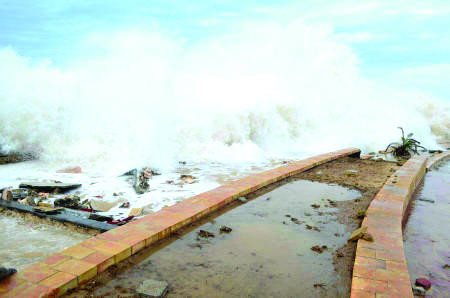
KSA, UAE send urgent assistance to Socotra
KSA, UAE send urgent assistance to Socotra
Latest updates


© 2026 SAUDI RESEARCH & PUBLISHING COMPANY, All Rights Reserved And subject to Terms of Use Agreement.