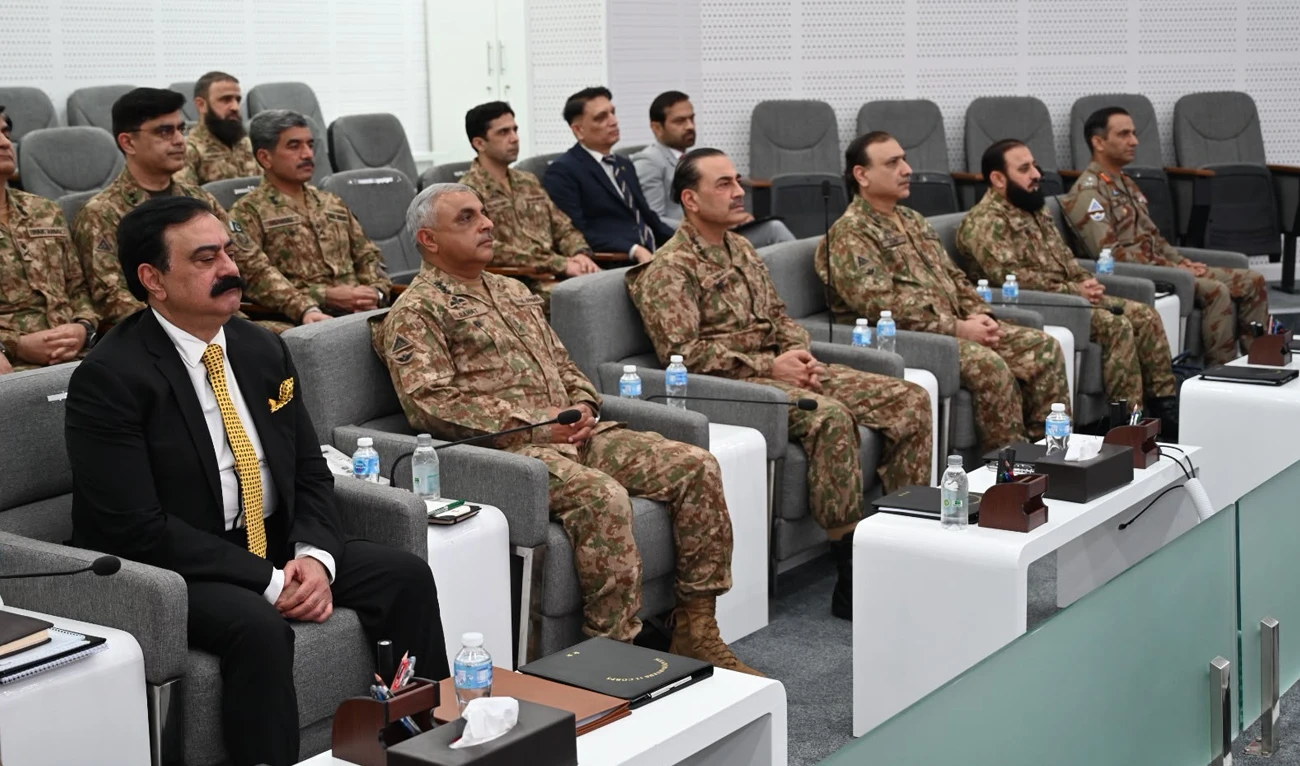
- Munir reviews security situation, operational preparedness during visit to Quetta Garrison
- Army chief says stable environment key to development, economic opportunities in province
ISLAMABAD: Chief of Army Staff (COAS) and Chief of Defense Forces (CDF) Field Marshal Asim Munir called for closer coordination between law enforcement agencies and other state institutions in Balochistan on Saturday, a day after the military said it had killed 48 militants in operations across the insurgency-hit southwestern province.
Munir made the remarks during a visit to the Quetta Garrison, where he was briefed on the security situation, operational preparedness and measures to maintain stability in Balochistan, according to the military’s media wing, the Inter-Services Public Relations (ISPR).
The visit comes amid an intensified counterterrorism campaign following a sharp rise in militant violence in the province.
“COAS & CDF appreciated the high standards of professionalism, operational readiness and selfless commitment displayed by troops,” ISPR said in a statement. “He underscored importance of continued coordination among Law Enforcement Agencies and other state institutions to consolidate peace and maintain an environment conducive to sustained economic activity and development.”
Munir said that the peace, prosperity and well-being of the people of Balochistan were central to the efforts of the state, adding that a stable and secure environment would continue to facilitate development initiatives, economic opportunities and improved prospects for the people of the province.
The military said a day earlier security forces had killed 48 militants across Balochistan over the preceding 72 hours.
The operations followed a sustained escalation of violence in the province, with Prime Minister Shehbaz Sharif saying in a statement that more than 1,188 militants had been killed in Balochistan since the beginning of the year.
Pakistan’s largest but least populated province has faced a decades-old separatist insurgency led by groups like the Baloch Liberation Army. Separatists accuse Pakistani state institutions of exploiting the province’s mineral and gas resources while leaving its population impoverished.
The government rejects accusations that Balochistan has been deliberately deprived, pointing to development spending, infrastructure projects and investment under the multibillion-dollar China-Pakistan Economic Corridor. It says militant attacks on workers from other provinces and infrastructure have themselves impeded economic development.