DECEMBER 8 marks Constitution Day of Uzbekistan. The Parliament of Uzbekistan adopted on Dec. 8, 1992, the Basic Law of the nation — the constitution of the sovereign Uzbekistan. On the same day Uzbek President Islam Karimov signed the laws ‘On the Adoption of the Constitution of the Republic of Uzbekistan’, ‘On Declaring the Constitution Day of the Republic of Uzbekistan as a National Holiday’, and ‘On the Order of Enforcement of the Constitution’.
Twenty-two years have passed since that time. During this period democracy has become stronger in the country. The Basic Law has been, in fact, a policy document that created all the necessary conditions for the flourishing of the open civil society where people, their rights and freedom are the main priority. These principles were enshrined in the constitution which states that “democracy in the Republic of Uzbekistan shall rest on the principles common to all mankind, according to which the ultimate value is the human being, his/her life, freedom, honor, dignity, and other inalienable rights.”
At the dawn of its independence the young state faced a difficult task — to develop and to adopt a constitution that would correspond to the new realities. However, during that time, just as now, the head of state had a clear political vision according to which he built his strategy. He succinctly expressed this idea in his book ‘Uzbekistan on the Threshold of Independence’.
He writes “the main thing for us is always serve the interests of the people, the interests of the country, to create decent living conditions for all who live on this land. Our wealth, our opportunities, our people with ancient traditions and culture that gave the world brilliant thinkers and great scientists and will have all the necessary conditions so that every family and every person on this land live in happiness.”
The Basic Law was developed according to the traditions, geographic, ethnic, economic, political and historical features. It was a kind of a ‘regulatory element’ and a guarantor of all spheres of life of the people and the state.
“The whole lot of reforms and transformation in the life of every person in Uzbekistan and the nation in general, coupled with the confident advancement of the country toward progress and prosperity, are the result of rigorous adherence to the norms and requirements fixed in the constitution,” said President Islam Karimov during a speech at the 20th anniversary of the constitution.
The constitution became the basis for Uzbekistan’s unique model of socio-economic development. It guarantees social stability, peace and harmony in the country. With its adoption country’s political process received new realities such as a multi-party system, free elections, liberalization. The constitution created a stable political system, bicameral professional parliament, and a holistic legal framework that regulates the life of the society and the state.
However, there are always new requirements and criteria for the development of the country. Along with the time the constitution ‘matures’ and ‘accumulates’ new provisions in tune with the relevant strategic requirements.
The constitution of Uzbekistan has been amended six times since its first adoption. But the basic fundamental provisions of the 1992 constitution have been retained as they are topical today.
We must pay tribute to the fact that the constitution’s adoption predestined the future of Uzbekistan. Incorporating the fundamental provisions of the Universal Declaration of Human Rights and other fundamental international documents, our constitution made the rights, interests and freedoms of people pre-eminent over state interest. The Basic Law defined creating decent living conditions for the people to be its core essence. The constitution proclaimed the principles of social justice. Moreover, the constitution enshrined the basic principle of the rule of law; it declared all citizens to be equal before the law.
The constitution supports the principle of the separation of power between the legislative, executive and judicial authorities. Legal frameworks to strengthen the independence of the branches of government have been created in Uzbekistan so to guarantee their independent development. The Constitution created effective mechanisms of checks and balances which is the most fundamental component of a democratic regime.
Thanks to its constitution, Uzbekistan established a strong legal framework for the development of various institutions of civil society, multi-party system and free activity of political parties. The constitution ensured the revival of national traditions, language, values and culture of the people. It created conditions for moral perfection and harmonious development of human kind.
And today, analyzing the chosen strategy, we can say that the ultimate goals of political reforms, economic modernization, humanitarian and spiritual development which radically changed Uzbekistan’s image and place in the international community were correct.
Results achieved in state-building and in socio-economic reforms were achieved due to the laws and programs adopted in accordance with the basic principles and norms of the constitution. The young country has made great strides which are widely recognized in the world. These facts thereby reaffirm the correctness of the path chosen by the country for its independent development.
Speaking of absolute importance and significance of the constitution, we should not forget that the Day of the Constitution is also a great national holiday. Meetings, discussions and various cultural and educational events devoted to the 21st anniversary of the constitution are held across the country.
During these events, the focus is given to propagate the essence and meaning of the Basic Law and to improve legal awareness of the people. Rights and duties of the people enshrined in the constitution are being fully explained during the meetings organized in enterprises, neighborhoods, schools etc. To facilitate this process President of Uzbekistan issued ordinance ‘On the Arrangement of Study of the Constitution of the Republic of Uzbekistan’ dated Jan. 4, 2001.
Due to this document the country created an effective system for a deeper study and broad explanation to youth the content and meaning of each section, chapter and article of the constitution.
There is another important thing about the Constitution Day. These days, the government outlines priority areas for further development of the country, reflecting the dreams and aspirations of the nation. At the initiative of the head of state, Year 2014 was declared the Year of Healthy Child.


22 years on: Uzbeks continue their journey toward progress
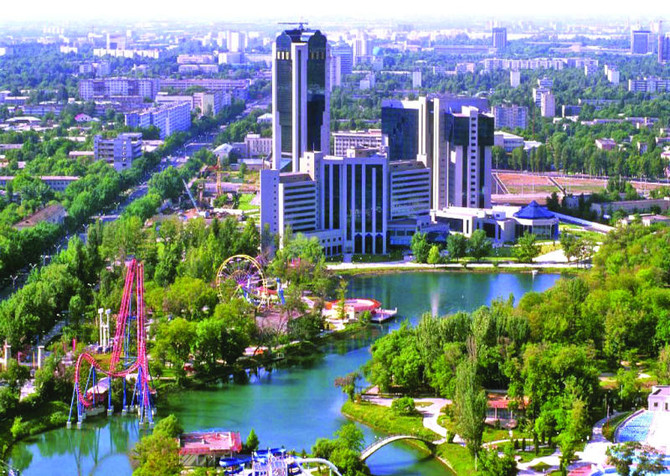
22 years on: Uzbeks continue their journey toward progress

Filipinos master disaster readiness, one roll of the dice at a time
- In a library in the Philippines, a dice rattles on the surface of a board before coming to a stop, putting one of its players straight into the path of a powerful typhoon
MANILA: In a library in the Philippines, a dice rattles on the surface of a board before coming to a stop, putting one of its players straight into the path of a powerful typhoon.
The teenagers huddled around the table leap into action, shouting instructions and acting out the correct strategies for just one of the potential catastrophes laid out in the board game called Master of Disaster.
With fewer than half of Filipinos estimated to have undertaken disaster drills or to own a first-aid kit, the game aims to boost lagging preparedness in a country ranked the most disaster-prone on earth for four years running.
“(It) features disasters we’ve been experiencing in real life for the past few months and years,” 17-year-old Ansherina Agasen told AFP, noting that flooding routinely upends life in her hometown of Valenzuela, north of Manila.
Sitting in the arc of intense seismic activity called the “Pacific Ring of Fire,” the Philippines endures daily earthquakes and is hit by an average of 20 typhoons each year.
In November, back-to-back typhoons drove flooding that killed nearly 300 people in the archipelago nation, while a 6.9-magnitude quake in late September toppled buildings and killed 79 people around the city of Cebu.
“We realized that a lot of loss of lives and destruction of property could have been avoided if people knew about basic concepts related to disaster preparedness,” Francis Macatulad, one of the game’s developers, told AFP of its inception.
The Asia Society for Social Improvement and Sustainable Transformation (ASSIST), where Macatulad heads business development, first dreamt up the game in 2013, after Super Typhoon Haiyan ravaged the central Philippines and left thousands dead.
Launched six years later, Master of Disaster has been updated this year to address more events exacerbated by human-driven climate change, such as landslides, drought and heatwaves.
More than 10,000 editions of the game, aimed at players as young as nine years old, have been distributed across the archipelago nation.
“The youth are very essential in creating this disaster resiliency mindset,” Macatulad said.
‘Keeps on getting worse’
While the Philippines has introduced disaster readiness training into its K-12 curriculum, Master of Disaster is providing a jolt of innovation, Bianca Canlas of the Department of Science and Technology (DOST) told AFP.
“It’s important that it’s tactile, something that can be touched and can be seen by the eyes of the youth so they can have engagement with each other,” she said of the game.
Players roll a dice to move their pawns across the board, with each landing spot corresponding to cards containing questions or instructions to act out disaster-specific responses.
When a player is unable to fulfil a task, another can “save” them and receive a “hero token” — tallied at the end to determine a winner.
At least 27,500 deaths and economic losses of $35 billion have been attributed to extreme weather events in the past two decades, according to the 2026 Climate Risk Index.
“It just keeps on getting worse,” Canlas said, noting the lives lost in recent months.
The government is now determining if it will throw its weight behind the distribution of the game, with the sessions in Valenzuela City serving as a pilot to assess whether players find it engaging and informative.
While conceding the evidence was so far anecdotal, ASSIST’s Macatulad said he believed the game was bringing a “significant” improvement in its players’ disaster preparedness knowledge.
“Disaster is not picky. It affects from north to south. So we would like to expand this further,” Macatulad said, adding that poor communities “most vulnerable to the effects of climate change” were the priority.
“Disasters can happen to anyone,” Agasen, the teen, told AFP as the game broke up.
“As a young person, I can share the knowledge I’ve gained... with my classmates at school, with people at home, and those I’ll meet in the future.”


