JEDDAH: Saudi scholarship students in the US have taken up the cudgels against attempts to distort the image of Islam and Muslims by getting involved in social and charity work.
“We need to participate in the American community service to project the true picture of Saudi society,” said Ph.D. scholarship student Yusuf bin Ali Al-Rajhi.
He took advantage of the summer vacation to work for a New York charity to take food from restaurants to the houses of the homeless and elderly, and then take the garbage and waste from there to the allocated dumping sites.
Yusuf and his other compatriots in the US drew inspiration from a chapter entitled “An Ambitious Homeland” in Saudi Vision 2030 that says: “We make an instrumental and substantial contribution to charity work locally, regionally and globally.”
With the support of the Saudi cultural mission and the student clubs, the students are making a significant contribution to American society through their volunteer work.
Mohammed bin Abdullah Al-Issa, the Saudi cultural attaché in the US, said: “Participating in voluntary work is the road to success. We always encourage our children here studying on scholarships to participate in all kinds of voluntary work.
He said there are more than 300 Saudi students’ clubs in the US in addition to a number of charity and social organizations that reflect the true image of Saudi society.
Omar Al-Awali, a scholarship student, is involved in voluntary work since 2013 in the Boston Rescue Mission society, which is involved in the rehabilitation of people suffering from difficult living conditions.
He helps in setting up training courses and programs to prepare these people to enter the labor market. He is the first Saudi person to work for this charity.
Another student, Malak Al-Daoud, is the first Saudi volunteer as a broadcaster for a talk show, “Talk US,” in Indianapolis. She said her goal is to develop herself and reflect the true picture of her homeland and give a good image of the Muslim community in general and Saudi Arabia in particular to the American society.


![]()
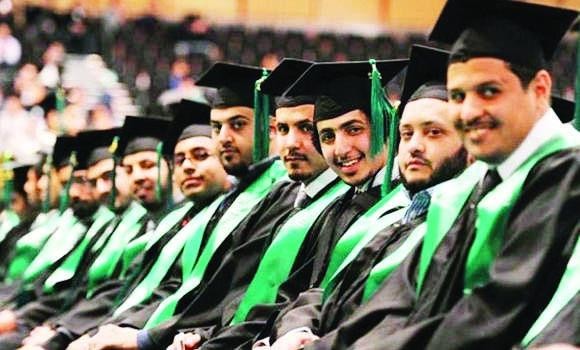
Scholarship students in US make a mark with social work
Scholarship students in US make a mark with social work
Latest updates


© 2026 SAUDI RESEARCH & PUBLISHING COMPANY, All Rights Reserved And subject to Terms of Use Agreement.