JEDDAH: The Saudi Customs department, known in the region for foiling attempts to smuggle in drugs, ranked first among the World Customs Organization in the Middle East in confiscating items violating intellectual property rights, an official has said.
The number of smuggling attempts in member countries of the organization has reached 14,815 so far this year, said Faisal Al-Majeish, director of the regional office of the organization.
The regional office has 10 Arab members — Saudi Arabia, Jordan, the United Arab Emirates, Bahrain, Qatar, Kuwait, Yemen, Oman, Lebanon and Syria.
Al-Majeish said intellectual property violations topped the list of violations registered by the Customs Enforcement Network, CEN, followed by alcohol and drugs.
“The World Customs Organization strives to fight violations in all regions affiliated with it; the regional office offers help to customs bodies in order to detect various customs violations such as smuggling of antiquities, money laundering, human trafficking, smuggling of drugs and other banned substances,” said Al-Majeish.
Details like pictures of confiscated materials and methods of smuggling are registered on the CEN system. The regional office analyzes the data to find out new or abnormal smuggling methods and other useful information. New findings are shared through news bulletins or reports between local offices in member countries.
Al-Majeish said the regional office, as a representative of the World Customs Organization, coordinates with the organization’s secretariat to facilitate the work of member countries in exchanging information on customs violations.
Al-Majeish said the geographical location of the Middle East and the increased smuggling of drugs called for the setting up of a regional information network to guarantee the highest levels of efficiency in the fight against drugs.
All countries of the region participate actively to support the regional office to facilitate the gathering, coordination and analysis of information among local member countries and the rest of bodies and directorates related to fighting smuggling on the local and international levels.
Al-Majeish confirmed that the office achieved many goals in the field of analytical studies related to confiscated materials in the Middle East and other regions. He pointed out that some studies are done through the participation of two or more regional offices.
The office focuses on the implementation and activation of the best practices used on the regional and international levels in the field of conducting studies and analyzing results.
Al-Majeish said the regional office issues two types of warning bulletins. “Some are related to information about shipments that haven’t reached the target country at the time of preparing the bulletin, and are called news bulletins. These are used when there are suspicions about the existence of customs violations. Customs bodies in the Middle East exchange these bulletins, which helps in foiling smuggling attempts,” he added.


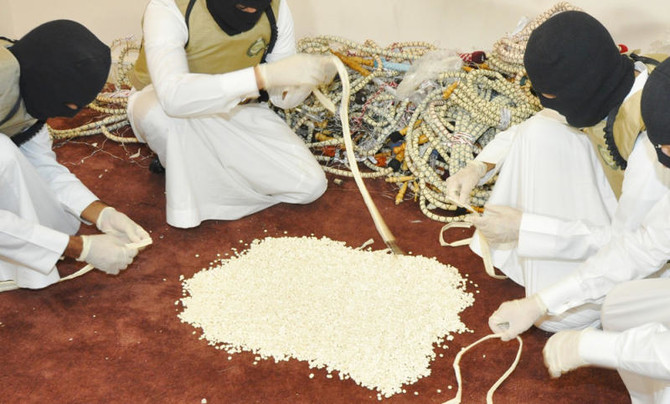
Another feather in the cap for Saudi Customs
Another feather in the cap for Saudi Customs

Saudi Arabia condemns RSF attacks on hospital, aid convoy and civilians in Sudan
- The strikes on Al-Kuweik Military Hospital and relief facilities in North and South Kordofan reportedly killed dozens of unarmed civilians
RIYADH: Saudi Arabia has strongly condemned a series of attacks by Sudan’s Rapid Support Forces on a military hospital, a World Food Programme aid convoy and a bus carrying displaced civilians, the Kingdom’s Foreign Ministry said on Saturday.
The strikes on Al-Kuweik Military Hospital and relief facilities in North and South Kordofan reportedly killed dozens of unarmed civilians, including women and children, and damaged humanitarian convoys and infrastructure.
In a statement carried by the Saudi Press Agency, the ministry described the attacks as unjustifiable and in clear violation of international humanitarian law and established norms protecting civilians and aid workers.
Saudi Arabia called on the RSF to immediately halt the violations and to allow the safe delivery of humanitarian assistance, stressing the group’s obligations under international law and the Jeddah Declaration on the Protection of Civilians in Sudan, signed in May 2023.
The Kingdom also reiterated its support for Sudan’s unity, security and stability, and underscored the need to preserve the country’s legitimate institutions, SPA added.
It warned against foreign interference and the continued flow of illegal weapons, mercenaries and foreign fighters, saying such actions were prolonging the conflict and deepening the suffering of the Sudanese people, despite claims by some parties that they support a political solution.


