Women remain acutely underrepresented in UN-brokered peace talks despite the fact that sixteen years ago their participation was recognized in a UN Security Council Resolution (1325) as being of vital importance.
For Haifa Fahoum Al-Kaylani, Founder Chair of the Arab International Women’s Forum, and Ibrahim Gambari, former Foreign Affairs Minister of Nigeria and UN Under-Secretary-General for Political Affairs, this is a truly lamentable state of affairs. Both serve on the Commission on Global Justice, Security & Governance whose report ‘Confronting the Crisis of Global Governance’ reveals gender inequality as a fundamental global governance challenge in conflict-affected environments, where, compared to men, women suffer harm differently and disproportionately.
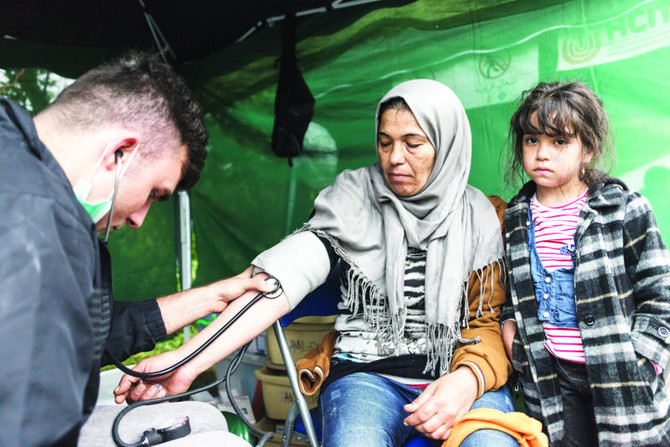
They note that all too often women, especially in violent conflict and post-conflict settings, suffer serious physical and mental harm, lack access to critical services and struggle to achieve dignified livelihoods and exert decision-making power.
They point to research carried out by UNIFEM/UN Women revealing that, in fourteen cases since 2000, women’s participation in peace negotiation delegations averaged less than eight percent, and less than three percent of their signatories were women.
Today, only two of twenty-two UN Under-Secretaries-General are women, and in UN Missions, women make up less than one-third of the international civilian staff, 21 percent of senior professional levels, and only 18 percent of national staff. Moreover, the recent Global Study on the Implementation of United Nations Security Council Resolution 1325 found that only 54 countries have formulated National Action Plans for Resolution 1325.
In the UN Secretary General Ban Ki-moon’s 2014 report on Women, Peace and Security he expressed concerns about the plight of women. He wrote: “I am deeply troubled by continuing and emerging trends and patterns of abuse, violence and discrimination against women and girls in many conflict and post-conflict settings, often as deliberate campaigns against women’s rights. In Iraq and the Syrian Arab Republic, women have been directly targeted in the outbreak of violence, with reports of rape, forced marriage, forced prostitution, restrictions of movement, enforcement of dress codes and stoning of women for alleged adultery in areas controlled by militants from the Daesh. The escalation of violence in Iraq in 2014 includes the mass killing in Baghdad of women alleged to be sex workers and the targeting and mass abduction of minority women.
“In the Central African Republic and South Sudan, women have been disproportionately affected by mass displacement. In some areas of South Sudan, rates of female-headed households are close to 60 percent and women and girls face significant security risks, including in sites for the protection of civilians. In the eastern Democratic Republic of the Congo, there are continued concerns regarding the presence of armed groups, the increased number of internally displaced persons and refugees, who are mostly women and children, and continued incidents of sexual violence. In Afghanistan, the number of women and girls killed or injured increased by 61 percent in the first half of 2013, as compared with 2012, and targeted killings or attacks against women in public roles continued, including the killings of two high-ranking women police officers, Islam Bibi and Lt. Negar, in the southern province of Helmand. I call upon all parties to cease such acts immediately and upon relevant stakeholders to respond to all reports and ensure the physical security, safety, protection and enforcement of the rights of women and girls. The protection of civilians is a legal obligation. Members of security forces, local militias or other armed groups who have committed violations of international humanitarian or human rights law must be held to account.
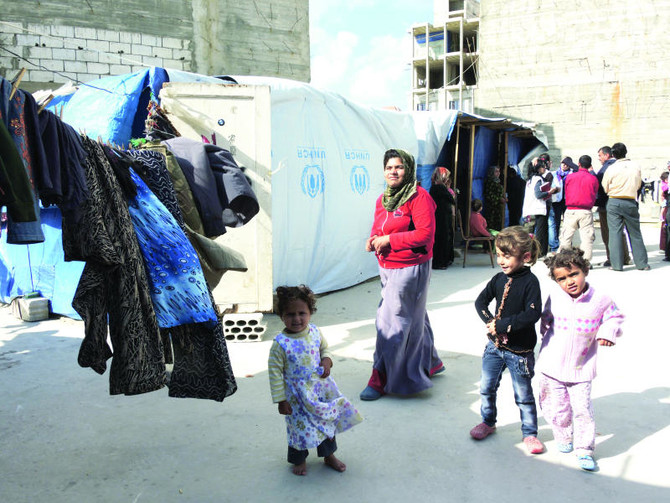
“The immense human and financial cost of conflict is starkly visible in the situation of refugees, asylum seekers and internally displaced persons. The Global Trends report, produced annually by the Office of the United Nations High Commissioner for Refugees (UNHCR), shows that 51.2 million people were forcibly displaced at the end of 2013, 6 million more than the 45.2 million reported in 2012. The increase was driven mainly by the situation in the Syrian Arab Republic, which, by the end of 2013, had forced 2.5 million people to become refugees and left 6.5 million people internally displaced — most of whom are residing in urban and peri-urban areas rather than camps. In total, 56 percent of the world’s refugees originate from Afghanistan, Somalia and the Syrian Arab Republic alone. Major new displacements were also seen in Africa, notably in the Central African Republic and South Sudan. The data were gathered before the renewed conflict in Iraq and the intensification of violence between Israel and the State of Palestine, which resulted in massive new displacements. Increased displacement has also been reported in Ukraine. I call upon all actors to take immediate steps to ensure that forcibly displaced populations are protected from violence, humanitarian access is granted and responses are scaled up to deliver gender-responsive services.”
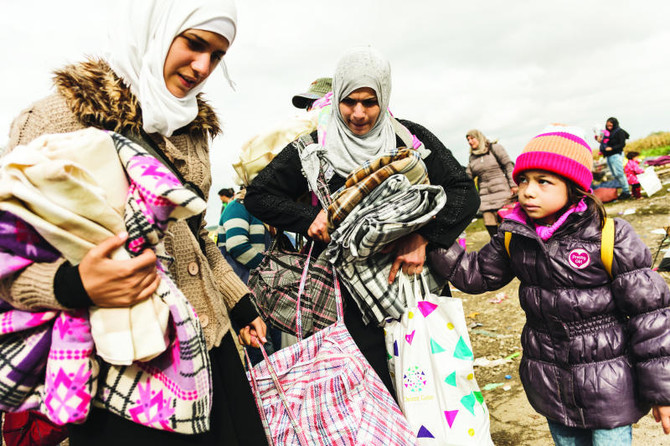
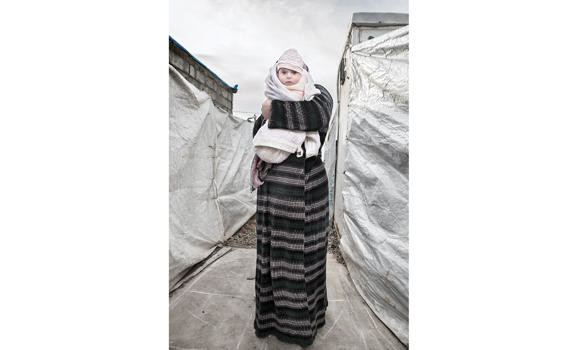
Today, we continue to witness the mass movement of families from war torn countries with many losing their lives in their attempts to find safety.
To ensure that women’s voices are heard and decision-makers made more accountable, particularly in fragile states, the Commission on Global Justice, Security & Governance proposes several innovations to advance a vision of “just security.”
First, strengthen the role of women in peace processes. Global and regional institutions should appoint women to prominent peacemaking roles. International actors that support peace processes should demand women’s inclusion in negotiating teams and as signatories to ensure that their experiences and priorities are represented.
Second, employ National Action Plans for Resolution 1325 as an effective tool of foreign policy. Incorporating such Plans into a country’s foreign policy can secure and sustain political will and resources — two critical components for ensuring that a Plan’s objectives are met and leaders held accountable.
Third, tackle the socio-economic factors that disadvantage women’s status in society. The Commission recognizes several such factors, including the lack of access to education, reproductive health services, and decent work opportunities in the formal economy.
Finally, the Commission strongly endorses the UN’s goal of empowering women to become national and world leaders in the 21st century. The Campaign to Elect a Woman UN Secretary General, organized by a group of female scholars and civil society leaders, is cited as an excellent example toward achieving this goal.
Current possible candidates to succeed Ban Ki-moon include UNESCO’s Director-General Irina Bokova, UNDP’s Administrator Helen Clark, and former Special Adviser to the UN Secretary-General Amina Mohammed. All possess high-level qualifications and proven leadership skills.
It is hoped that by adopting such measures, the formidable political, socio-cultural and economic obstacles that prevent the participation of women in peace efforts, whether as peacemakers or as citizens, can be overcome.


![]()
![]()
![]()
![]()
![]()
![]()
![]()
Women’s voices need to be heard in global peace talks



Women’s voices need to be heard in global peace talks
Latest updates


© 2026 SAUDI RESEARCH & PUBLISHING COMPANY, All Rights Reserved And subject to Terms of Use Agreement.