JEDDAH: Several Saudi men and women working as models want fellow citizens to understand that they are simply trying to earn a living, and that their jobs are not unlawful.
Wedyan Khaled, a woman model, said she had to face several problems because many people are opposed to what she is doing. “I have paid a high price. My fiancé left me the moment he heard I was a model,” she was quoted as saying recently in a local publication.
Khaled said she cannot understand why people react in this manner because she models abayas and is constantly surrounded by her women friends and colleagues, with no men around.
Two models, Samar Khayat and Raghdan Al-Ghamdi, said they have also faced several problems. “It is not easy for a woman model to find a husband, not to mention the negative manner in which society views the modeling profession. This is so even though fashion shows are in closed areas with only women allowed entry,” said Al-Ghamdi.
Mohammad Fuhmi, a model, said: “My work has been very successful so far. I first focused on my studies and got a master’s degree. Then I dedicated myself to modeling. I love this profession very much and I cannot imagine doing anything else.”
However, he said that models face many problems including companies refusing to pay them properly. This is because there are no laws regulating the industry, he said.
Mansour Jamal, a model, said there is an urgent need for laws to oversee the industry so that people are not exploited by individuals and companies. However, in response to a question on how he views women models, he said: “To be honest, I will never marry a model.”
Mohammad Fahmi, a fellow model, said he would under certain conditions. “If the woman only models decent clothes, in line with Arab tradition, I would probably marry her,” he said.
Fayez Al-Qahtani, a fashion photographer, said: “There is no doubt that people working in the modeling business face many difficulties. I have been detained and my camera was confiscated many times. But the biggest problem has been people denying us our rights. There is no regulatory body overseeing this work.”
Umaimah Azoz, a businesswoman and head of the committee for fashion design at the Jeddah Chamber of Commerce and Industry, said: “We should consider the issue from the financial side. Saudis spend a fortune on fashion, in fact I think we spend the most in the world.”
“This business generates huge profits that’s why we set up a committee which is helping industry players reach their goals.” Despite all these efforts, she added, the industry is still not properly regulated.
However, she said that measures are taken to abide by local customs. “We respect and abide by our Arab and Islamic traditions in terms of decency,” she said.


![]()
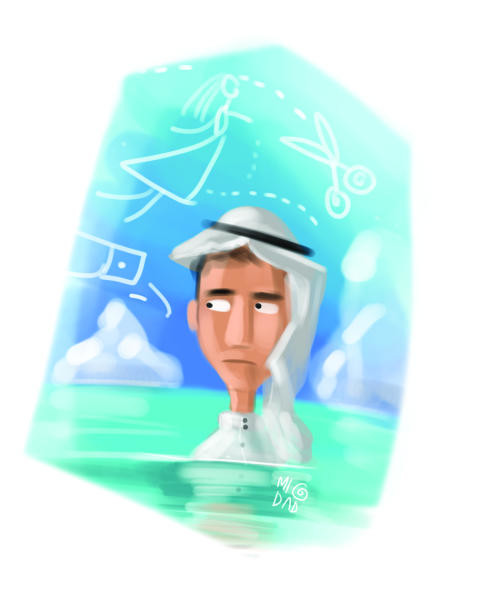
Saudi models seek ‘understanding’
Saudi models seek ‘understanding’
Latest updates






© 2026 SAUDI RESEARCH & PUBLISHING COMPANY, All Rights Reserved And subject to Terms of Use Agreement.