Omaima Mahmoud Azouz is an abaya designer and plastic artist who likes to proceed forward with well-studied large steps in her career, whether in decoration or abaya design. She has promising future plans, which she began with the first abaya show that is described by her to be the first step on the way. She is an energetic, active and self-confident woman, who is able to prove herself in the society and create her own identity by making a distinguished trademark that bears her name.
Omaima is the first chairperson of the Fashion Designers Committee in the Jeddah Chamber of Commerce and industry (JCCI). The committee is first of its kind in the Kingdom as well as in other Gulf countries.
Omaima said it was her sheer talent that made her enter the world of business and succeed in it.
The future of the Saudi fashion industry is bright, thanks to the support of various government agencies and the private sector, she said.
In the coming period, the committee Omaima heads will play an important role to consolidate the status of people in this profession and enhance the role of employees in the fashion industry.
Investments in the Saudi fashion sector are estimated at SR15 billion. The Saudi market is considered to be the largest in the Middle East, and along with the UAE market it is the most influential in the region. The Kingdom is visited annually by about nine million pilgrims and visitors, all of who return to their home countries with gifts, such as, abayas and other women’s clothing, for their loved ones.
According to Omaima, the development of this sector is possible through the development of the workers’ skills. Support should also be rendered to productive families who constitute an important aspect of this system, including those involved in the making of abayas. They can be merged into the industry and rehabilitated by making them founders of world-class Saudi products. The adoption of sustainable marketing policies in the fashion industry is also vital. “The aim is also to promote interaction between local fashion designers and their international counterparts, as well as to revive authentic Hijazi heritage, which combines both modernity and traditions,” she said.
Omaima said her successful experience in this area was one of the reasons behind her selection by the Organizing Committee of Al-Janadriyah National Festival for Heritage and Culture to participate in the cultural festival. “This participation along with several others in and outside the country helped me to make a name for myself. I founded Fiore, a fashion design house that offers abayas. Through Fiore, I am trying to blend in the Saudi heritage into stylish abayas,” she said.
Omaima organized a fashion show after participating in the Janadriyah festival and then another one next to the Eiffel Tower in the French capital. “There will be many more surprises in the coming period,” she said.
She added that her message is clear in all her fashion lines. “I want to say that the Gulf abaya has its own glory, beauty and privacy. The Saudi woman has a high taste in fashion and therefore, we will not be able to do away altogether with importing garments from outside.”
“We live in a global village and under the banner of the World Trade Organization (WTO), we must boost our local products and support it. We must raise awareness for local goods through seminars and exhibitions. It should be one of the national tasks of the Ministry of Commerce and Industry, as well as that of other government agencies and the private sector. The role of the media is an important one, it is our strategic partner in this task,” said Omaima.
The abaya is no longer just a traditional dress worn by Gulf women alone, it has also captured the attention of Arab and international designers who have created its many versions. Some of these high-profile fashion houses include Christian Dior, Oscar de la Renta, Prada, Roberto Cavalli, Fendi, Jean-Paul Gaultier, Alberta Ferretti and Valentino.
“If the Gulf abaya didn’t have its prestige and glory, it wouldn’t be presented in these global markets at exorbitant prices,” she said.
Because Omaima was born to become an artist with high artistic taste, she was strongly and successfully able to design abayas with new models that match with all age groups, depending mainly on the cloth of black silk inlaid with colors. This is the mark which features her designs that are characterized by high taste and magnificence free from any artificiality. Not only did she focus on modern fashion, but her love for heritage inspired her to utilize the “bisht” or so-called “mishlah” cloth, which is known, as Omaima says, to be worn by the Saudi man. “I have a desire to get our heritage and identity spread abroad, while they know nothing about mishlah as compared to the cloak, shemagh and iqal, so when the Saudi woman wears a cloak made of mishlah fabric and travels abroad, she thus helps me to achieve my goal,” she said.
Omaima is keen to designs abayas that attract young women and therefore, is particularly concerned about the colors, fabrics and the embroidery. She hopes her young clients wear her abayas outside the national borders too.
“Fashion is indeed a profitable job. Otherwise, neither I or anybody else would have survived. However, we cannot do without the support of the government. This support does not have to be financial, it can be moral as well. We need loans for establishing new pioneers in the fashion sector, and we need rules and regulations to restrict the import of a similar existing product of the same quality in the local market. We also need to encourage the private sector to do more. The step taken by the JCCI in forming the committee is an important one. It has opened doors for us to remove the obstacles we faced,” said Omaima.
“My philosophy in designing reflects the personality of a stylish, distinctive and respectful Saudi women holding on to her hijab,” she added.
—
Email: [email protected]


![]()
![]()
![]()
![]()
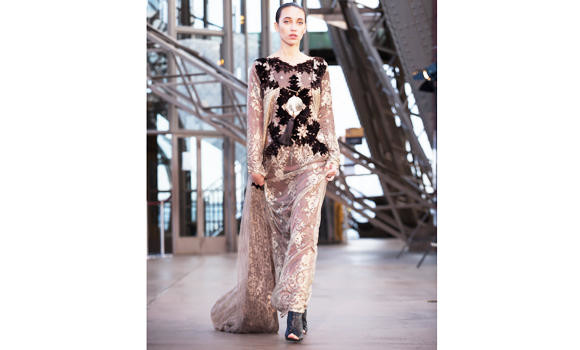
Omaima Azouz designs modern abayas inspired by Saudi heritage

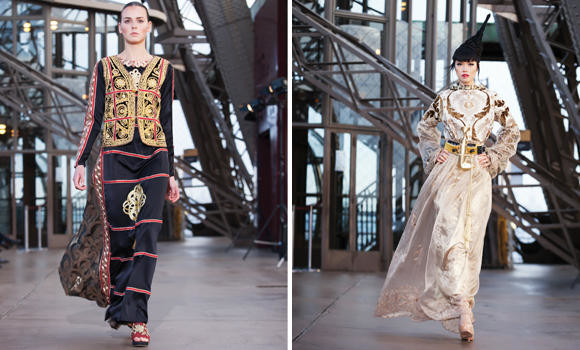

Omaima Azouz designs modern abayas inspired by Saudi heritage
Latest updates





© 2026 SAUDI RESEARCH & PUBLISHING COMPANY, All Rights Reserved And subject to Terms of Use Agreement.