SEOUL, South Korea: A Seoul court on Thursday sentenced a former Korean Air executive to a year in prison for aviation law violations that stemmed from her inflight tantrum over how she was served macadamia nuts.
Cho Hyun-ah, the daughter of Korean Air’s chairman, achieved worldwide notoriety after she ordered the chief flight attendant off a Dec. 5 flight, forcing it to return to the gate at John F. Kennedy Airport in New York.
Head of cabin service at the time of the incident, Cho was angered she had been offered macadamia nuts in a bag instead of on a dish. A heated and physical confrontation with members of the crew in first class ensued.
The court said Cho was guilty of forcing a flight to change its route, obstructing the flight’s captain in the performance of his duties and forcing a crew member off a plane. It found her not guilty of interfering with a transport ministry investigation into the incident.
Cho, in custody since Dec. 30, wiped away tears with a tissue as a letter expressing her remorse was read to the court by head judge Oh Seong-woo.
It included details about how Cho, one of the richest women in South Korea who regularly flew first class, was adjusting to the basic conditions in prison and reflecting on her life. “I know my faults and I’m very sorry,” Cho said in her letter.
Prosecutors had called for three years in prison.
Cho’s high-and-mighty behavior, dubbed nut rage, caused an uproar in South Korea. The incident was a lightning rod for anger in a country where the economy is dominated by family-run conglomerates known as chaebol that often act above the law.
Chaebol chiefs convicted of white collar crimes have typically received suspended prison sentences and later on, presidential pardons. Courts have often acknowledged the contribution of such industrialists in transforming South Korea from an economic backwater into a developed economy.
But the Cho case indicates South Korean society is less indulgent of the second and third generation members of high-profile business families. Heirs to fantastic fortunes such as Cho quickly ascend the executive ladder but few believe their rise is based on merit.
In her letter to the court, Cho said she was given only toilet paper, soap and underwear after being detained but was humbled that other prisoners had given her their toiletries.
“People there lent me their toner, lotion, shampoo and rinse. I was so thankful,” the letter said. “They didn’t ask me anything about this case. I felt that this was indeed being considerate for others.”
Oh, the chief judge, said the court took into consideration that Cho’s actions undermined the flight’s safety, that the flight attendants who were verbally and physically abused are still struggling to return to work and worldwide media reports about the case damaged South Korea’s reputation.
“If she were considerate to people, if she didn’t treat employees like slaves, if she could have controlled her emotion,” said Oh, “this case would not have happened.”
But the court also recognized that Cho showed remorse and the airline was making efforts to help the affected flight attendants. Cho’s attorney left the court without answering a question about whether she will appeal.
The court sentenced Yeo Woon-jin, a Korean Air executive who pressured employees to lie about the nut rage case, to eight months in prison.
Transport ministry official Kim Woon-sub was found guilty of leaking the ministry’s investigation to the airline. He received a six month prison sentence suspended for one year.


![]()
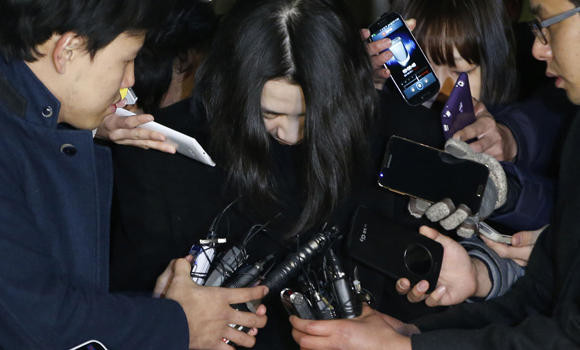
Daughter of Korean tycoon convicted in "nut rage" case
Daughter of Korean tycoon convicted in "nut rage" case
Latest updates


© 2026 SAUDI RESEARCH & PUBLISHING COMPANY, All Rights Reserved And subject to Terms of Use Agreement.