Abu Dhabi unveils Guggenheim artworks

Updated 03 November 2014
Follow

Abu Dhabi unveils Guggenheim artworks

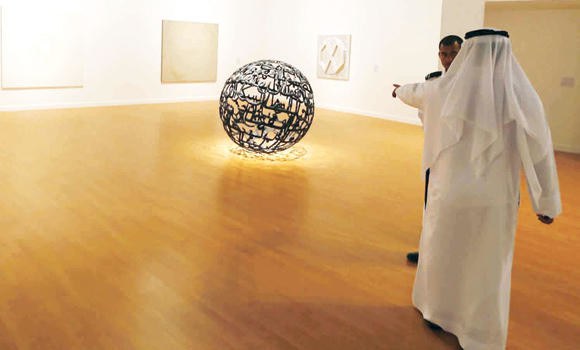
ABU DHABI: The Gulf emirate of Abu Dhabi offered a peek Sunday of several artworks which will be displayed at its Guggenheim museum, set to open in 2017.
Visitors got a glimpse of 19 out of the 200 artworks acquired by oil-rich Abu Dhabi that will be on public display from Wednesday until January at the museum.
US architect Frank Gehry designed the Abu Dhabi Guggenheim, which will be larger than its counterparts in New York, Berlin, Bilbao, Las Vegas, and Venice.
The exhibition “Seeing through Light: Selections from the Guggenheim Abu Dhabi Collection” features artworks by 19 international artists from the 1960s until present day that explore the theme of light.
It showcases works by contemporary artists from the United States, Europe and the Middle East, including Larry Bell, Dan Flavin, Robert Irwin, Douglas Wheeler and Keith Sonnier.
Works by German artist Otto Piene, founder of the Düsseldorf-based experimental artist group ZERO, as well as those by Japanese avant-garde artist Yayoi Kusama, are among the pieces acquired by the museum.
“This group of artworks illuminates the creative vision of the future museum, offers the first glimpse of what is to come, and represents a significant milestone in the evolution of the new museum,” organizers said in a statement posted on the Guggenheim website.
Last month the emirate, aiming to become a leader in the world of fine art, announced it would showcase masterpieces by Leonardo da Vinci and Vincent van Gogh, which will be among 300 works dating back to antiquity displayed at the Louvre Abu Dhabi.
The museum — part of a collaboration that saw Abu Dhabi pay $520 million just to use the name of Paris’ world famous gallery — is set to open in December next year.
Abu Dhabi is engaged in an ambitious development plan aimed at modernizing the emirate and diversifying its economy.


Riyadh to install 25 new public artworks after conclusion of Tuwaiq Sculpture symposium

Updated 09 March 2026
Follow

Riyadh to install 25 new public artworks after conclusion of Tuwaiq Sculpture symposium

  • Move will extend the impact of the annual art event beyond its conclusion, bringing large-scale contemporary artworks into the city’s streets and parks
  • Artworks produced during the symposium will now become part of Riyadh Art’s permanent collection

RIYADH: Some 25 sculptures created during the seventh edition of the Tuwaiq Sculpture symposium and exhibition will soon be installed across public spaces in Riyadh.

The move will extend the impact of the annual art event beyond its conclusion, organizers said, bringing large-scale contemporary artworks into the city’s streets and parks.

Organized by the Royal Commission for Riyadh City through the Riyadh Art Program, the 2026 edition has ended after nearly two months of live sculpting, exhibitions and public programming.

The artworks produced during the symposium will now become part of Riyadh Art’s permanent collection and will appear across the capital as part of a broader effort to integrate art into everyday urban life.

This year’s symposium began in January and took place along Prince Mohammed bin Abdulaziz Road, widely known as Tahlia Street.

The site was transformed into an open-air studio in which visitors could observe artists carving, welding and assembling sculptures.

The live sculpting phase, which was held between Jan. 10 and Feb. 5, brought together leading Saudi and international artists to produce 25 large-scale works.

The sculptures were created using locally sourced granite and reclaimed metal, highlighting both the region’s natural materials and the creative reuse of industrial elements.

Visitors were able to follow the process of each artwork’s development, from raw materials to finished sculptures, while also interacting with the artists and learning about their techniques and concepts.

The event also featured a wide-ranging community engagement program designed to deepen public understanding of contemporary art.

The program included 10 panel discussions, 105 training workshops and 15 masterclasses exploring sculptural techniques, materials and the role of public art in cities.

Educational outreach formed another key component of the symposium. Organizers hosted 25 educational visits for more than 600 students, while daily guided tours enabled visitors to explore the artworks and gain insight into the creative processes behind them.

After the live sculpting phase, the completed sculptures remained on-site until March 8, giving visitors the opportunity to experience the works in their original setting before their distribution across Riyadh.

The symposium was curated by Lulwah Al-Homoud, Sarah Staton, and Rut Blees Luxemburg, who guided the artistic direction around the theme “Traces of What Will Be,” exploring how sculpture can reflect future possibilities while responding to the city’s evolving identity.