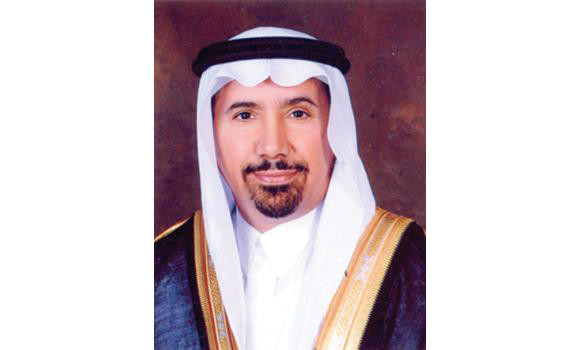
Riyadh plans to host the 4th Arab-Chinese Cooperation Conference on Energy on Nov 18-20, under the motto “Sustainable energy for development,” said Undersecretary of the Ministry of Water and Electricity for Electric Affairs and Head of the Organizing Committee Saleh Al-Awaji.
Al-Awaji stressed the need to boost cooperation in the areas of petroleum, natural gas, renewable energy, and energy efficiency based on the common interests existing between Arab and Chinese parties.
The 4th conference comes in implementation of the final communiqué issued at the end of the 3rd Arab-Chinese Cooperation Conference on Energy, which was held in Yinchuan, People’s Republic of China, in 2012, and recommendations of the 6th ministerial meeting of Arab-Chinese Cooperation Forum in Peking in June 2014.
Arab League Assistant Secretary General for Economic Affairs Mohamed bin Ibrahim Al-Tuwaijri said the executive bureau of the Arab Council of Ministers for Electricity has issued a decision to support Arab-Chinese cooperation, notably in its 4th session.
He said the Arab League Secretariat General will join the 4th conference represented by high-powered officials in different energy sectors, experts, engineers, businessmen and industrialists concerned with energy affairs in addition to the Organization of Arab Petroleum Exporting Counties (OAPEC), Arab Atomic Energy Agency (AAEA), and the Arab Organization for Industrial Development and Mining.
The event will explore topics including electric energy, renewable energy, peaceful use of atomic energy, oil and natural gas, he pointed out.


KSA to hold Arab-Chinese meet on energy in Riyadh
KSA to hold Arab-Chinese meet on energy in Riyadh

Saudi Arabia announces new financial support to the Yemeni government
RIYADH: Saudi Ambassador to Yemen and Supervisor of the Saudi Program for the Development and Reconstruction of Yemen Mohammed Al-Jaber announced that the Kingdom, under the directives of its leadership, has provided new support to the Yemeni government's budget, aimed at paying the salaries of state employees in all sectors.
In a post on X, Al-Jaber stated that this support complements a package of development projects and initiatives, amounting to SR1.9 billion, announced on Wednesday. The package includes provision of necessary petroleum derivatives to operate power plants, which will contribute to improving the living standards of people in Yemen and alleviating daily burdens on them.
Al-Jaber’s post emphasized, in particular, that all salaries of military and security forces linked to the the higher military committee linked to the Saudi led Coalition will be paid as of Sunday.
The post is likely relate to Several Media reports which have suggested that disgraced former Southern Transitional Council (STC) chief Aidaroos Al Zubaidi — who has now fled Yemen — was taking advantage of military personnel and withholding salaries as means of pressure. Al-Zubaidi is wanted by the Yemeni government for acts of high treason and corruption.
The ambassador emphasized that these steps come within the framework of supporting the Yemeni government's efforts to implement the economic reform program, which aims to achieve financial and economic stability and enhance the state's ability to meet its basic obligations.


