LOS ANGELES: AT&T says it views its planned $48.5 billion purchase of DirecTV as a way to help redefine the video entertainment industry, giving it opportunities to bundle services and tap into growing Latin American markets.
AT&T Inc.’s proposed transaction primes it for the age of Internet-delivered video.
AT&T and DirecTV promised consumer benefits like more economical bundles that tie mobile phone, pay TV and Internet service together on a single bill. AT&T said that it’ll probably be 12 to 18 months for robust streaming video offerings to be available, but that bundled offerings should be available soon after the deal closes, which the companies expect to occur within 12 months.
AT&T is currently the second-largest wireless provider with 116 million customers.
The company will gain access to DirecTV’s 20.3 million US customers and its 18.1 million Latin American customers. DirecTV’s US customers, coupled with 5.7 million U-verse TV customers, will give the combined AT&T-DirecTV 26 million users for video. That would make it the second-largest pay TV operator behind a combined Comcast-Time Warner Cable, which would serve 30 million under a $45 billion merger proposed in February.
“What it does is it gives us the pieces to fulfill a vision we’ve had for a couple of years — the ability to take premium content and deliver it across multiple points: your smartphone, tablet, television or laptop,” AT&T Chairman and CEO Randall Stephenson said.
Michael White, chairman and CEO of DirecTV Inc., said his company has been talking off and on with AT&T about a potential transaction for years, but that recent trends in the industry helped make the deal happen now.
The companies are aiming to eke out $1.6 billion in annual cost savings in an increasingly expensive and maturing pay TV business.
Using DirecTV’s cash flow, AT&T has greater ability to invest in its landline and mobile networks for broader reach and faster speeds in an Internet service market where it risks falling behind a bulked up Comcast-Time Warner Cable.
But the deal could face regulatory scrutiny from the Federal Communications Commission and Department of Justice. Unlike the cable company tie-up, the AT&T-DirecTV merger would effectively cut the number of video providers from four to three for about 25 percent of US households.
Cable companies operate in regions that don’t overlap. By comparison, AT&T provides TV service to 22 states, where it is a direct competitor to DirecTV, which operates nationwide. Reducing choice in those markets could result in higher prices for consumers, and that usually gives regulators cause for concern.
White said customers will see more competitive pricing from the combination with AT&T.
Stephenson said regulatory concerns would be addressed with a number of what he called “unprecedented” commitments.
Among them:
— DirecTV would continue to be offered as a stand-alone service for three years after the deal’s closing.
— AT&T would offer stand-alone broadband service for at least three years after closing, so consumers could consume video from Netflix and other online services, with download speeds of at least 6 megabits per second where feasible.
— AT&T would expand high-speed broadband access to 15 million more homes — beyond the 70 million that could now get AT&T service — within four years.
— AT&T vowed to abide by the open Internet order from 2010 that the Federal Communications Commission is now in the process of revising after a court struck it down.
— AT&T vowed to sell its roughly 9 percent stake in Latin American wireless carrier América Móvil for about $5 billion.
Delara Derakhshani, policy counsel for Consumer Reports magazine’s lobbying arm, Consumers Union, complained that the deal “is just the latest attempt at consolidation in a marketplace where consumers are already saddled with lousy service and price hikes.”
“You can’t justify AT&T buying DirecTV by pointing at Comcast’s grab for Time Warner, because neither one is a good deal for consumers,” she said in a statement.
Under the terms announced Sunday, DirecTV shareholders will receive $28.50 per share in cash and $66.50 per share in AT&T stock, bringing the value to $95 a share. The total transaction value is $67.1 billion, including DirecTV’s net debt.
Stephenson and White both said the merger would allow the combined company to offer video over multiple screens, but acknowledged that deals with content providers to expand service on multiple platforms still need to be negotiated.
DirecTV’s exclusive deal for its signature product, NFL Sunday Ticket, expires at the end of the coming season. White anticipates that it will come to an agreement with the NFL on an extension before the transaction with AT&T closes.
“This positions us well to compete in the 21st century,” White said. “I think our future is bright together in ways that make both of our companies stronger.”
Analysts have questioned the strategic benefits of a deal, particularly because it would give AT&T a larger presence in a pay TV market that isn’t growing. Last year, pay TV subscribers in the US fell for the first time, dipping 0.1 percent to 94.6 million, according to Leichtman Research Group.
While AT&T and DirecTV are doing better than cable companies at attracting TV subscribers, DirecTV’s growth in the US has stalled while AT&T is growing the fastest of any TV provider.
But Stephenson said DirecTV’s Latin American presence provides a good growth opportunity. He considers Brazil a key region to potentially add customers in.
DirecTV offers neither fixed-line or mobile Internet service, and its rights to airwave frequencies for satellite TV are not the kind that AT&T can use to improve its mobile phone network.
Still, Stephenson has talked about how the growth of online video helps boost demand for its Internet and mobile services. Last month, AT&T entered a joint venture with the Chernin Group to invest in online video services.
DirecTV would continue to be based in El Segundo, California, following the merger, the companies said. AT&T is based in Dallas.


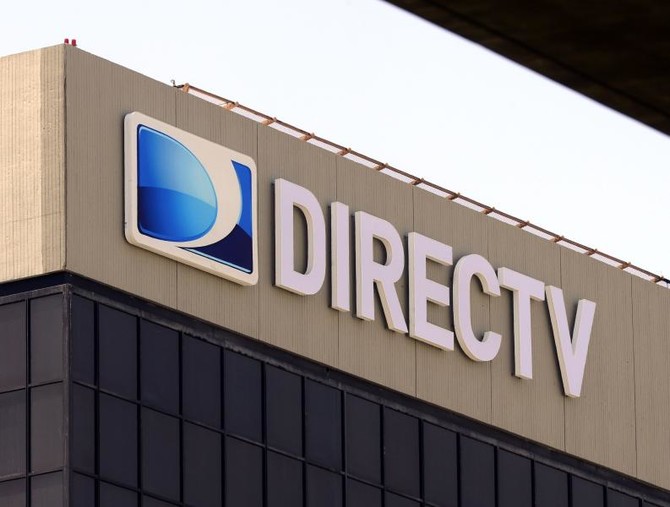
AT&T aims for TV’s future with $48.5bn DirecTV deal
AT&T aims for TV’s future with $48.5bn DirecTV deal

SAL agrees $30m Aviapartner Liege acquisition to expand into Europe
RIYADH: SAL Saudi Logistics Services Co. has agreed to acquire Belgium-based Aviapartner Liege SA for €28 million ($30.3 million), giving the Saudi logistics firm a foothold at one of Europe’s major air cargo hubs.
Under a sale and purchase agreement signed with Aviapartner Belgium NV and Aviapartner Holding NV, SAL will acquire 100 percent of the company’s share capital on a cash-free, debt-free basis, according to a filing on Saudi Exchange.
The acquisition gives SAL a full operational presence at Liege Airport in Belgium, a key European cargo hub, and is expected to support the company’s long-term growth strategy.
SAL, which provides cargo handling and logistics services across Saudi airports, has been expanding its service portfolio as the Kingdom invests heavily in aviation and supply-chain infrastructure under Vision 2030.
In the Tadawul filing, the company stated: “This acquisition supports SAL’s international expansion strategy by establishing an operational footprint at a key European cargo hub, expanding its cargo ground handling and logistics service offerings at international airports, geographically diversifying its revenue streams, and leveraging operational synergies through access to established infrastructure, airline relationships, and a mature operating environment.”
The deal is strategically significant because Liege Airport has emerged as one of Europe’s most important air cargo hubs and a rapidly expanding gateway for global freight flows.
The Belgian airport is the fifth-largest cargo airport in Europe and has recorded strong growth in recent years, handling more than 1.3 million tonnes of cargo in 2025 as volumes rose about 14 percent year on year.
The transaction will be financed through the company’s available cash resources and remains subject to customary closing conditions and regulatory approvals.
Aviapartner Liege, based in Liege, Belgium, primarily provides ground handling and cargo services.
Financial disclosures show Aviapartner Liege generated revenues of €24.7 million in 2023, rising to €28.6 million in 2024 before declining to €24.3 million in 2025.
SAL said it expects the transaction to have a positive long-term impact on its financial performance following completion and consolidation of the acquired company’s financial results.
The company added that no related parties were involved in the transaction, which was signed on March 4.


