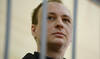
Billionaire’s arrest focuses on Iran’s political divisions

Updated 31 January 2014
Follow

Billionaire’s arrest focuses on Iran’s political divisions

BEIRUT: While international sanctions have made life a struggle for many Iranians, they were a big break for businessman Babak Zanjani, who made a fortune helping the government evade the restrictions on oil sales. He also made enemies.
A $40,000 watch on his wrist and a Tehran football club for a plaything, Zanjani shuttled to meetings on private jets, arranging billions of dollars of oil deals through a network of companies that stretched from Turkey to Malaysia, Tajikistan and the UAE, he said last autumn.
“This is my work — sanctions-busting operations,” he told Iranian current affairs magazine Aseman.
Under the conservative presidency of Mahmoud Ahmadinejad, the 39-year-old Zanjani was good enough at his work to amass a fortune of $10 billion until he was arrested late last month. He is being held in Tehran’s Evin prison, accused of owing the government, under moderate new President Hassan Rowhani since August, more than $2.7 billion for oil sold on behalf of the Oil Ministry.
Rowhani’s government has not said what specific charges are being investigated. But two days before Zanjani’s arrest, Rowhani had written to his first deputy demanding action against sanctions profiteers.


Tunisian police clash with youths in Kairouan after man’s death

Rights groups accuse Saied of using the judiciary and police to stifle criticism, something that Saied denies. (AFP file photo)
Updated 15 December 2025
Follow

Tunisian police clash with youths in Kairouan after man’s death

  • Tunisia President Kais Saied shut down parliament and began ruling by decree in 2021 in what he called a move to root out rampant corruption and mismanagement, but which the opposition called a coup

TUNIS: Clashes erupted for a second night on Saturday between police and youths in the central Tunisian city of Kairouan after a man died following a police chase, according to his family, fueling authorities’ fears that protests could spread across the country. As Tunisia prepares to mark the January anniversary of the 2011 revolution, which sparked the Arab Spring uprising, tensions have risen amid protests, and a powerful UGTT union call for a nationwide strike next month. Thousands have been protesting for weeks in the southern city of Gabes, demanding the closure of a chemical plant on environmental grounds.
Witnesses said demonstrators in Kairouan threw stones, petrol bombs and flares, and blocked streets by burning tires, prompting police to disperse crowds with tear gas.
The family said the man, riding a motorcycle without a license, was chased by police, beaten, and taken to a hospital. He later fled and died on Friday from a head injury.
The government was not immediately available to comment. Relatives of the deceased said they will not remain silent and will spark major protests if those responsible are not held accountable.
In a bid to defuse tensions, Kairouan’s governor visited the family on Saturday evening and pledged to open an investigation to determine the circumstances of the death and establish accountability, witnesses said.
Tunisia President Kais Saied shut down parliament and began ruling by decree in 2021 in what he called a move to root out rampant corruption and mismanagement, but which the opposition called a coup.
Rights groups accuse Saied of using the judiciary and police to stifle criticism, something that Saied denies.