- India announced it was unilaterally suspending Indus Waters Treaty in April 2025 amid tensions with Pakistan
- Court also orders India to limit construction of hydroelectric power project in disputed Jammu and Kashmir
ISLAMABAD: The Court of Arbitration said on Monday that India must uphold a decades-long water-sharing treaty with Pakistan that New Delhi insists it has suspended following tensions with Islamabad, urging it to limit the construction of a hydroelectric plant in the disputed Jammu and Kashmir region.
The Indus Waters Treaty (IWT), brokered by the World Bank in 1960, grants Pakistan the rights to the Indus basin’s western rivers — Indus, Jhelum, and Chenab — for irrigation, drinking, and non-consumptive uses like hydropower, while India controls the eastern rivers — Ravi, Beas, and Sutlej — for unrestricted use but must not significantly alter their flow. India can use the western rivers for limited purposes such as power generation and irrigation, without storing or diverting large volumes, according to the agreement.
India announced in April 2025 that it was suspending the Treaty unilaterally after blaming Pakistan for supporting a militant attack in Indian-administered Kashmir. This drew a sharp response from Pakistan, which has consistently maintained that India does not have the right to unilaterally suspend the Treaty.
The arbitration court said it examined the potential grounds on which India could suspend or terminate the Treaty, including the grounds cited by New Delhi in its public statements.
“In a unanimous decision, the Court found that none of these grounds could justify suspension or termination of the Treaty,” the court said in a press release.
“Accordingly, the Indus Waters Treaty remains fully in force, and India must observe its obligations under the Treaty, including those relating to the design and operation of its hydro-electric projects on the Western rivers.”
The court also issued an order on Pakistan’s application, which it filed on Mar. 4, about “interim measures” concerning the Ratle Hydroelectric Plant [RHEP].
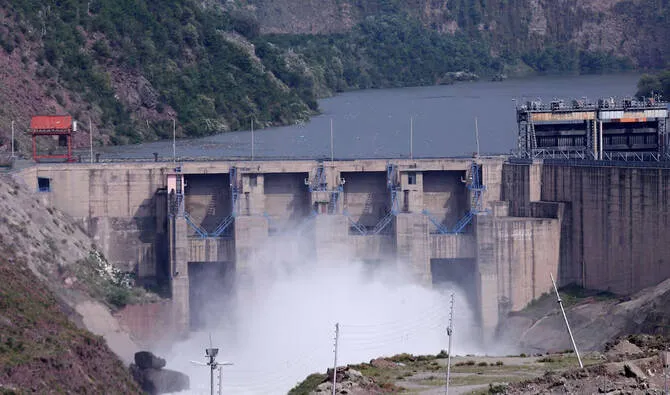
One of the main points of dispute between India and Pakistan on the IWT is the design features of the Kishenganga (330 megawatts) and RHEP (850 megawatts) power plants. The former was inaugurated in 2018 while the latter is under construction.
The two countries disagree over whether the technical design features of these two hydroelectric plants contravene the IWT. The plants are located in India on tributaries of the Jhelum and the Chenab Rivers. The IWT designates these two rivers, as well as the Indus, as the “Western rivers” to which Pakistan has unrestricted use with some exceptions. Under the Treaty, India is permitted to construct hydroelectric power facilities on these rivers, subject to constraints including design specifications as provided for in the Treaty.
The arbitration court said Pakistan, during proceedings, had urged The Hague to address the design of certain
components of the two plants. The court said the two projects are also the subject of proceedings before a neutral expert, a highly qualified engineer appointed by the World Bank.
“In a unanimous decision, the Court decided to impose measures prohibiting India from concreting the RHEP dam wall and power intake structure above certain levels until 90 days after the Neutral Expert’s final decision, which is expected in July 2027,” the court added.
In a statement, India’s Ministry of External Affairs (MEA) rejected the court’s decision.
“India categorically rejects its so-called award, just as it has firmly rejected all prior pronouncements by this illegally constituted body,” the statement said.
New Delhi said it has consistently maintained that the establishment of the arbitral body constitutes a “grave violation” of the IWT.
“This so-called Court of Arbitration has no jurisdiction whatsoever to pronounce on India’s sovereign decisions,” the statement added. “India’s decision to hold the Indus Waters Treaty in abeyance remains in force.”