
MANILA: Kriz Dela Cruz has pinned all his hopes on getting a seafaring job, believing that a maritime career is the best way to lift his family out of poverty.
To apply for a job at sea, he traveled more than 1,000 km to reach Manila from his southern Philippine hometown of General Santos City, still determined to pursue the line of work despite the deadly risks for seamen following the US-Israel war on Iran.
“Honestly, I’m worried too. But I really want to lift my family out of poverty,” the 26-year-old told Arab News.
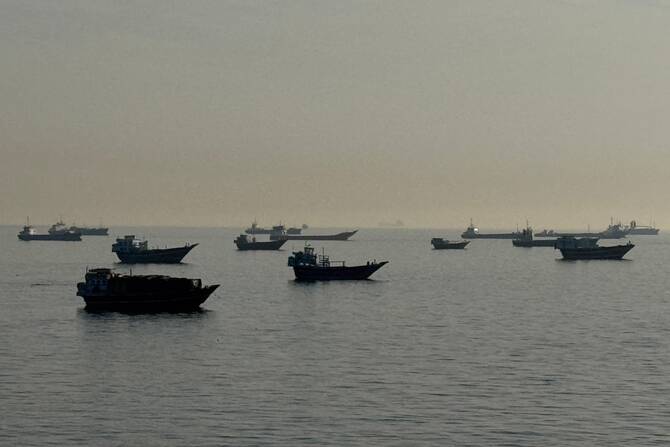
The Philippines is the largest source of seafarers in the world, with more than 590,000 at sea in 2025. In the early days of the war, about 6,400 out of more than 20,000 seamen trapped in the Strait of Hormuz were Filipinos.
Though many have either been repatriated or made it out of the waterway in the past few months, about 3,000 Filipinos are among 6,000 sailors still stranded in the Arabian Gulf, the Department of Migrant Workers said.
According to the International Maritime Organization, at least 19 sailors have been killed in 68 attacks around the Hormuz strait since the war with Iran began on Feb. 28.
Though aware of the risks, Cruz still dreams of a better life for his family and to help his younger sister through college.
“The salary is better, higher, than if I just stayed here in the Philippines, especially because of inflation. Life is really very difficult right now,” he said.
“My sister is in her first year in college. If I’m lucky, I want to help her, make sure she can finish her studies. That’s the very first thing I want to do. I also want to build a house for my parents. They’re both already in their sixties.”
But as the conflict spreads across the Middle East and extends into its sixth month, stranded seafarers are facing an increasingly challenging situation.
Some have reportedly been left without support, repatriation or their owed wages, the UN said, as they remain exposed to the deadly attacks in the strait.
Mariners are also facing the dangers of increased attacks on vessels in the Black Sea, as Russia’s invasion of Ukraine intensifies. Thirty-five ships were struck in July alone, killing more than 20 sailors — at least three of whom were Filipinos.
Yet the grave risks are unlikely to affect the number of applicants, said Marlon Rono, president and chief executive officer of Magsaysay People Resource Corporation, one of the biggest shipmanning companies in the Philippines, which employs about 55,000 Filipino seamen.
“Now they attack ships using drones, unlike before. A lot of changes, and it has become more complicated,” he told Arab News.
“Despite those threats, despite those risks, seafaring is still a choice by many young Filipinos. And it hasn’t declined. In fact there is a big shortage of seafarers, especially for officers, globally, and you need to fill that up.”
Seafaring was a career choice for many Filipinos, and they continue sailing because it is their profession, he added.
“They’re so dedicated with their job … Whether it’s in the Arabian Gulf or wherever it is, many of them still would want to continue to sail because that is their career,” Rono said.
“Second, because they want to support their family … It’s a financial issue, that they need to continue working.”
An ordinary seaman is likely to receive a monthly salary of about $1,500, while a captain gets between $10,000 to $15,000. Their income usually doubles when they are in “high-risk” areas, as stipulated in globally applicable international guidelines, according to Rono.
Most of the applicants came from far-flung provinces, such as the Visayas and Mindanao, said Jun Conrado, quality department head at recruitment agency NAESS Shipping Philippines.
For many Filipinos, family is the main and common driving factor to become a mariner.
“They do have the option to refuse to sail if they want to,” he told Arab News.
“But I think, at the end of the day, they really work as seafarers because of their families.”