The head of Israel’s spy agency held a phone call with Syria’s foreign minister last week during which they discussed Turkiye’s military presence in Syria, three people familiar with the matter said, just days before Israel bombed a Syrian air base.
The August 14 call between Mossad spy agency chief Roman Gofman and Syrian Foreign Minister Asaad Al-Shaibani is one of the highest-level contacts yet between Israel and the Damascus administration led by President Ahmed Al-Sharaa.
The Israeli prime minister’s office, which handles queries regarding Mossad, did not immediately respond to a request for comment, nor did a spokesperson for Shaibani.
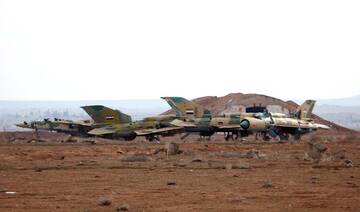
After Israel attacked the Abu Al-Duhur air base on Tuesday, Israeli Prime Minister Benjamin Netanyahu said that Damascus was on the verge of permitting Turkish troops to deploy there, and had ignored Israel’s repeated warnings that such a deployment would pose a threat to Israel’s security.
The sources said the issue of Turkish military support for Syria dominated Gofman’s call with Shaibani four days earlier.The call centered on “Israeli inquiries about what (Turkiye) was doing in terms of increasing their military presence, as well as the sale of weapons, provision of drones and other issues,” one of the sources said.
A second source, a senior official, said Gofman used the call to ask about Turkiye’s provision of arms to Syria’s army.
A third source familiar with the matter confirmed the call took place, saying that they discussed Turkiye’s military presence in Syria.Turkiye’s defense ministry declined to comment and its foreign ministry did not immediately respond to a request for comment.
Netanyahu warns over Turkiye-Syria ties
Turkiye has emerged as a close ally of the Sharaa administration since Bashar Assad was toppled in 2024, having backed rebels during the Syrian civil war, stirring concern in Israel about rising Turkish sway on its northern frontier.
Sharaa, who has established close ties with Washington, said in July that Syria was seeking to reach a security agreement with Israel and trying to involve a large group of countries to pressure Israel to adopt a more balanced policy toward his country.
Netanyahu, in a video posted on X on Wednesday, said Israel “will not tolerate a Turkish military establishment in Syria that threatens Israel.” “We made it clear to Turkiye — Don’t. Apparently they didn’t hear the message, so we made sure they understood it better,” he said, in an apparent reference to the airstrikes.
The Turkish presidency on Wednesday rejected what it called “untenable allegations” by Israel regarding its military position in Syria, saying Israel aimed to legitimize its “unlawful airstrikes targeting Syria’s sovereignty and territorial integrity.”
Turkiye would “continue to cooperate with the Syrian Government on a legitimate basis for the establishment of peace, stability, and prosperity,” it said, without referring to any potential deployment plans.Tom Barrack, the US ambassador to Turkiye and special envoy for Syria and Iraq, said on Tuesday the Israeli strikes were “an unnecessary escalation that does not advance regional stability.”
In separate comments to Reuters on Tuesday, Barrack said that Washington was working to establish a deconfliction mechanism among Israel, Turkiye and Syria, and added the US already facilitates an information-sharing and dialogue mechanism among the parties.
Syria says no Turkish military build-up planned at air base struck by Israel
Syrian Foreign Minister Asaad Al-Shaibani said he made clear to Israel there were no plans to establish a Turkish military base at Abu Al-Duhur air base, which Israel struck on Tuesday, saying the site was being rehabilitated for use by the Syrian Air Force.
Al-Shaibani said Turkish military officers had visited the base as part of training and broader military cooperation.
He denied any Turkish military build-up, saying the facility was largely empty and not yet operational.
“There was no intention to establish a Turkish base there, nor to establish a permanent Turkish military presence or deploy Turkish forces at the site,” Al-Shaibani said in an interview with Axios on Wednesday.
Israeli Prime Minister Benjamin Netanyahu said on Wednesday that Israel warned Syria ahead of the strike not to allow a Turkish presence at the base.
“Our message was very clear. Don’t. I guess they didn’t quite understand the message,” Netanyahu added.
Al-Shaibani said Israel had no legitimate justification for the bombing. Syria remained open to negotiations with Israel on de-escalation, he said.
The two sides had made significant progress toward a security agreement during a year of US-mediated talks, but Israel later backed away from commitments and the agreement was not implemented, he added.
Al-Shaibani said any future deal must address the security concerns of both sides and respect Syrian sovereignty, warning that continued Israeli military operations would increase regional instability.