

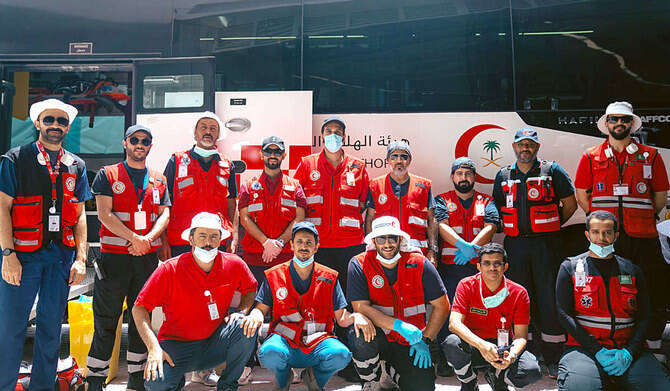

RIYADH: The Saudi Red Crescent Authority’s 2025 annual report reveals an agency quietly shifting from a traditional transport-and-ambulance service into an agile, preemptive civil protection network.
For citizens, incoming pilgrims, and international relief efforts, this operational pivot under Saudi Vision 2030 directly impacts medical survival rates, hospital efficiency, and public safety across the Kingdom.
Field innovation and digital dispatch
A core driver of this transformation was demonstrated during the Hajj season, where the authority addressed chronic emergency room congestion by introducing a formal on-site treatment framework.
By treating heat exhaustion, minor injuries, and dehydration directly in field tents or on the street, paramedics freed up hospital beds and trauma units for life-threatening emergencies.
Backed by 605 primary ambulances, 27 heavy-response units, and three air ambulances hovering over traffic bottlenecks, the system ensured critical cases were evacuated in minutes while minor cases received instant, localized care.
To ensure these field interventions occur within the critical “golden hour” of medical emergencies, the report underscores a major technological shift in how emergency calls are routed nationwide.
The authority integrated automated location-tracking algorithms and upgraded computer-aided dispatch systems across its control centers, significantly reducing the vital time gap between an emergency request and paramedic deployment.
This digital framework is paired with an expanded air ambulance fleet that provides rapid airlifts across high-density urban centers, remote desert highways, and coastal regions directly to specialized trauma centers.
Grassroots outreach and international standing
Beyond high-tech emergency coverage, the authority is moving response capabilities out of the ambulance and directly into everyday civilian spaces.
Recognizing that choking and sudden cardiac incidents frequently occur in public venues, the authority logged over 326,000 volunteer hours from 15,502 citizens and launched grassroots initiatives including the “Lifesaving Waiter” campaign.
By equipping restaurant and hospitality staff with immediate first-aid skills, the authority is building a broad network of civilian first responders in dining and leisure venues.
Additionally, by auditing and granting compliance certificates to 13 private training centers, the SRCA ensures private-sector medical instruction meets strict national standards.
On the international stage, the Kingdom is expanding its role from a traditional financial donor into an active operational leader in global crisis management.
By chairing the Disaster Management Advisory Group for the 2024–2026 term and establishing a formal national personnel secondment mechanism, Saudi medical, technical, and logistical experts are now directly embedded into international relief organizations and global disaster responses.
Internally, this institutional modernization was validated through six international ISO certifications spanning quality control, enterprise risk management, information security, information technology service delivery, beneficiary complaints management, and occupational health and safety.
For the public, these accreditations guarantee that emergency calls, medical data, and user complaints are handled with global-standard transparency and operational accountability.
The authority noted that these operational refinements and structural milestones lay the groundwork for a broader long-term goal: building a world-class emergency medical apparatus capable of saving lives locally, regionally, and on international humanitarian fronts.


