JEDDAH: A student team from King Abdulaziz University will transform its award-winning underwater robot into a commercially viable Saudi technology after placing seventh at the MATE ROV 2026 World Championship in Canada.
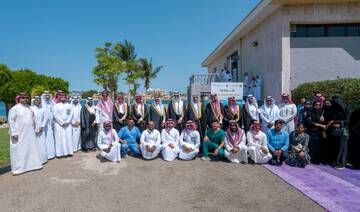
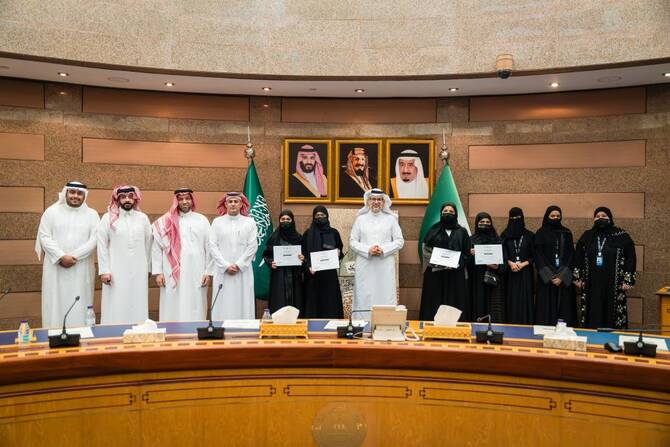
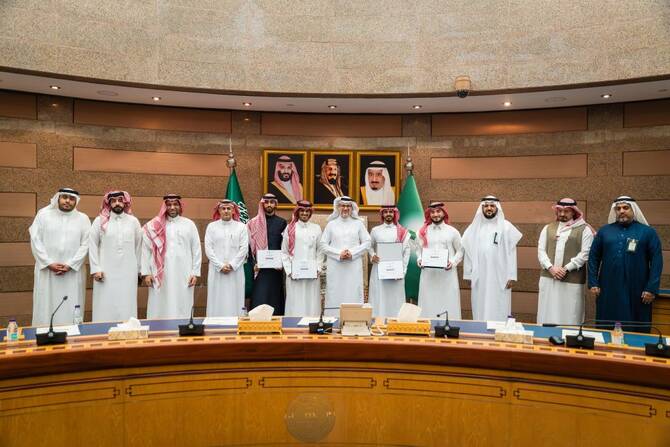
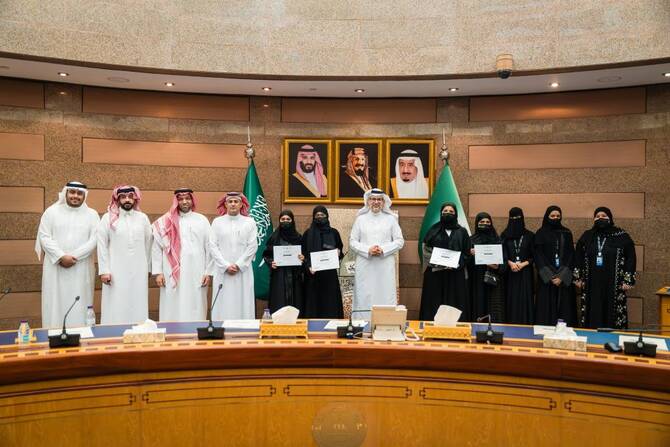
KAU President Dr. Tareef Al-Aama honored the Red Sea Rovers team following its performance in the championship finals at Memorial University, where the team competed against 35 universities in the Pioneer category.
The team’s remotely operated vehicle scored highly for its ability to carry out complex underwater exploration and engineering tasks.
Integrating advanced control, sensing and operational systems, the vehicle is designed to provide stability and precision in challenging marine environments.
The project was developed over two years at the Manufacturing Club under KAU’s Deanship of Student Affairs, where students from multiple disciplines collaborate using technical facilities and hands-on training.
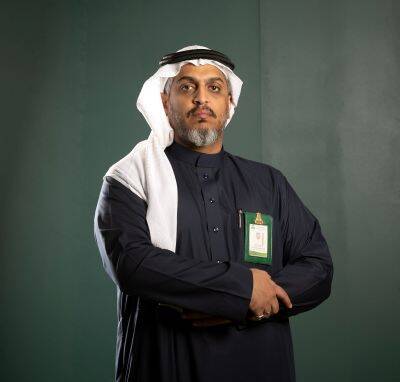
Ammar Abdulghani Melaibari, general supervisor of the industrial workshops at the faculty of engineering and supervisor of the club, told Arab News that the global ranking represented “a starting point, not a final destination.”
He said the vehicle had been designed with the needs of Saudi sectors in mind, particularly the growing need for safer and more affordable underwater inspection systems.
“The idea came in response to the need for safe, lower-cost solutions for underwater inspection, rather than relying entirely on divers or expensive imported systems,” he said.
Potential applications include monitoring coral reefs and marine wildlife, documenting reef conditions, collecting environmental samples and surveying underwater sites using autonomous three-dimensional mapping. The vehicle could also inspect pipelines, ship hulls, port infrastructure, desalination plant intakes and offshore energy facilities.
The team is developing an underwater welding system and a robotic arm for maintenance work, reducing the need to deploy divers in hazardous environments.
Melaibari said the wide range of applications represented a genuine commercial opportunity. The university and team are exploring the creation of a startup providing environmental surveys, sample collection, inspection and maintenance services for ports, desalination plants and offshore facilities, replacing imported services with Saudi expertise.
The proposed company could potentially reduce costs for national organizations and replace imported services with Saudi expertise. Melaibari added that such applications could support Red Sea conservation and national sustainability initiatives.
“The project began as a student idea within the faculty of engineering’s manufacturing community and developed into an integrated hybrid system powered by eight thrusters, giving it six degrees of freedom,” he said.
“It operates in two modes: an autonomous mode for programmed missions and a tethered mode for direct control with unlimited operating time.”
KAU plans to develop the project through four areas: knowledge continuity, technical advancement, intellectual property protection and entrepreneurship.
Future work includes a three-degree-of-freedom robotic arm, AI-powered image and data analysis, and enhanced autonomous 3D mapping. The university also plans to register patents and commercialize the technology through a university spin-off supported by KAU’s business incubator and Wadi Jeddah.
Rather than selling the vehicle itself, the proposed company would provide specialized marine services while generating revenue to fund further research and development.
The multidisciplinary team brought together expertise in mechanical design, power systems, electronics, programming and image processing. Engineering studies, 3D printing and real-world aquatic testing were all conducted at university facilities under academic supervision.
The team included Ruba Faisal Al-Nashiri, Abdullah Mohammed bin Salman, Ammar Khalid Al-Ahmadi, Imtinan Ayman Al-Halawani, Manar Mahdi Talib, Youssef Ahmed Baabdullah, Abdulsalam Suleiman Al-Faifi, Raghad Ahmed Al-Saedi, Rahaf Abdulkhaliq Al-Adwani, Al-Mahdi Mohammed Sirafi, Faris Mujahid Al-Bukhari and Abdulaziz Mohammed Al-Harbi.
The project received support from KAU, the Scientific Endowment and Johnson Controls Arabia.
Plans are underway to expand participation to students specializing in mechanical and electrical engineering, computer science, artificial intelligence, marine sciences, administration and media.
The university also plans to provide student teams with organized access to manufacturing facilities, testing areas and laboratories.
Melaibari added that sustainable funding and partnerships with industrial and defense-sector organizations would help cover equipment, materials and participation in future international competitions, while new students will be trained alongside current members to preserve expertise and strengthen the team’s global competitiveness.