


ISLAMABAD: Kuwait’s Foreign Minister Sheikh Jarrah Jaber Al-Ahmad Al-Sabah expressed concern over Iran’s continuing attacks on his country in a call with Pakistan’s Deputy Prime Minister Ishaq Dar on Saturday, as Islamabad urged de-escalation in the region while Tehran announced to suspend all obligations under a Pakistan-brokered peace framework with the United States.
The conversation followed the seventh consecutive night of US-Iran fighting, with Tehran threatening a “full-scale offensive” if US strikes continued while saying it had targeted US military sites in Kuwait, Bahrain and Jordan.
The conflict originally began on Feb. 28 before it spread across the Gulf and disrupted shipping through the Strait of Hormuz, sending global oil prices higher. Pakistan positioned itself as a mediator between the US and Iran, trying to prevent a broader regional conflict.
After months of efforts, the US and Iran signed the Islamabad Memorandum of Understanding (MoU), an interim 14-point peace framework under which Washington and Tehran were required to hold negotiations to reach a final settlement of the conflict within a 60-day period.
“Foreign Minister Sheikh Jarrah shared Kuwait’s serious concerns regarding the continued attacks on its territory and expressed hope that restraint would be exercised by all sides and that the Islamabad MoU would be fully implemented,” Pakistan’s foreign office said in a statement after Al-Sabah held a phone call with Dar.
The foreign office said the Kuwaiti foreign minister also appreciated Pakistan’s “constructive and mediatory role” in promoting dialogue and regional stability.
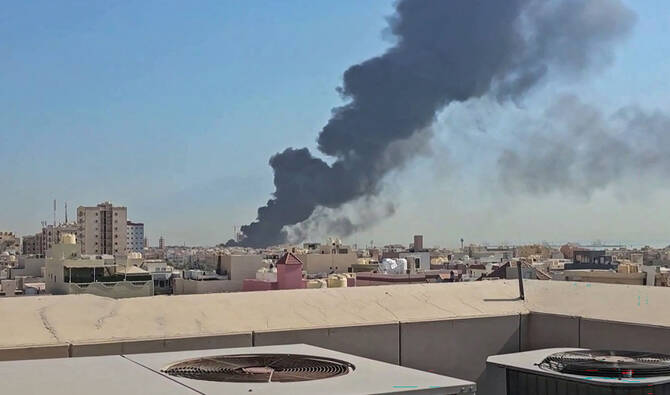
The discussion followed Kuwait’s announcement on Saturday it had intercepted Iranian missiles and drones, while a water desalination facility was struck and caught fire in the second such attack on the country in two days.
Kuwait relies heavily on desalination plants for drinking water, with the facilities providing around 90 percent of the country’s supply.
Dar stressed the need for de-escalation and emphasized the importance of respecting the sovereignty and territorial integrity of all states, saying maintaining regional peace and security must remain the foremost priority.
The development comes after Reuters reported a day earlier that Pakistan was in early-stage talks with Kuwait on a potential expanded defense partnership linked to energy cooperation and investment.
A top Iranian military official, Major General Mohsen Rezaei, warned on Saturday Tehran will resume “full-scale offensive operations” if US strikes against it continue for another two or three days.
“Iran will no longer limit itself to retaliatory, like-for-like responses ... and no political border will be safe,” he said, according to the Iranian news agency IRIB.
Iran’s Deputy Foreign Minister Khazem Gharibabadi also told the media in his country that the US had violated the Islamabad MoU when Tehran was engaged in negotiations with Washington.
“The United States has violated and suspended all its commitments,” according to Iran’s semi-official ISNA news agency. “Consequently, we have also suspended all our obligations under the memorandum and are currently implementing none of them.”


