


ISLAMABAD: Protest leaders in Azad Kashmir on Thursday warned of marching on the regional capital of Muzaffarabad on July 15 if the government failed to meet their demands, following weeks-long demonstrations and clashes in the territory.
The confrontation between local authorities and supporters of the Joint Awami Action Committee (JAAC), a recently banned civil rights movement, poses a sensitive challenge for Islamabad, which frequently criticizes New Delhi’s handling of dissent in Indian-administered Kashmir but is now facing anger in the territory under its own control.
The unrest began ahead of a June 9 strike called by the JAAC in protest mainly against the reservation of 12 seats for refugees in the July 27 elections to the region’s 45-seat legislative assembly. The refugees live in Pakistan after being displaced from Indian-administered Kashmir, following the 1947 partition of the Subcontinent.
Last month, at least seven people, including four police personnel and three protesters, were killed in violence in Rawalakot, where authorities accused JAAC supporters of attacking law enforcement personnel. Protest leaders said on Monday that two demonstrators were killed in fresh clashes in Mirpur, a claim contested by regional police chief.
“A long march will be held toward Muzaffarabad on July 15,” JAAC said in a statement late Thursday. “After July 14, our demands will not be limited to this Charter of Demand. We will come out with a new announcement.”
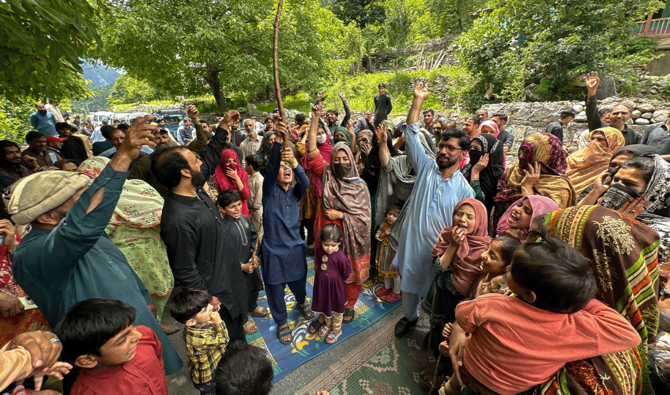
JAAC supporters have pressed ahead with protests despite the group being banned last month under anti-terrorism laws. Protests, sit-ins and business strikes paralyzed daily life across much of the region, though both sides offer contrasting accounts of the conditions.
Thousands of JAAC supporters are currently camped out on the outskirts of Rawalakot, about 100 km (62 miles) south of Muzaffarabad, the regional capital.
The dispute comes ahead of legislative elections scheduled for July 27 in the mountainous region, which lies within the broader Kashmir territory claimed in full by both India and Pakistan but administered in parts by each. The Azad Jammu and Kashmir government banned the rights alliance on June 5, citing reports about its involvement in “potential violence, acquisition of weapons, attacks on law-enforcement personnel, and plans to disrupt normal life.” JAAC denies the allegations and says its struggle for rights is peaceful.
JAAC called for protests across AJK on June 9 after talks with Pakistan’s federal government failed to resolve the dispute over the refugee seats. The group argues that the reserved seats allow Pakistan’s mainstream political parties to influence government formation in AJK and has demanded their immediate abolition.
However, JAAC’s campaign suffered a setback last month when the AJK Supreme Court observed that the seats enjoy constitutional protection and cannot be abolished through executive or administrative action.


