

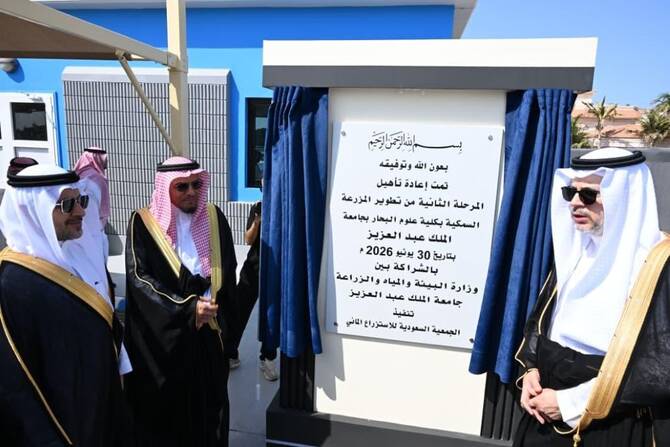

JEDDAH: An initiative to rehabilitate and redevelop its fish farm facility in Obhur, north of Jeddah, has been launched by King Abdulaziz University in partnership with the Ministry of Environment, Water and Agriculture.
The scheme, implemented through the ministry’s National Livestock and Fisheries Development Program, aims to strengthen cooperation between academic and government institutions and support sustainable growth in Saudi Arabia’s aquaculture sector.
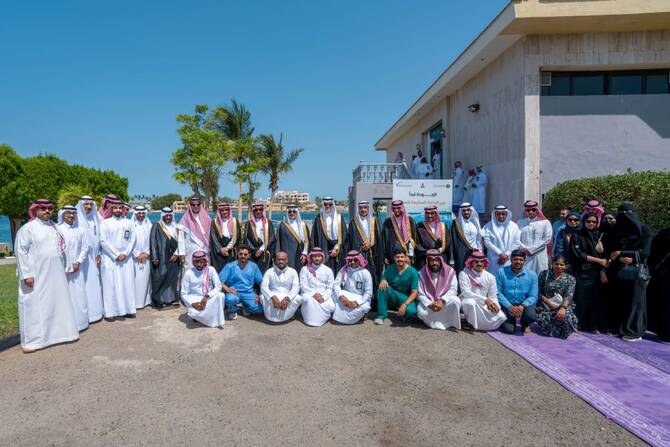
Its inauguration on Tuesday was attended by Deputy Minister of Environment, Water and Agriculture Mansour Al-Mushaiti, King Abdulaziz University president Tareef Al-Aama, Agriculture Undersecretary Suleiman Al-Khatib, and Assistant Undersecretary for Livestock and Fisheries Ali Al-Shaikhi.
Speaking to Arab News about the main challenges facing aquaculture in the Red Sea, Dean of the Faculty of Marine Sciences Turki Al-Raddadi said the region had a unique marine environment which presented significant challenges.
“One of the most prominent challenges is the consistently high and fluctuating water temperatures, which place farmed species under environmental stress that can affect growth rates and productivity,” he said. “These are becoming more pronounced as the impacts of climate change intensify.”
Disease remained one of the most significant economic challenges facing the aquaculture industry, he added, particularly in shrimp farming.
“Shrimp have relatively limited immune defenses compared with some other farmed aquatic species, making them more vulnerable to disease outbreaks that can result in substantial losses if they are not managed through effective scientific and preventive measures,” said Al-Raddadi.
There was also a need to develop more efficient and cost-effective feed, preserve the genetic diversity of farmed species, and produce locally adapted strains capable of withstanding the environmental conditions of the Red Sea. These are all essential to ensuring sustainable production and enhancing the competitiveness of Saudi Arabia’s aquaculture sector, he added.
The fish farm’s research programs seek to develop aquaculture feed using locally sourced and alternative ingredients, helping to reduce production costs and decrease reliance on imported materials.
Other projects focus on improving the health of fish and shrimp stocks to strengthen disease prevention and reduce dependence on conventional treatments.
The facility is also working to preserve the genetic resources of native species and develop strains that are better adapted to the environmental conditions of the Red Sea. Efforts are underway to improve hatchery performance and expand local fingerling production, reducing the need for imports and supporting greater self-sufficiency.
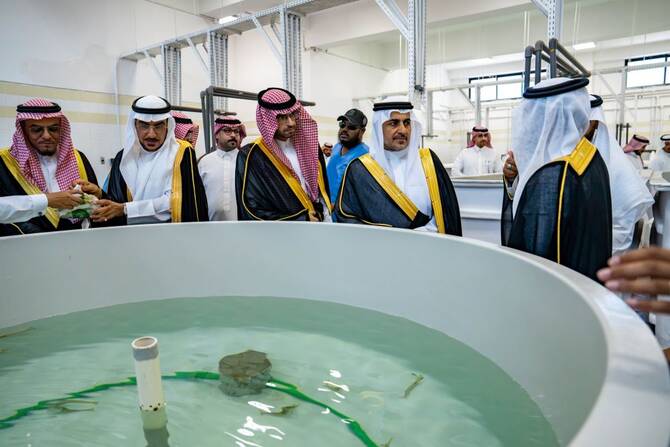
Those attending Tuesday’s event watched a documentary on the ministry’s work before Director General of Aquaculture Fares Al-Ghamdi, spoke about the current and future areas of collaboration between the ministry and the university. Al-Mushaiti later toured the project’s facilities.
Al-Raddadi said the redevelopment project was designed to enhance the university’s educational and research infrastructure in aquaculture, supporting applied scientific research, technology localization and food security objectives in line with Saudi Vision 2030.
The facility will provide an advanced environment for research on Red Sea-native species and for the development of aquaculture systems and technologies. It will also support genetic improvement programs and efforts to increase the productivity of commercially valuable aquatic species.


