

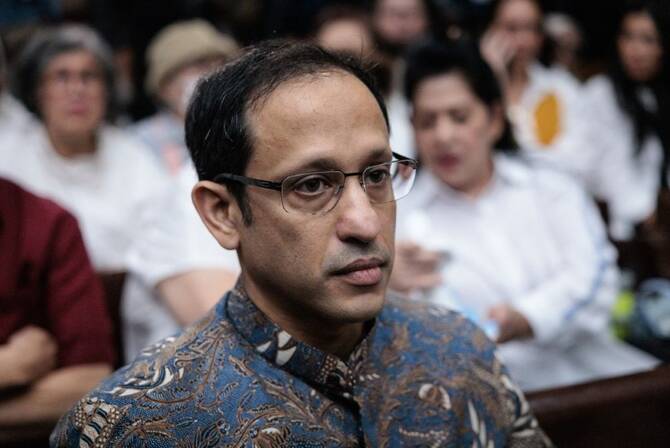

JAKARTA: An Indonesian court ruled on Tuesday that one of the country’s leading tech entrepreneurs, Nadiem Makarim, was guilty of corruption during his tenure as education minister and sentenced him to 10 years in prison.
The Jakarta Corruption Court also fined Nadiem, who served as education minister from 2019 to 2024, one billion rupiah ($55,870) and ordered him to pay $809 billion rupiah ($45 million) in restitution, or serve an additional five-year prison term.
His case is linked to the education ministry’s procurement of more than a million Google Chromebooks, to be used by students for remote learning during the COVID-19 pandemic.
In one of Indonesia’s most highly publicized corruption trials, prosecutors accused Nadiem of overpaying for laptops and software and ignoring internal evaluations. They argued that he was trying to enrich himself with the decision to purchase Chromebook laptops, which resulted in about $120 million in state losses.
The 41-year-old, who has pleaded not guilty, said that he will appeal the verdict immediately.
“I have effectively been sentenced to 15 years, because I have been ordered to pay 809 billion rupiah in restitution, which I do not have,” Nadiem said in a brief address to the media after the verdict.
“I will file an appeal immediately and continue fighting for the truth, for the sake of young people, professionals, and everyone innocent who is being criminalized.”
Before joining former president Joko Widodo’s cabinet in 2019, Nadiem had already gained popularity in Indonesia and across Southeast Asia for building Gojek, the Indonesian alternative to Uber, and turning it into a super app.
What began as an app specializing in courier delivery and motorbike taxi services expanded into a multi-service platform offering also food delivery and digital payments, exceeding more than 190 million downloads in 2020.
It became Indonesia’s first unicorn start-up, and was valued at about $10 billion by 2019, making it one of the country’s most successful tech companies.
Nadiem, who was recruited to bring a tech-driven approach to government in that same year, said that his decision to serve as education minister was in part to encourage Indonesian professionals to enter public service.
But the case against him and the final verdict could cause an opposite effect, he said in his closing statement before the judges last week.
“Youth across all of Indonesia, and the diaspora in every corner of the world, await your answer to the question echoing in their hearts: ‘Is this country still safe for us to serve?’”


