- Authorities restrict traffic and access to Islamabad’s diplomatic enclave ahead of state visit
- Leaders expected to discuss trade, regional stability and next phase of US-Iran diplomacy
ISLAMABAD: The government tightened security in the federal capital on Tuesday ahead of a visit by Iranian President Masoud Pezeshkian, with authorities restricting traffic and access to Islamabad’s Red Zone, a high-security area housing key government buildings, as the two countries prepare for talks following recent US-Iran negotiations brokered by Pakistan and Qatar.
The visit comes after American and Iranian officials met in Bürgenstock, Switzerland, for the first high-level talks held under the Islamabad Memorandum of Understanding, a Pakistan-mediated agreement signed earlier this month after weeks of conflict triggered by joint US-Israeli strikes on Iran on Feb. 28.
Pakistan played a key mediating role during the conflict, helping secure a ceasefire in April, arranging the first direct high-level talks between US and Iranian officials in Islamabad and continuing to relay messages between the two sides that ultimately led to the signing of the memorandum by Washington, Tehran and Islamabad.
“The entry of all heavy traffic into Islamabad from any direction or highway will remain suspended from midnight until further notice,” Islamabad police said in a public advisory issued ahead of the visit.
“Except for the Marriott and Margalla Road entrances, all entry points to the Red Zone will remain completely closed for all kinds of traffic,” the advisory added.
Separately, Pakistan’s cabinet division directed ministries, divisions and other government offices located in Islamabad’s Red Zone to work from home on Tuesday, while exempting key institutions including the Prime Minister’s Office, Foreign Ministry, Interior Ministry and parliament.
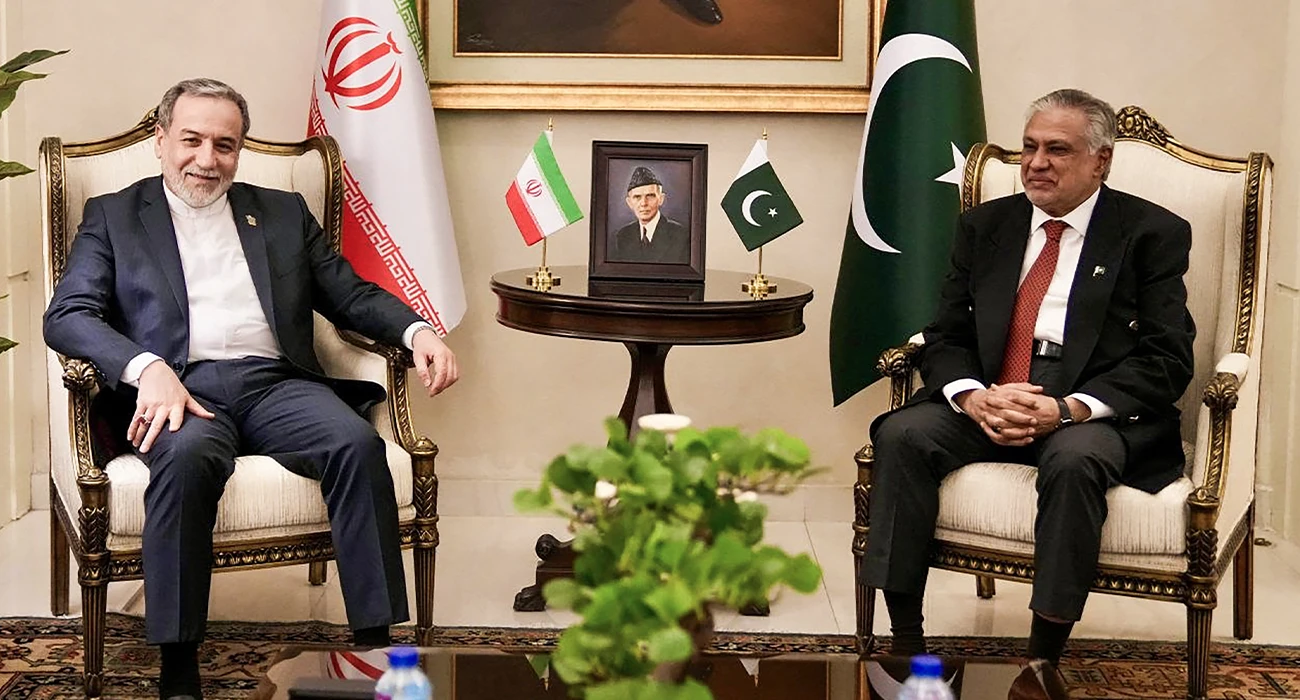
Pezeshkian is expected to arrive later on Tuesday accompanied by a high-level delegation of ministers and senior officials, with both sides expected to discuss expanding trade, investment, energy cooperation and regional connectivity alongside ongoing diplomatic efforts.
Pakistan’s foreign ministry said the Iranian president would meet President Asif Ali Zardari and hold talks with Prime Minister Shehbaz Sharif during the state visit.
“During the visit, the two sides will review the full spectrum of bilateral relations and explore new avenues to further deepen cooperation across diverse sectors, including trade, energy, border security, people-to-people exchanges, and regional connectivity,” the ministry said in a statement on Monday.
It added the visit would also provide an opportunity to discuss diplomatic engagements following the signing of the Islamabad Memorandum of Understanding, as well as regional and international developments of mutual interest.
The trip will be Pezeshkian’s second visit to Pakistan as president. During his first visit in August 2025, the two countries pledged to increase bilateral trade to $10 billion, deepen economic cooperation and strengthen coordination on regional security issues.
Pakistan’s recent mediation efforts have not only boosted engagement with Tehran but also laid the groundwork for a diplomatic process aimed at resolving disputes over Iran’s nuclear program, sanctions and broader regional security concerns.
At talks held in Bürgenstock, Switzerland, on Sunday, US and Iranian officials gathered for the first time under the Islamabad framework of agreement. A joint Pakistan-Qatar statement issued after the meeting said the parties had agreed on a roadmap toward reaching a final deal within 60 days and established mechanisms to support implementation of the accord.
The talks were attended by Sharif and Pakistan Army Chief Field Marshal Asim Munir alongside Qatari mediators.
Ahead of Pezeshkian’s visit, Iranian and Pakistani officials have emphasized the importance of expanding bilateral cooperation while supporting the diplomatic process.
During a visit to Tehran on Saturday, Pakistani Interior Minister Mohsin Naqvi met the Iranian president, who praised Islamabad’s role in supporting diplomacy and efforts that helped secure a ceasefire and end the conflict, according to Iran’s state-run IRNA news agency.
The Iranian president also stressed Tehran’s commitment to expanding cooperation with Pakistan and discussed plans to pursue greater economic, trade and investment ties between the neighboring countries.
Pakistan and Iran share close political, economic and cultural relations, although ties have periodically been complicated by security challenges along their common border.
Both countries have recently sought to deepen cooperation in trade, connectivity and regional stability.