


RIYADH: On a quiet street in Riyadh, behind an ordinary door and inside a modest room packed with amplifiers, guitars and recording equipment, some of Saudi Arabia’s heaviest music is being created.
For years, Saudi rock and metal musicians faced a common problem: finding a place that understood their sound. While music studios existed, few were equipped to record the aggressive guitars, powerful drums and complex arrangements that define rock and metal. Many bands had little choice but to travel abroad to produce their music.
That challenge inspired musician and producer Kamal Khalil to build Camel Core Music Studio, a bedroom studio dedicated to helping local bands record their singles and albums without leaving the Kingdom.
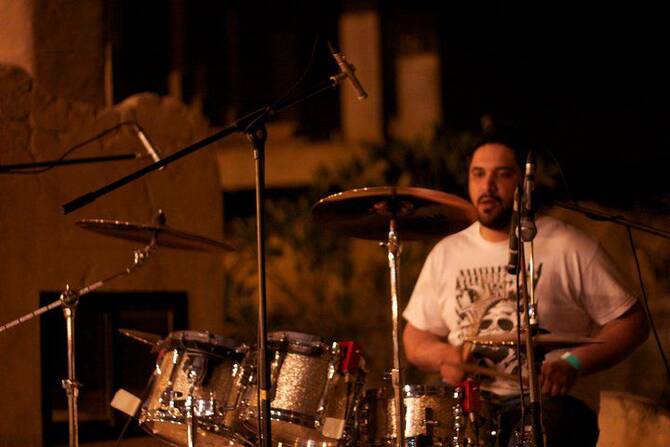
Despite its small size, the studio has become an important part of Saudi Arabia’s alternative music community, enabling bands including Deathless Anguish, Sound of Ruby, Fanatic Rollers, Inversion and Halak to record their music.
“I started providing these services because there’s a lack of this within the scene,” Khalil told Arab News. “A lot of bands travel outside Saudi Arabia to record, and many musicians don’t have experience in tracking. I’m trying to help through these services and also share my knowledge with anyone interested.”
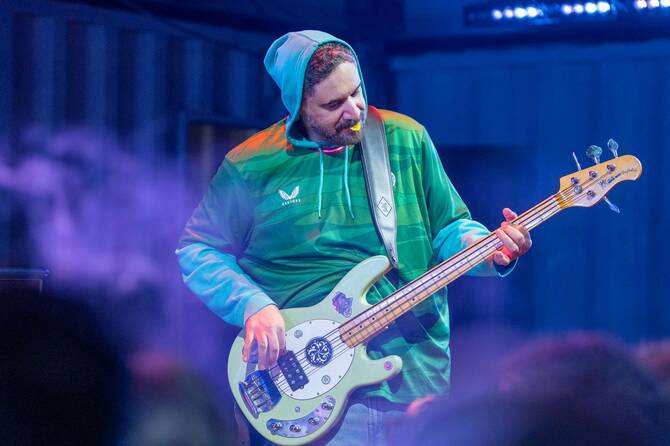
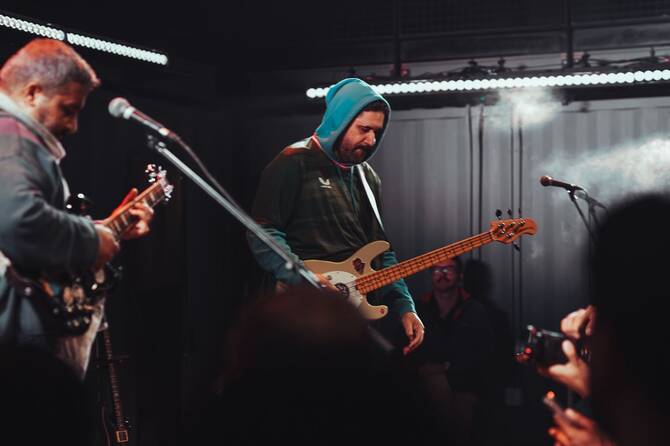
The studio is the result of a journey that began more than two decades ago. Khalil is a multi-instrumentalist who plays guitar, bass and drums, he is currently the bassist for Sound of Ruby and plays guitar with Deathless Anguish.
“I’ve been into rock and metal since the late ‘90s,” he said. “In the early 2000s, I developed the Saudi rock and metal society forum SAmetal, where the Saudi scene used to gather and discuss music.”
A major obstacle quickly became clear: there were no local studios capable of properly recording rock or metal music.
“So I started learning more about recording and mixing,” Khalil said. “Two years ago, I finally graduated as a professional music producer from Berklee Online.
“I think the biggest challenge right now is the lack of live shows and also the frequency of releases from bands,” he continued. “Although this is getting better.”
The studio’s client list reflects Khalil’s decades of involvement in the scene. Alongside his own bands, he has recorded projects for Grieving Age and Wasted Land and is currently preparing to work with several new bands.
His commitment goes beyond recording. He regularly advises younger musicians on production techniques, helps bands prepare for performances and even lends equipment free of charge.
“I try my best to guide emerging musicians in terms of production elements and choices without changing their ideas,” he said. “The new bands here are really creative and they are good musicians. If there’s something that can be added or played in a more emotional way, I suggest it.”
His support often extends to live events, where he helps bands set up equipment and improve their sound.
“I think the scene reached its peak around 2006,” Khalil said. “I remember there were at least 30 bands back then.”
After a period of decline, he now sees signs of a revival.
“In recent years, it started to pick up again,” he said. “I see a lot of youngsters coming up, which makes me happy. Despite the rise of EDM and the trend where everyone wants to be a DJ, these young musicians still want to play rock and metal.”
For Khalil, that renewed interest is motivation to keep building.
“I would like to upgrade the studio in the future to become a real professional studio with enough space to record bands live,” he said. “I’d also like it to become a rehearsal space and work with more local bands, to help as many musicians as I can.”
In a country where rock and metal have often existed on the margins, Camel Core Music Studio is proving that passion, persistence and a room full of equipment can help keep an entire scene alive.


