


QUETTA: On a hot June morning, Zahoor Ahmed arrived at his regular spot in the southwestern Pakistani city of Quetta and received more than two dozen crates filled with falsa, a small, round, sweet-and-sour tropical berry native to South Asia, from a trader in the neighboring Sindh province.
As soon as the 32-year-old dealer starts unwrapping them, more than a dozen local vendors of this short-seasoned berry arrive and start parking their pushcarts alongside Quetta’s Joint Road to collect their stock of the berry to begin selling it on the streets.
Sweet and sour in taste, the berry is a fruit from the tree called Grewia Asiatica which thrives in the unique, moist climate of Pakistan’s southern Sindh and eastern Punjab provinces. But the demand for this perishable fruit rises in summers.
As temperatures rise to their extremes in June and July in the southwestern Pakistani city of Quetta, so does the number of local residents who either eat this berry or drink its juice to cool off their bodies.
“Quetta has a good market for it, and every year we come here from [Balochistan’s] Jaffarabad district and set up falsa carts here,” Ahmed, a local dealer, told Arab News.
“It is very good for the stomach. Those who know its benefits buy it more, while some buy it to make juice and others to eat it raw.”
For Ahmed, who has been selling falsa from May till July for the last six years, the local berry offers an economic opportunity.
He buys 40 kilograms of falsa for Rs5,500 ($19.78) and sells it for Rs300 ($1.80) per kilogram to customers in Quetta.
‘PRICELESS GIFT’
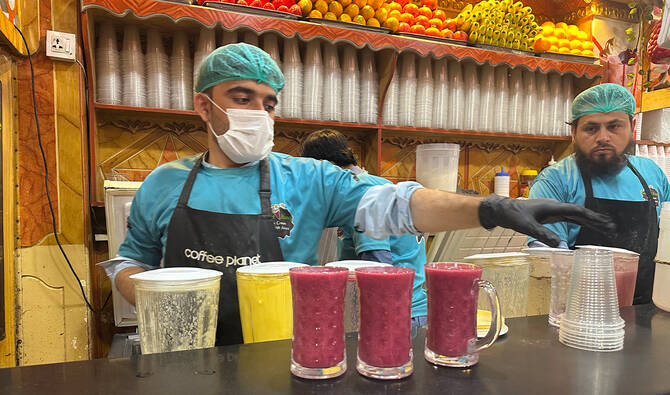
While yogurt-based lassi, lemon sodas and sugarcane juice are popular summer drinks in Pakistan, many Quetta residents prefer falsa and its juice.
Muhammad Yaseen, a resident of Quetta’s Faisal Town, said he starts his day with chilled, fresh falsa juice in summers.
“It is a priceless gift given by God that we get in summers,” the 55-year-old said. “People still don’t have complete information regarding the health benefits of falsa. If people knew about how it provides immunity to the human body, everyone would start using it.”
Ali Ahmed, a 45-year-old man who survived a cardiac arrest in January, said he had heard from doctors that it contains no sugar and has countless benefits.
“Last year, it was expensive, but this year it is Rs300 ($1.08 per kg), which is affordable and within a common man’s reach.”
RICH NUTRITIONAL PROFILE
Falsa is among very few plant-based fruits that have amino acids, which serve as the fundamental building blocks of proteins, very low glycemic index that has minimal impact on blood sugar levels, while the berry contains antioxidants and bioactive compounds that have beneficial physiological effects on human health, according to experts.
“If we talk about its nutritional profile, it is high in vitamin C, in potassium, iron, while it has a very balanced calorie count for the human body,” Dr. Gulalai Rehman, a senior nutritionist and food scientist at Arya Institute of Medical Science in Quetta, told Arab News.
Asked whether this berry is more effective in liquid form or in raw form, she said it was best if the berry was not consumed with sugar.
“We know from our region that we always add sugar to any drink, if we are adding sugar in falsa obviously it reduces its potential of healing, potential of antioxidants and glycemic index,” Rehman said.
Tahir Arain, a fruit and vegetable supplier in Sindh’s Hyderabad district who has been sending falsa shipments to Balochistan and Punjab for the last 15 years, said climate change and weather abnormality have also affected this berry.
“The variations that have occurred in the weather, this year’s crops were affected,” the 43-year-old falsa trader said.
“Despite this, prices are low for this year and premium quality falsa is being sold for Rs5,500 rupees ($19.78) to Rs6,000 ($21) for a 40kg stock in this largest fruit market.”
When asked why prices were low despite changing weather patterns damaging falsa crops, Arain said:
“The intensity of the heat this year is even higher than last year. People brought their crops to the market early at low rates.”
Quetta is a city where falsa sales continue longer than any other region of the country, Arain said.
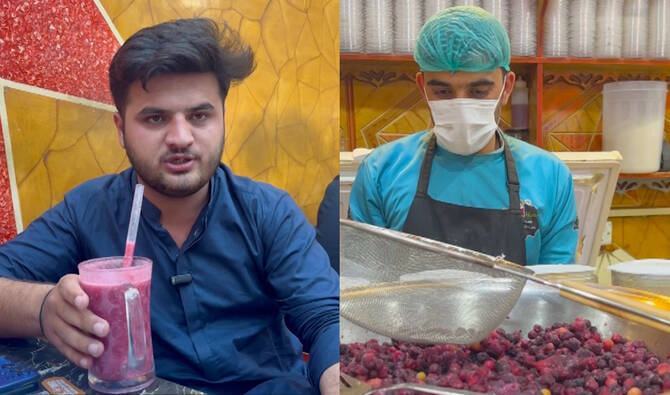
“We wait for this short-season berry in summer because it refreshes our body,” said Muhammad Yasir, an 18-year-old student who arrived at a fresh juice shop along with his friends to drink falsa juice.


