

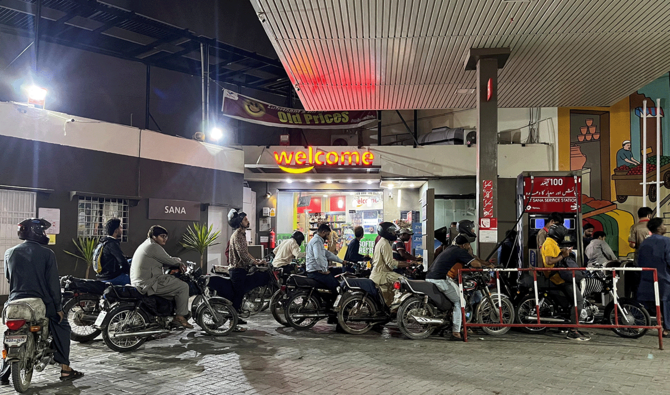

ISLAMABAD: Pakistan on Friday cut the price of petrol by Rs4 per liter and lowered high-speed diesel rates by Rs2 per liter for the coming week, the energy ministry said, as global oil prices retreated on expectations that a US-Iran deal could ease disruptions to crude shipments through the Strait of Hormuz.
The reduction marks the fifth cut in petrol prices in recent weeks after earlier fuel price increases linked to concerns over energy supplies and shipping through the strategic waterway, which carries about a fifth of global oil flows.
Pakistan, which relies heavily on imported fuel, remains vulnerable to fluctuations in international oil prices and disruptions to maritime supply routes.
“The Government of Pakistan has revised the ex-depot prices of the petroleum products for the next week starting from 13th June, 2026,” the Ministry of Energy’s Petroleum Division said in a notification.
According to the notification, the price of petrol was reduced to Rs373.78 ($1.34) per liter from Rs377.78, while the price of high-speed diesel was lowered to Rs378.78 ($1.36) per liter from Rs380.78.
The reductions come a week after the government cut petrol prices by Rs4 per liter while leaving diesel rates unchanged.
Brent crude prices on Thursday fell to their lowest levels since early March as traders grew more confident about an imminent peace agreement between the United States and Iran. Brent futures settled at $87.33 a barrel, down $3.05, or 3.37 percent.
Pakistan traditionally revises fuel prices fortnightly but has made more frequent adjustments in recent months amid volatility in global energy markets.
Fuel prices are closely watched in Pakistan as they feed directly into transport costs, electricity generation and inflation, influencing broader consumer prices.


