
KARACHI: Pakistan should consider targeted tax relief for manufacturers in its upcoming federal budget to help businesses navigate economic uncertainty stemming from regional tensions, the head of a leading foreign investors’ group said on Tuesday, citing measures adopted by countries such as Sri Lanka and Türkiye.
The budget for fiscal year 2026-27 is due to be announced on June 10 amid concerns that the conflict involving the United States and Iran could disrupt trade flows and keep energy prices elevated in Pakistan, which imports much of its fuel needs.
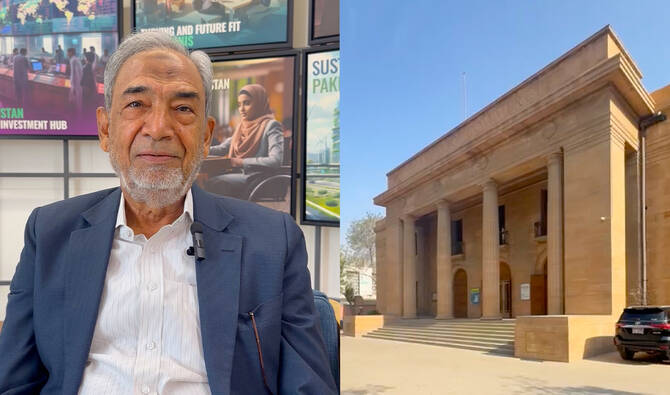
Founded in 1860, the Overseas Investors Chamber of Commerce and Industry (OICCI) represents around 200 of Pakistan’s largest foreign investors, including multinational companies such as Citibank, Coca-Cola, Akzo Nobel, Toyota, Mitsubishi Motors and Maersk.
Speaking to Arab News in an exclusive interview, OICCI Chief Executive and Secretary General M Abdul Aleem said its members contribute about one-third of Pakistan’s total tax revenue.
“Because of the war in this region, many countries have taken some good decisions,” he said. “For example, Turkiye has reduced its corporate tax rates for manufacturing industries from 25 percent to 12.5 percent just to make sure that their industries survive.”
Last month, Türkiye’s parliament halved the corporate tax rate for certified manufacturing and agricultural production companies to 12.5 percent.
“We have not asked for that type of a reduction, but we certainly have given this as a recommendation to the government authorities that despite all the challenges, one should consider this one percent or two percent reduction.”
Aleem said Sri Lanka had also introduced significant incentives to encourage investment and economic activity, adding that the OICCI had left it to the government to find creative solutions to the current economic challenges.
Asked about expectations for the upcoming budget, he said businesses understood the constraints facing Islamabad under the $7 billion International Monetary Fund (IMF) program, but they wanted a more competitive and predictable tax regime.
“What we have suggested to the government is that we should rationalize our tax rates to the level that is sustainable going forward,” he said.
Aleem said OICCI had proposed a gradual reduction in both super tax and corporate tax rates.
“There have been some one-time taxes in Pakistan, like super tax, for example,” he said. “It was introduced in 2022 for two years, but it has continued.”
Super tax is an additional three percent levy imposed on top of regular income tax once earnings exceed a specified threshold.
“We have asked for that to be reduced, not in one go,” he added. “But we have said that it can be reduced by one percent every year for the next three years.”
The chamber has also proposed reducing the corporate tax rate from 29 percent to 25 percent through annual one-percentage-point cuts.
Aleem also called for relief for salaried workers.
“The taxes on salaries are very high,” he said. “It was increased in the last two years and the maximum rate on the salaries is 35 percent.”
OICCI has proposed reducing the top salary tax rate to 25 percent and doubling the annual tax-free income threshold from Rs600,000 ($2,155) to Rs1.2 million ($4,309).
Asked about Pakistan’s investment climate, Aleem said the ongoing US-Iran conflict was affecting businesses across the region, with disruptions to trade routes and uncertainty surrounding strategic shipping lanes such as the Strait of Hormuz complicating imports and exports.
The biggest challenge, he added, was ensuring smooth and convenient business operations.
“We are here for the long-term and we would like to stay for the long-term,” he said, urging the government to maintain a rational tax regime and create conditions that would allow businesses to expand and continue contributing to the economy.