

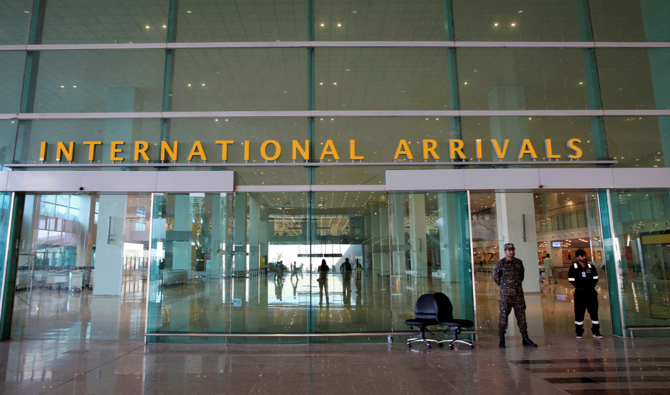

ISLAMABAD: As the first flight carrying Pakistani pilgrims home under the government’s Hajj scheme arrived in Islamabad on Monday, many returning worshippers described an emotional pilgrimage marked by tears, spiritual fulfillment and a lingering reluctance to leave Islam’s holiest sites.
For some, the strongest memories were not of the crowds or rituals but of standing before the Kaaba for the first time.
“Only tears were flowing from my eyes and there were no words on my tongue,” said Rukhsana Zulfiqar, a pilgrim from the eastern Pakistani city of Sargodha.
“It was just this: to keep looking, to just keep on looking [at the Kaaba].”
Others struggled to put the experience into words at all.
“Whenever a person goes there, they experience a feeling that cannot be described,” said Muhammad Ilyas Khan, a pilgrim from the northwestern city of Peshawar who performed Hajj for the first time this year after previously undertaking Umrah.
Hajj, one of the five pillars of Islam, is required once in a lifetime for Muslims who are physically and financially able to undertake the journey. Pakistan was allocated a quota of nearly 179,000 pilgrims this year, including about 119,000 under the government scheme and around 60,000 through private tour operators. While private operators began bringing pilgrims home last week, Monday’s arrival marked the return of the first group traveling under the state-managed Hajj program.
The Saudi Arabian Airlines flight carried 370 pilgrims to Islamabad, where they were received by Federal Minister for Parliamentary Affairs Dr. Tariq Fazal Chaudhry and officials from the Ministry of Religious Affairs.
Many returning pilgrims praised Saudi authorities for managing the pilgrimage despite intense summer temperatures, pointing to expanded cooling systems, improved transport services and crowd-management arrangements introduced after previous Hajj seasons were affected by extreme heat.
“Saudi Arabia’s management was excellent,” Zulfiqar told Arab News at the airport.
“Their army [security], their everything overall, was very good.”
Pilgrims said air-conditioned tents in Mina and improved transport services between key Hajj sites helped make this year’s pilgrimage significantly more comfortable.
“The tents in Mina were air-conditioned with proper, effective cooling, their bus service was highly improved,” said Raja Naveed, a pilgrim from Chakwal.
“They took us from Arafat to Muzdalifah by bus and later, they also brought us back from Mina to Aziziya via the bus service. In terms of the Saudi government’s role, it was a highly commendable service.”
Khan said he had expected the pilgrimage to be physically challenging because of the summer heat and the sheer scale of the gathering, which draws Muslims from around the world.
Instead, he said, the experience unfolded with unexpected ease.
“We faced absolutely no difficulties, praise be to god,” he said.
For Pakistani authorities, the return operation is only beginning. More than 38,000 pilgrims are expected to arrive through Islamabad Airport alone by the end of June.
“The post-Hajj flight operation for the returning pilgrims [under government scheme] has commenced today, which will continue until June 30,” Pakistan’s Director of Hajj in Islamabad, Qazi Sami ur Rehman, told Arab News.
“A total of 129 flights will return, through which approximately 38,000 pilgrims will arrive back via Islamabad Airport.”
Yet for many pilgrims, the journey home brought mixed emotions.
“I have physically returned but our hearts are still left behind there,” Naveed said.


