

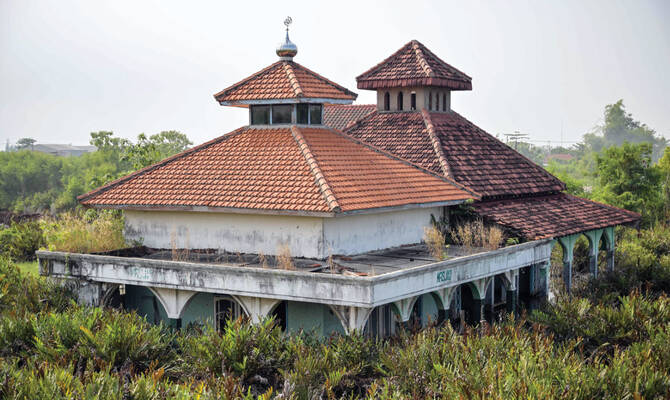

SIDOARJO: Harwati clasped her hands and offered a prayer on the edge of a sludge lake on the Indonesian island of Java, as dozen of residents gathered to mark two decades since mud volcano eruptions began displacing thousands.
On May 29, 2006, the earth in the Sidoarjo district of East Java province opened up, ejecting pungent, steaming hot mud that swallowed villages and factories.
Thirteen people died when an underground gas pipeline in the disaster zone exploded.
The eruptions, which continue to occur, destroyed at least a dozen villages and have displaced tens of thousands of people.
Harwati said the gathering, held on Friday to mark two decades since the disaster, was organized to remind the government that residents are still feeling the impact of the mudflow.
“Even though presidents change, we still hope (the government will) provide justice for us,” the 50-year-old said on Saturday, insisting that the disaster was “far” from over.
She demanded the government conduct a thorough examination of the mudflow’s impacts on the health of nearby residents, saying many locals have suffered from cancers after the incident. An area of over 600 hectares was swallowed by the mud, according to the government, as efforts to plug it, including with huge concrete balls, have proved ineffective.


