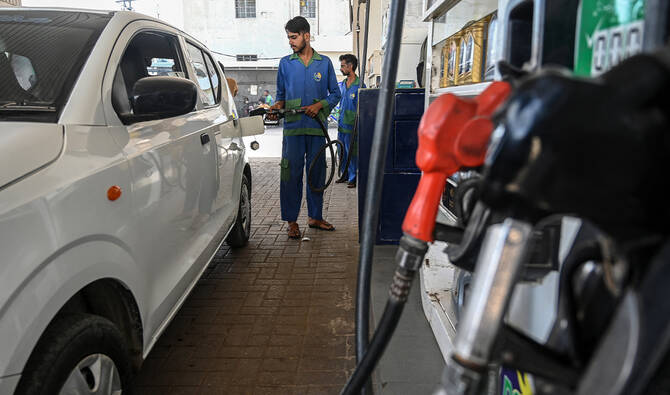

ISLAMABAD: Pakistan on Friday slashed petrol and diesel prices by Rs22 per liter on the third day of Eid Al-Adha, extending a series of fuel price cuts that the government said would provide relief to consumers as a large number of Eid travelers prepare to return home over the weekend.
The reduction marks the third fuel price cut in recent weeks and comes despite continuing uncertainty in global energy markets linked to the US-Iran conflict and disruptions to shipping through the Strait of Hormuz.
Pakistan, which relies heavily on imported fuel, remains vulnerable to fluctuations in international oil prices and maritime supply routes.
“The federal government has decided to reduce the prices of petrol and diesel,” Prime Minister Shehbaz Sharif’s office said in a statement.
“The price of petrol has been reduced by Rs22 and the price of diesel has also been reduced by Rs22.”
The statement described the reduction as an Eid gift for the public.
“The prime minister had promised the nation that relief would be provided whenever room was available, and that promise has been fulfilled exactly as made,” the statement said.
Pakistan traditionally revises fuel prices on a fortnightly basis but has adopted more frequent adjustments in recent months as authorities respond to volatility in international energy markets.
The South Asian country had earlier raised petrol and diesel prices after the outbreak of the US-Iran war amid concerns about energy supplies and shipping through the Strait of Hormuz, a strategic waterway through which roughly one-fifth of the world’s oil and liquefied natural gas supplies normally pass.
Since then, authorities have continued to adjust the prices, which remain elevated despite recent reductions.
Fuel prices are closely watched in Pakistan because they directly affect transportation costs, electricity generation and inflation, often influencing the prices of goods and services across the economy.
The prime minister’s office said the government had continued providing relief to consumers despite difficult economic conditions and pointed to earlier subsidies for fuel users, including public transport operators, motorcyclists and rickshaw drivers.
It also said Pakistan had maintained uninterrupted fuel supplies despite regional turmoil, contrasting the situation with shortages reported elsewhere in the region during periods of heightened tension.