



RIYADH: Saudi Arabia’s push to expand female participation in sports began in 2017, when physical education was introduced in girls’ public schools for the first time.
The following year, stadiums previously restricted to men were opened to women and families, marking a broader shift in access under Vision 2030.
This is reflected in key sporting events across the Kingdom. In the Riyadh Marathon, participation by Saudi female participation rose from 18.7 percent in the inaugural 2022 edition to 25.8 percent in 2026, according to the Saudi Sports for All Federation.
“This year’s edition featured a 90-year-old runner in the 5 km race, a moment that captures the inclusive spirit of an event open to all ages and abilities,” Shaima Al-Husseini, the federation’s managing director, told Arab News.
The increase in women’s participation reflected efforts to create a more inclusive sports environment through sustainable programs and flexible initiatives that consider cultural, social and physical considerations, she explained.
“Central to this effort is the creation of safe and welcoming spaces where women can engage in sports with ease, strengthening their sense of belonging and long-term connection to an active lifestyle,” said Al-Husseini. “What we see today is the result of this deliberate and sustained approach, where sport has become a conscious daily choice for women.”
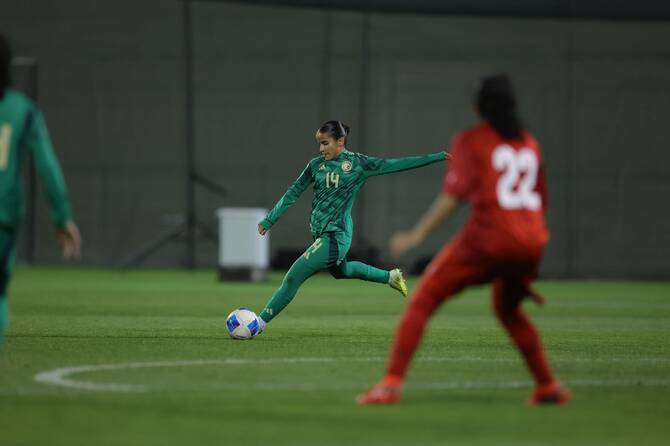
Majd Al-Otaibi, began playing football at the age of six while living overseas, but stopped after returning to Saudi Arabia. She spoke to Arab News about her journey into the sport.
“When I first started playing in Saudi I couldn’t believe that there was football. My dad was the first one who was surprised … he signed me up, me and my sister, and then I continued playing on hopes that there will be a future. And there was a future,” she said.
Al-Otaibi highlighted a marked shift from previous years, when opportunities were limited and less widely accepted, to a more supportive environment today.
“I feel like there’s a big difference from the opportunities before and to the opportunities now, because before, a lot of families … (were) not very open to the idea of women playing football,” she said. “But (with) time, they accepted it, and this is what helped us open more opportunities. I think every year this gets better, and I feel like the Saudi Federation is doing an amazing job at opening up opportunities for Saudi women in sports in general.”
She also said she was optimistic for the next generation of athletes and added she hoped to continue developing her career internationally.
“I’ve seen many young athletes who just started and they have an amazing talent, and I’m just excited for what Saudi women have to offer in sports in the future,” she said.
“I would like to play outside of Saudi to come back better for the national team and to represent my country in the best way possible … I would like to become one of the best players.”
More than 70,000 girls are competing in school leagues, according to the Vision 2030 website, while the workforce behind the sector is also expanding, with more than 1,000 coaches supporting the development of women’s sports.
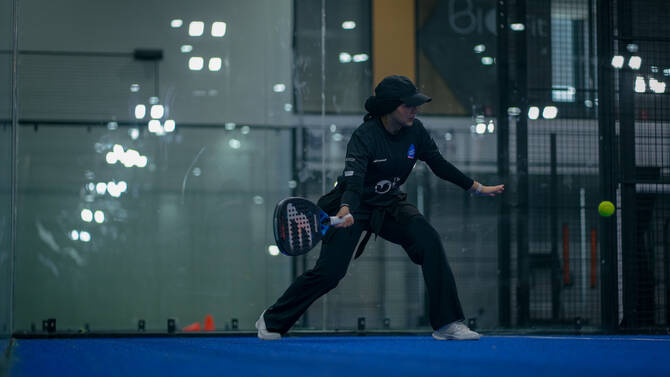
Sawsan Al-Hindi, a Saudi padel player, pointed to the sporting opportunities now available for women.
“It’s becoming normal to see women competing and representing teams, which is something really positive,” she told Arab News. “Before Vision 2030, these opportunities were limited and less accessible."
Al-Hindi began playing padel in 2022 while on a scholarship in Australia, initially as a way to cope with academic pressure before gradually transitioning into competitive play. She later ranked 13 in Saudi Arabia and first in the Eastern Province last year.
“It wasn’t one specific moment, but more of a gradual shift. Once I started competing and seeing my level improve, I began to take it more seriously,” she said, adding that confidence was one of her main early challenges.
“I used to lose my confidence quickly and overthink my mistakes during matches,” she said. “Another challenge at the beginning was finding a consistent group or community to play with. It wasn’t always easy to find the right people to train and play matches with regularly.”
Al-Hindi said access to tournaments and structured competition played a key role in her development: “Having access to tournaments and a competitive environment made a big difference. But also, having the right guidance played a huge role. My coach, Lucas Ticera, was one of the main reasons I continued and developed in padel.”


