

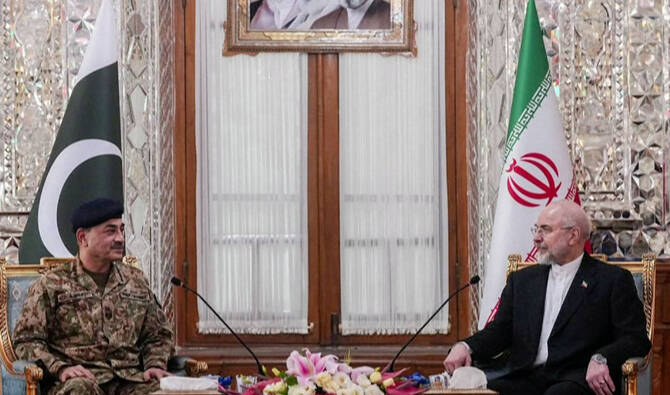

TEHRAN, Iran: Pakistan’s powerful army chief met Iran’s parliament speaker on Thursday, Iranian state television said, after Pakistani mediators traveled to Iran to press efforts to end the war with the United States and Israel.
“Field Marshal Asim Munir, Commander of the Pakistan Army, who traveled to our country yesterday, met and held talks with Mohammad Bagher Ghalibaf... this Thursday morning, April 16,” the report said.
Separately, Pakistan’s foreign office spokesperson Tahir Andrabi said on Thursday that Islamabad is maintaining open communication channels with the US and Iran as part of ongoing efforts to sustain peace talks.
The diplomatic push comes after weeks of war in Iran before a temporary truce was announced and Pakistan hosted rare direct talks between US and Iranian officials in Islamabad, positioning itself as a key intermediary between the two sides.
“Pakistan has maintained open channels of communication with the concerned parties as part of our facilitative and mediatory role,” Andrabi said during his weekly news briefing.
He said Pakistan’s leadership remained engaged at multiple levels, including the ongoing three-nation visit by Prime Minister Shehbaz Sharif in the region and Munir’s trip to Iran, reflecting a continued push for dialogue and de-escalation.
Andrabi said the Islamabad talks between US and Iranian delegations over the weekend were prolonged and intensive, highlighting the complexity of the negotiations.
“The talks continued for 21 hours, that is the duration of actual negotiation,” he said. “Overall, the process continued for well above 30 hours, if you count the movement of the delegations and the momentary breaks for meals and coffees and so on.
“So as such, the entire negotiation process was intensive and extensive, both in terms of scope and timelines.”
The White House has indicated that any future negotiations with Iran could again take place in Islamabad, though no final decision has been announced.
Pakistan has stepped up its diplomatic outreach in recent weeks, holding extensive engagements with global leaders and positioning itself as a facilitator for dialogue amid a broader push to reduce regional tensions.


