



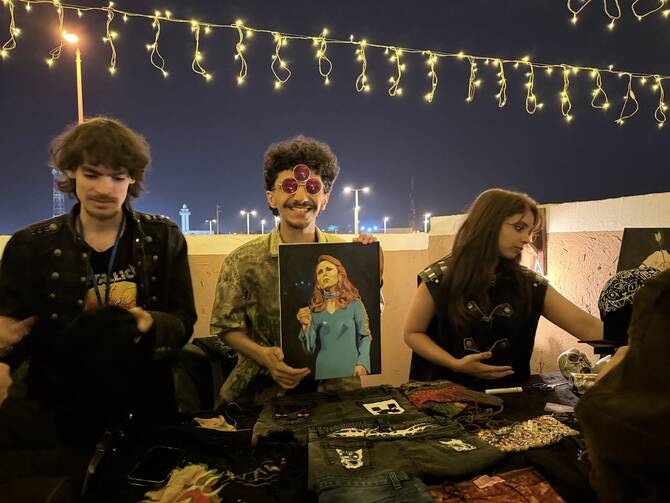

Riyadh: In the fast fashion economy, the business model is built on volume. Produce cheaply, sell quickly and replace constantly. The result is a system where clothing loses value almost as soon as it is purchased, feeding a cycle of overconsumption and waste. But for Black Veil Thrifts, value begins at the opposite end of that chain, with what has already been discarded.
Founded by Fahad Al-Omairi, BVT operates on a circular model that captures value from clothing that would otherwise be written off.
The process starts with sourcing. Instead of investing in raw materials or manufacturing, the collective acquires garments through donations or low-cost thrifting, dramatically reducing input costs while diverting textiles from landfills.
In financial terms, this flips one of fashion’s biggest expenses, production, into a near zero starting point.
That margin is then rebuilt through creativity. Each piece is redesigned, repaired or entirely transformed by local artists, turning basic secondhand items into distinctive, higher-value products.
“We noticed a lot of people in the metal scene only shop from fast fashion platforms, wear items for a few months, then discard them. Meanwhile, local Saudi artists are being left jobless and ignored,” Al-Omairi told Arab News.
By inserting artists into the value chain, BVT shifts where money flows. Instead of profits concentrating at the manufacturing or retail level, the majority is directed toward creators.
Artists receive 60 percent of each sale, a structure that prioritizes labor and creativity over mass production. “Instead of every artist having to fend for themselves in this brutal job market, we work together. We give them fair wages and a platform,” he said.
The distribution model goes further. A single item may pass through multiple hands. One artist repairing damage, another adding design elements, and others contributing finishing touches. Each participant receives a share of the final sale based on their contribution.
The result is a layered income stream generated from a single product, in contrast to the one-time transaction typical of fast fashion.
This collaborative structure also reduces barriers to entry for emerging creatives. By centralizing logistics, storage and sales under one platform, BVT allows artists to focus on production rather than overhead.
“We handle the logistics, the warehouse and the selling. It is all centralized, so artists can focus on their work,” Al-Omairi explained.
The economic impact extends beyond clothing into the wider creative sector. For artists such as Lurelin, the platform has become a gateway to sustained work and collaboration.
“As an independent artist, Black Veil has genuinely been instrumental in connecting me with other amazing artists, especially through collaboration and paid jobs, people I would have otherwise never met,” Lurelin said. “A lot of times I’ve faced a problem, and Fahad sat in front of me calling people until he found someone with the solution. Many of those people are now Black Veil endorsed artists alongside me.”
Lurelin added that much of his creative network had come directly through the collective. “From the director of my music videos to the artist of my single and album covers, as well as bandmates for my side project, all came from Black Veil. It genuinely would not have been possible without the people he has brought together.”
His role within the ecosystem also feeds back into the business model. “I provided a lot of stock for the event in Samhaniyah and I create much of the custom leatherwork requested,” he said, highlighting how contributors are both suppliers and beneficiaries within the same system.
Beyond individual opportunities, BVT is actively building infrastructure for the scene. “One of the main ways Black Veil is supporting us is by making sure new faces shine within events,” Lurelin said.
“They are currently working on a Black Veil endorsed concert, bringing musicians together to perform while the shop runs alongside, with all of us wearing custom pieces created by in-house artists.”
The long-term vision extends even further. “The goal is to build a studio similar to KEXP for the local scene,” he added, pointing to ambitions that go beyond fashion into media and music production.
There is also a wider supply chain implication. By enabling local bands and creatives to produce merchandise through upcycled materials, BVT reduces dependence on imported fast fashion goods. This keeps spending within the local economy while shortening supply chains and lowering environmental impact.
The brand’s identity adds another layer of value. The name “Black Veil” references themes of mourning and memory, reflecting the idea of giving new life to items that carry emotional weight.
“We can take people’s pieces with memories and upcycle them into art. We’re turning tragedy into joy,” Al-Omairi said.
Looking ahead, growth for BVT is not tied to producing more, but to involving more people. Increasing the number of collaborators expands both creative output and income distribution, reinforcing the circular nature of the model.
As Saudi Arabia advances its sustainability goals under Vision 2030, initiatives such as BVT demonstrate how circular economy principles can translate into real financial opportunity.
By minimizing input costs, extending product life cycles and redistributing profits across a network of local creatives, the model challenges traditional assumptions about how fashion generates value.
In an industry defined by excess, Black Veil Thrifts is building a system where less waste does not just reduce harm, it creates an ecosystem where creativity, collaboration and sustainability drive economic return.


