

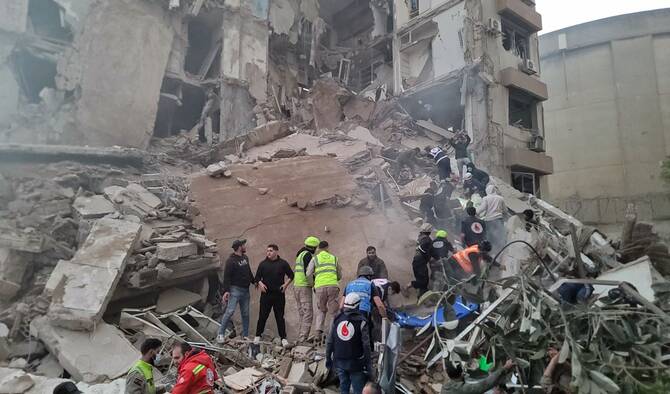

NEW YORK CITY: The UN’s high commissioner for human rights, Volker Turk, condemned a devastating wave of Israeli airstrikes across Lebanon on Wednesday, describing the levels of destruction and civilian suffering they inflicted as “nothing short of horrific.”
He said it was “appalling” that hundreds of civilians had been killed or injured in a matter of hours by the attacks.
“The scale of the killing and destruction in Lebanon today is nothing short of horrific,” Turk said.
“Such carnage, within hours of agreeing to a ceasefire with Iran, defies belief. It places enormous pressure on a fragile peace, which is so desperately needed by civilians.”
At one point, Israel carried out more than 100 strikes across Lebanon within the space of just 10 minutes. The bombardment targeted southern Lebanon, the eastern Bekaa Valley and the southern suburbs of Beirut.
Early accounts reported mass casualties and hospitals overwhelmed by the influx of wounded. A UN human rights team present at one of the strike zones in Beirut described scenes of devastation, with bodies being pulled from the rubble.
In southern Lebanon, an overnight strike reportedly hit a building facing Hiram Hospital in Al-Aabbassiyeh, near Tyre, killing four people and damaging the medical facility. In a separate incident, an ambulance belonging to the Islamic Health Authority in Qlaileh was struck, with reports that three people were killed.
“Each and every attack must comply with the fundamental principles of distinction, proportionality and precautions,” Turk said. “These principles are non-negotiable and must always be respected, whatever the circumstances of armed conflict.”
He called for immediate, independent investigations into all alleged violations and insisted that accountability must follow.
Wednesday’s escalation came hours after the announcement of a two-week ceasefire agreement in the US-Israeli conflict with Iran, which Israeli Prime Minister Benjamin Netanyahu’s office later confirmed did not apply to Lebanon.
It also comes against the backdrop of weeks of intensifying hostilities between Israel and Hezbollah. Lebanese authorities report that more than 1,500 people, including more than 200 women and children, have been killed in Israeli attacks since March 2, and more than 1 million people have been displaced.
Meanwhile, cross-border fire has also exacted a toll. Missile and drone attacks by Hezbollah on northern Israel between March 2 and April 7 reportedly resulted in civilian casualties, damage to residential areas, and displacement of residents.
Turk condemned all such attacks unequivocally, urging both sides to halt the hostilities without delay.
Compounding the concerns, Israel has issued evacuation warnings and displacement orders affecting about 14 percent of Lebanese territory, including the entire region south of the Zahrani
River, much of the southern suburbs of Beirut, and parts of the Bekaa Valley. Meanwhile Israeli demolitions of homes and commercial properties in Lebanese villages near the southern border with Israel continue.
“The scale of such actions, coupled with statements by Israeli officials indicating an intention to occupy or even annex parts of southern Lebanon, are deeply troubling,” Turk warned, calling on the world to urgently intervene to prevent the situation from deteriorating further.
“The international community must act quickly to help bring an end to this nightmare,” he said.
“Efforts to bring peace to the wider region will remain incomplete as long as the Lebanese people are living under continuing fire, forcibly displaced and in fear of further attacks.”


