

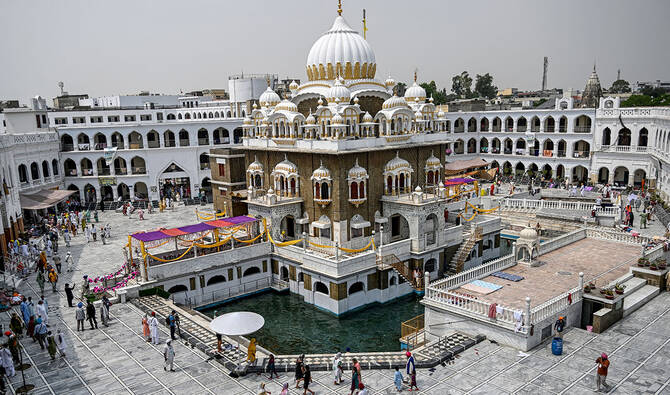

ISLAMABAD: Pakistan has issued over 2,800 visas to Sikh pilgrims from India to attend the annual Baisakhi festival this month, its High Commission in New Delhi said on Tuesday, in a gesture of religious diplomacy amid strained ties between the two countries.
Baisakhi, celebrated every year in mid-April, marks the founding of the Khalsa by Guru Gobind Singh in 1699 and is one of the most important religious festivals for Sikhs. The Khalsa refers to the Sikh community formally initiated into the faith through a distinct religious code.
Thousands of devotees from around the world travel to Pakistan during this period to visit sacred sites, including Gurdwara Panja Sahib in Hasan Abdal and Nankana Sahib, the birthplace of Guru Nanak, the founder of Sikhism.
“On the occasion of the Baisakhi festival, the Pakistan High Commission in New Delhi has issued visas to more than 2,800 pilgrims from India, so that they can participate in the annual festival to be held in Pakistan from April 10 to 19, 2026,” the mission said in a post written in Hindi on social media platform X.

Screenshot shows a post from the Pakistan High Commission in India’s official X account.
Pakistan has regularly issued visas to members of India’s Sikh community for religious pilgrimages despite tensions between the two South Asian nuclear rivals in recent years.
Last year, the two countries fought a brief but intense war that lasted for four days before a US-brokered ceasefire was put into place.
Pakistan also opened a visa-free border crossing with neighboring India called the Kartarpur Corridor that allows Indian Sikh pilgrims to visit Gurdwara Darbar Sahib in its eastern frontier region, where Guru Nanak spent his final years.
Religious tourism has remained one of the few consistent areas of engagement between the two countries, even as broader diplomatic relations remain largely frozen.


