
RIYADH: The Syrian government expects a leap of about 149 percent in its public revenues during 2026, driven mainly by oil and gas earnings, while the 2025 budget achieved the first surplus since 1990.
Syrian Minister of Finance Mohammed Yasser Barnieh said total public revenues are expected to rise to about $8.7 billion in 2026, with oil and gas constituting about 28 percent of that.
Revenues last year recorded $3.5 billion, an annual growth rate of 120.2 percent.
The minister pointed out that public spending is also expected to rise to about $10.5 billion in the 2026 budget, more than triple its 2025 level of $3.45 billion, an annual increase of 45.7 percent.
Despite this spending expansion, he explained that the 2025 budget achieved a small surplus of about 0.15 percent of the gross domestic product, the first surplus the country has witnessed since 1990.
He added that the Ministry of Finance intends to begin preparing for the 2027 budget starting next month, to be discussed in the People’s Assembly during the last quarter of 2026.
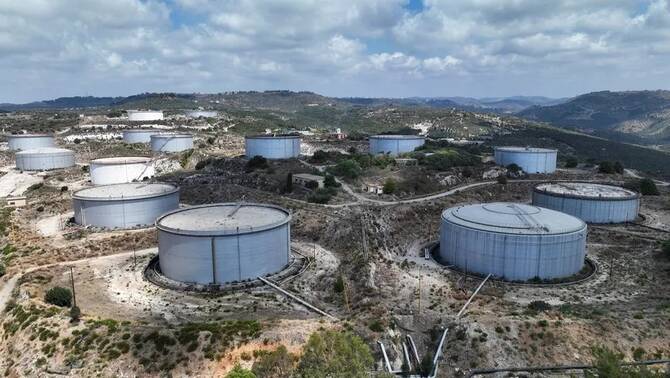
The country is working to revive its oil and gas sector after years of war, devastated infrastructure and a sharp decline in production. The nation is counting on reserves to attract global companies.
Syrian Energy Minister Mohammed Al-Bashir said last November that the ministry is in the process of exploring for gas in the Mediterranean, estimating the country’s offshore gas reserves at 1,200 billion cubic meters, with large areas remaining unexplored.
Last February, the Financial Times quoted the CEO of the Syrian Petroleum Co., Youssef Qablawi, as saying that less than a third of Syrian territory has been subjected to exploration so far, with large areas where no exploration wells have been drilled to date.
Agreements to increase oil and gas production
Since assuming power after the fall of Bashar al-Assad’s regime, the new administration in Syria has sought to attract foreign companies operating in various sectors, especially oil and gas.
During this month, the Syrian Petroleum Co. signed a contract with Saudi company ADES Holding, including maintenance and development of existing wells and drilling new exploration wells, expecting an increase in gas production of up to 25 percent after the first six months, rising to 50 percent by the end of the first year.
Last February, Syria concluded an agreement with US Chevron and Qatar’s Power International Holding to explore for oil and gas in territorial waters. Work is scheduled to begin within two months.
The country is also holding talks with major international energy companies to grant them oil and gas exploration licenses, amid estimates of undiscovered gas reserves reaching trillions of cubic meters.
At the end of last year, the Syrian Petroleum Co. signed a memorandum of understanding with US companies ConocoPhillips and Novatera aimed at developing the gas sector and increasing production from existing fields, in addition to a similar memorandum with the UAE’s Dana Gas to redevelop and expand a number of strategic fields.
The company is also holding talks with Eni, in addition to expected discussions with BP in London, while Damascus has expressed readiness to open the door to Russian and Chinese companies to invest in the sector, according to Qablawi.
New entities
Syrian President Ahmed Al-Sharaa issued three decrees establishing new entities in the mining, electricity, and water sectors to support infrastructure and reconstruction in the country, worn down by war for more than 14 years, according to the Syrian News Agency.
This comes after the Syrian government announced the establishment of an infrastructure support fund with government spending of no less than $3 billion, coinciding with the unveiling of the 2026 budget worth about $10.5 billion, meaning a major leap of about five times compared to the 2024 budget.
According to the three decrees, the Syrian Mining Co. was established, financially and administratively independent. The Syrian Electricity Co. was also established as a public holding company of an economic nature, fully owned by the state, in addition to launching the General Establishment for Drinking Water and Sanitation.
The three companies report to the Minister of Energy, and their main headquarters will be in the capital, Damascus.
The Syrian presidency expects the country’s GDP to range between $60 and $65 billion during the current year, supported by economic growth expectations of up to 10 percent, according to estimates from the Ministry of Finance announced at the beginning of the year.
The International Monetary Fund confirmed last February that the Syrian economy continues to show clear signs of recovery, with a notable slowdown in inflation and a small surplus in the 2025 public budget, describing these developments as reflecting improved management of fiscal and monetary policies.