

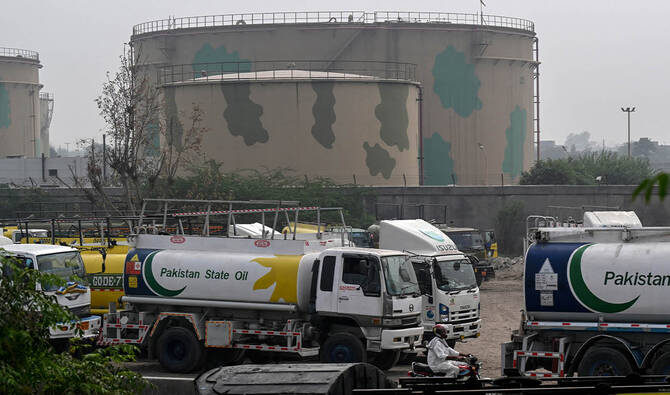

KARACHI: Pakistan’s refineries continue to operate at optimal levels and the overall supply of petrol, diesel and crude oil remains stable, the finance ministry said on Monday, days after Islamabad sharply raised consumer prices for diesel and petrol.
Pakistan last week raised fuel prices to historic highs, with petrol reaching Rs458.41 ($1.65) per liter and diesel Rs520.35 ($1.87), before Sharif announced a Rs80 ($0.29) cut in the petrol levy to ease the burden on consumers.
The development followed widespread disruptions in energy and cargo supplies through the Strait of Hormuz waterway due to the ongoing United States-Israel war on Iran and Tehran’s counterattacks in the region.
Pakistan cabinet’s committee to monitor petrol prices met on Monday to review the petroleum supply situation and market conditions following the recent price adjustment, focusing on ensuring supply continuity.
“Members were informed that the overall supply position remains stable, with diesel stocks providing approximately 25 days of cover, petrol availability sufficient to meet current demand, and crude oil stocks at around 12 days of cover, supported by incoming cargoes and scheduled imports,” the finance ministry said.
“The Petroleum Division apprised the Committee that import arrangements for the coming weeks are on track through a combination of commercial procurement and government-to-government engagements, while refineries continue to operate at optimal levels to maintain throughput and ensure efficient conversion of crude into refined products.”
In light of recent price movements, the committee emphasized continued vigilance across the supply chain to prevent hoarding, speculative behavior, and any disruption in product availability, according to the ministry.
The committee also reviewed the gas supply situation, including stock positions, and discussed options to manage gas availability for domestic consumers and its allocation between domestic and power sectors. It emphasized strengthening monitoring and data-driven oversight through the digital dashboard launched by the Oil and Gas Regulatory Authority (OGRA), which is designed to provide real-time visibility of stock levels, sales, and supply conditions from depots to retail outlets.
Pakistan, which relies heavily on imported fuel, has been trying to cushion consumers from the fallout of the conflict while maintaining supply. Sharif said the government had avoided the severe shortages and long queues seen in some other countries affected by the crisis.
Islamabad last week announced targeted subsidies, under which motorbike users are to receive Rs100 ($0.36) per liter, capped at 20 liters a month for three months, while small farmers are to get a one-time payment of Rs1,500 ($5.40) per acre to offset higher diesel costs during harvesting.
The government also announced monthly support for the transport sector, including Rs70,000 ($252) for freight trucks, Rs80,000 ($288) for larger transport vehicles and Rs100,000 ($360) for public passenger buses, while Pakistan Railways was to receive support to keep lower-class fares manageable.
Finance Minister Muhammad Aurangzeb, who presided over Monday’s meeting, emphasized the importance of timely data integration and directed all stakeholders to ensure prompt and accurate sharing of information to support effective utilization of the Oil and Gas Regulatory Authority (OGRA) dashboard for decision-making.
“Ensuring uninterrupted fuel availability, improving transparency, and protecting consumers remain key priorities, while also encouraging responsible consumer behavior,” he was quoted as telling officials.


