

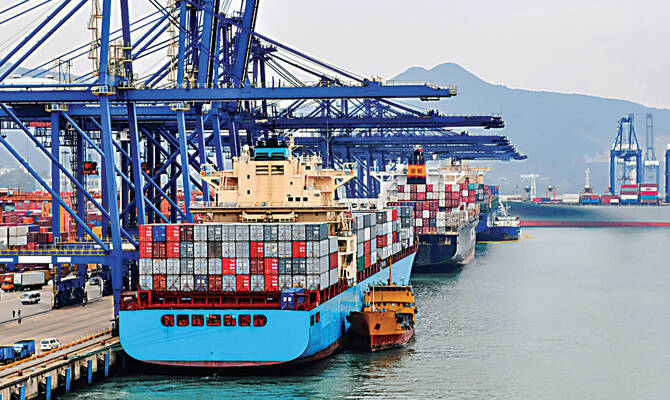

RIYADH: The Saudi Ports Authority, also known as Mawani, has extended the exemption period on storage fees to 20 days for both loaded outbound containers and empty inbound containers at King Fahd Industrial Port in Yanbu.
In a post on X, Mawani said the move is intended to enhance operational flexibility, strengthen supply chain continuity, and help exporters make more efficient use of port services.
The decision comes as part of Saudi Arabia’s broader efforts to support trade and reinforce supply chains amid regional disruptions linked to the ongoing conflict involving Iran, which has affected maritime traffic and contributed to the closure of the Strait of Hormuz.
To address these challenges, Mawani recently introduced five new shipping services in partnership with major global carriers, adding a combined capacity of 63,594 twenty-foot equivalent units. The authority has also expanded fee exemptions at other ports, including King Abdulaziz Port in Dammam and Jubail Commercial Port, where the storage fee exemption for empty containers was increased from 10 to 20 days.
“Our routes remain steady in a changing world,” Mawani stated, emphasizing its commitment to maintaining reliable operations.
The extended exemption for empty inbound containers is designed to encourage shipping lines to bring in more empty units, improving availability for exporters. At the same time, waiving fees for loaded outbound containers gives exporters greater flexibility and supports more efficient shipment planning through Yanbu.
Daipayan Adhikari, head of strategic projects and logistics solutions at United Warehouse Co. Ltd., told Arab News that the decision by the Saudi Ports Authority to extend the exemption period to 20 days at King Fahd Industrial Port in Yanbu is a practical step to improve port competitiveness and supply chain flexibility.
“From a logistics perspective, this move will help shipping lines reposition empty containers more efficiently and give exporters additional time to plan outbound shipments without immediate storage pressure. It also strengthens Yanbu’s role as an alternative gateway on the Red Sea, supporting smoother cargo flows and reducing congestion risk at other major ports,” he said.
Adhikari added that, overall, the initiative signals a continued focus on improving operational efficiency and encouraging greater utilization of Saudi ports for regional trade and export activities.
Ongoing regional tensions have disrupted shipping patterns, driving up freight costs and putting additional pressure on container availability across the Gulf. In response, Saudi Arabia has introduced measures to sustain maritime and logistics activity, including expanding integrated services across its Eastern region ports to ensure smoother vessel operations and faster turnaround times.
Earlier this month, the Kingdom also launched an international rail logistics corridor linking Eastern Province ports with the Al-Haditha border crossing. The route connects King Abdulaziz Port in Dammam, Al-Jubail Commercial Port, and King Fahd Industrial Port in Jubail to Jordan and other northern markets.
These efforts are part of a wider push to modernize Saudi Arabia’s ports and logistics infrastructure as global trade routes continue to evolve. Under Vision 2030, the Kingdom aims to position itself as a major logistics hub connecting Asia, Europe, and Africa, with Mawani playing a central role in this transformation.
More than SR2.2 billion ($586.6 million) in private sector investment has been directed toward developing multipurpose cargo terminals across eight ports, reflecting a strong commitment to improving logistics performance and supporting industrial growth.
In a notable development earlier this year, APM Terminals acquired a 37.5 percent stake in the South Container Terminal at Jeddah Islamic Port, integrating it into the global network of its parent company, A.P. Moller–Maersk. The move highlights growing international confidence in Saudi Arabia’s port infrastructure and its strategic importance along key East-West trade routes.
Saudi ports handled more than 320 million tonnes of cargo in 2024, reflecting expansion across bulk, general cargo, and containerized trade.
In 2025, container throughput reached 8.3 million TEUs, marking a 10.58 percent year-on-year increase, with export containers rising by nearly 12 percent and transshipment volumes expanding by approximately 11.8 percent.


