




TEHRAN: US-Israeli strikes have hit more than 30 universities across Iran since the war broke out in late February, Iran’s science minister said on Saturday.
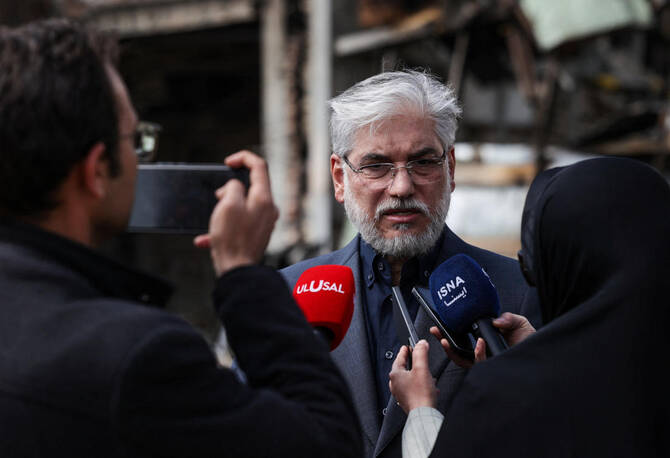
“To date, more than 30 universities have been directly targeted,” Hossein Simai Sarraf said during a visit to the Shahid Beheshti University in northern Tehran, which was struck on Friday.
President Donald Trump has sent mixed messages since the conflict began with a US-Israeli bombardment of Iran on Feb. 28, switching between hinting at diplomatic progress and making threats to bomb Iran “back to the Stone Ages.”
We considered this bridge our child, and we were very proud to see it grow.
Roozbeh Yazdi, Iranian engineer
On Saturday, he repeated his threats to intensify attacks on Iran if it failed to reach a deal or open the key Strait of Hormuz waterway.
Trump has bragged about bombing the B1 bridge, without explaining why it had been targeted.
“The biggest bridge in Iran comes tumbling down, never to be used again,” he wrote on his Truth Social platform alongside video footage of the wreckage.
According to Iran’s ISNA news agency, B1 was Iran’s most complex engineering project, built using an “extradosed” system that supports the deck through both suspension cables and arches.
Its highest point rises 176 meters above the ground and stretches 1,050 meters in length.
The bridge’s construction was part of a major motorway project aimed at reducing travel time between Tehran and northern Iran — a popular destination, especially for weekend trips to the Caspian Sea.
“This bridge was like our child,” Iranian engineer Roozbeh Yazdi said, fighting back tears.
Yazdi stood amid the wreckage of the Middle East’s tallest bridge, severed by strikes proudly claimed by Trump.
AFP visited the site on Friday during a press tour organized by Iranian authorities in Karaj, a city west of Tehran.
An official said 12 bombs had been dropped in the previous day’s attack.
The two main pillars are still standing. The word “Iran” in elegant calligraphy still crowns the structure.
But the force of the blasts had sliced the bridge in half at its midpoint.
Further strikes then destroyed the ends of the bridge deck, and twisted steel beams and chunks of concrete now dangle over the void.
Experts say they do not know if the bridge can ever be repaired.
“We worked hard to assemble these parts. We cried, we sweated buckets,” Yazdi said at the site, where the bridge had been due to open this summer.
Two cranes were still standing nearby, showing that the work, which began more than two years ago, was unfinished.
The bridge had not yet officially been named and was known simply as B1.
“We considered this bridge our child, and we were very proud to see it grow,” said Yazdi.
In the valley below the bridge, families had been picnicking on the grass when the blast struck.
AFP journalists saw a villa and residential buildings with blown-out windows — but no military installations.
According to the latest toll from the martyrs foundation of Alborz province, which includes Karaj, cited by the IRNA agency, the attack killed 13 civilians and wounded dozens.
“They (US and Israel) are attacking only the country’s and people’s infrastructure,” said Hamed Zekri, a 41-year-old engineer.
“We worked on this bridge for two years... morning and night... In the end, our efforts were destroyed in three hours.”
He said he was “so saddened” by the bridge’s destruction that he was at a loss for words.
Iranian Foreign Minister Abbas Araghchi said in a post on X: “Striking civilian structures, including unfinished bridges, will not compel Iranians to surrender.”
In another post, Trump said the US military “hasn’t even started destroying what’s left in Iran.”
“Bridges next, then Electric Power Plants!” he declared.
The Fars news agency published a list of the region’s key bridges that could be “potential targets of Iranian retaliation.”


