


DUBAI: A good night’s sleep is something many adults struggle to enjoy, but one gym in the UAE is trying to change that.
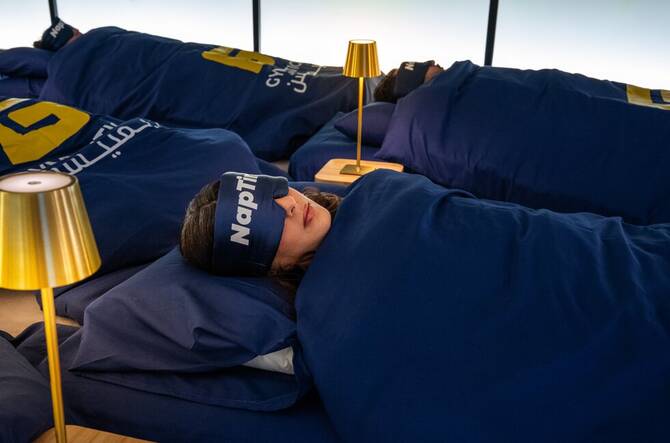
Regional fitness chain GymNation has launched NapTime, billed as the Middle East’s first-ever gym class designed to help participants fall asleep.
“Dubai felt like the perfect place to launch it because it’s a city that thrives on high energy and productivity — but that also means people often struggle to switch off,” GymNation CMO Rory McEntee told Arab News. “The class helps reframe rest as a performance tool rather than a luxury.”
The class launched in March and is structured in four stages as a “gradual pathway to rest,” says coach Desmond Wong.
The session begins with gentle, yoga-based stretching before participants use controlled breathing to lower heart rate and reduce stress hormones like cortisol in a section dedicated to guided breathwork.
The third stage features meditation accompanied by live handpan music before NapTime itself, a sleep environment with beds, duvets, pillows and eye masks which aim to make it easy to rest.
“In many ways, the most important stage is actually the preparation — the stretching, breathwork and meditation. The nap itself is the outcome, but the real value comes from guiding the nervous system into a state where rest becomes natural,” said Wong.
Dr Gurveen Ranger, a consultant clinical psychologist at Sage Clinics in Dubai, was among the team who designed the class and extols the benefits of sound sleep.
“It supports muscle repair, hormone regulation, cognitive performance and emotional wellbeing. When we sleep, the body carries out many of its most important recovery processes, from repairing tissues to consolidating memory and regulating metabolism,” she said.
“Without adequate sleep, physical performance declines, focus and decision-making worsen and long-term health risks increase. In fitness terms, sleep is essentially a built-in recovery system — it’s where much of the progress from training actually happens.”
The sleep-focused class is currently only available at GymNation in Dubai, but Wong shared an adapted approach that can be practiced at home.
He advises dedicating a few minutes to gentle stretching to release physical tension, followed by five minutes of slow, controlled breathing — inhaling through the nose and exhaling slowly to help calm the nervous system.
“After that, a short, guided meditation or simply lying down in a quiet, dimly lit room can help the body transition into rest,” he said, adding that reducing mental stimulation before bedtime and maintaining a consistent bedtime routine are important.
“The key idea is creating a small, intentional window where the body can shift out of ‘fight or flight’ mode and into a more relaxed state,” he explained.


