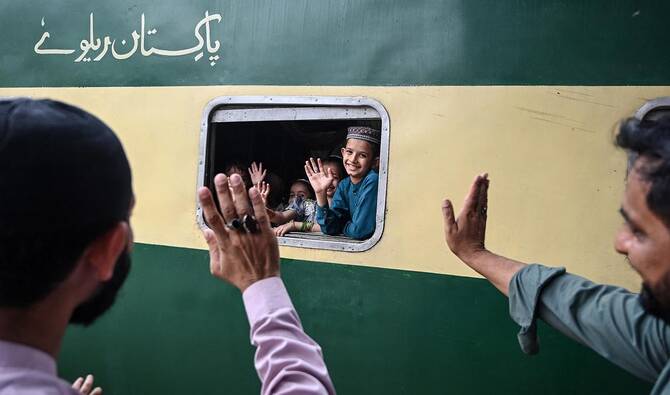

ISLAMABAD: Pakistan Railways recorded its highest-ever passenger revenues during the Eid holidays, an official statement said on Tuesday, earning more than Rs480 million ($1.7 million) over three days, as authorities step up efforts to revive the country’s rail network and improve services.
The state-run operator said it generated Rs110 million ($395,000) on the first day of Eid, Rs170 million ($611,000) on the second day and over Rs200 million ($718,000) on the third, with total passenger revenue exceeding Rs1 billion ($3.6 million) over the past week in total.
“This performance reflects positive policies and effective administrative measures,” Federal Minister for Railways Muhammad Hanif Abbasi said, congratulating the management.
He directed officials to accelerate efforts to improve passenger facilities and said upgrading railway infrastructure remained a top priority.
The department’s strong performance comes as Pakistan seeks to modernize its aging railway system to facilitate passengers and ensure smoother movement of goods, a key requirement for trade and economic activity.
The government has in recent years focused on upgrading tracks, improving train speeds and enhancing freight corridors linking ports such as Karachi with industrial centers, aiming to reduce logistics costs and support imports and exports.
Abbasi said the Karachi-to-Rohri railway track would be fully upgraded within the next three years, a move expected to improve travel standards and significantly increase train speeds.
Pakistan Railways has long struggled with underinvestment and outdated infrastructure, though its ongoing reforms are aimed at restoring public confidence and strengthening the sector’s role in both passenger travel and freight logistics.