


LONDON: The number of meningitis cases being probed by UK authorities has risen to 27, health officials said on Thursday, following a deadly outbreak centered on a university.
The UK Health Security Agency said in a statement: “Fifteen laboratory cases are confirmed and 12 notifications remain under investigation, bringing the total to 27.”
Two people have died since the epidemic came to light at the weekend, centered on the University of Kent in southeastern Canterbury and a local nightclub popular with students.
Prime Minister Keir Starmer has led urgent calls for young people who visited the nightclub on the weekend of the outbreak to come forward, adding that health experts were working to identify close contacts of those who were ill.
Speaking in parliament on Tuesday, he asked “anyone who attended Club Chemistry on March, 5, 6th or 7th to come forward, please, to receive antibiotics.”
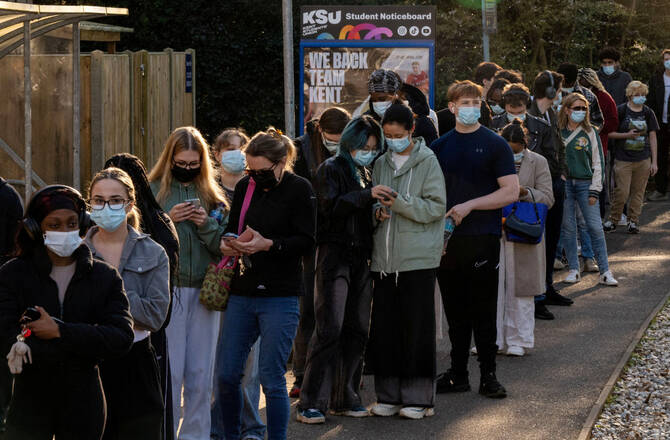
The university has rolled out a targeted vaccination program for meningitis B — a deadly bacterial strain — for some 5,000 students. Hundreds of students queued at the campus on Wednesday to get the jab.
The number of cases being probed by UK authorities has risen since Tuesday from 15 to 27, authorities confirmed on Thursday, amid fears the disease could spread as students head home for the Easter vacation.
A health official said it was too soon to declare that the outbreak has been contained.
“We are not in the position yet to say definitively that it’s been contained,” Dr. Anjan Ghosh, Director of Public Health at Kent County Council, told BBC Radio, adding that secondary transmissions needed to be ruled out.
In a typical year, Britain sees about 350 cases, roughly one per day. Britain’s largest pharmacy chain Boots said it was experiencing “unprecedented demand” for the meningitis B vaccine, resulting in limited supplies across Britain.
Meningitis is a potentially deadly infection that can lead to sepsis if it affects the protective membranes surrounding the brain and spinal cord. It is most common in young children, teenagers and young adults.
Initial symptoms of meningitis include headache, fever, drowsiness and a stiff neck — but those are symptoms of different illnesses and can hamper prompt diagnosis.
It can progress rapidly, with another sign often being a rash, and is spread through prolonged close contact, including kissing or the sharing of vapes or drinks.
The bacterial strain is rarer and deadlier than the viral type.
Doctors nationwide have been told to prescribe antibiotics to anyone attending their surgeries who visited Club Chemistry between March 5-7 and to University of Kent students “if they have been asked to seek preventative treatment.”


