

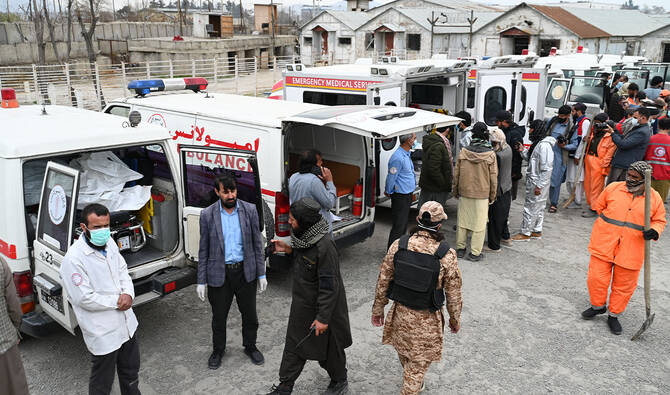

KARACHI: The United Nations Assistance Mission in Afghanistan has put the death toll at 143 in the bombing of a Kabul drug rehab center by Pakistan, an official told Reuters on Wednesday.
The Afghan Taliban government had said more than 400 people were killed and 265 injured in the air strike on Monday night.
Pakistan has rejected the Afghan Taliban claim that it targeted a drug rehab center saying it “precisely targeted military installations and terrorist support infrastructure.”
Allies-turned-foes Pakistan and Afghanistan’s worst fighting in years erupted last month, with Pakistani air strikes inside Afghanistan that Islamabad said targeted militant strongholds. Afghanistan called the strikes a violation of its sovereignty that targeted civilians, and launched retaliatory operations.
Over the last three weeks, both countries have launched air and drone strikes against each other and also engaged in ground firing across their 2,600-km (1,600-mile) border, with each claiming to have inflicted heavy damage and killed hundreds of opposition troops, without providing evidence.
Islamabad has long accused the Afghan Taliban government of providing a safe haven to militants executing attacks on Pakistan from its soil.
It says the leadership of militant group Tehreek-e-Taliban Pakistan, as the Pakistani Taliban are formally known, and many of its fighters are based in Afghanistan, which also hosts armed insurgents seeking independence for the southwestern province of Balochistan.
The Taliban, however, has denied the allegations and says militancy in Pakistan is the country’s internal problem.
Although a ceasefire was reached after similar border clashes in October through talks mediated by Turkiye, Qatar, and Saudi Arabia, no negotiations have taken place this time, despite calls from countries including Turkiye and Russia to resolve differences through diplomacy.
The Afghan Taliban had said last month that it was willing to negotiate with Pakistan, but Islamabad has shown no such inclination.
China, a key ally of both Afghanistan and Pakistan, has also urged “dialogue and negotiation,” saying on Tuesday that it will continue to play a “constructive role” to de-escalate tensions between the countries.


